
Updated May 6, 2026 by Bob Rountree
Huguenot Memorial Park is a beach lover’s dream.
Camp behind heltering dunes lining a mile-long pristine beach, though the weather could get a bit uncomfortable in winter. Pay attention to forecasts.
In summer, the park’s mile-long beach is packed with surfers, kites and sunbathers.
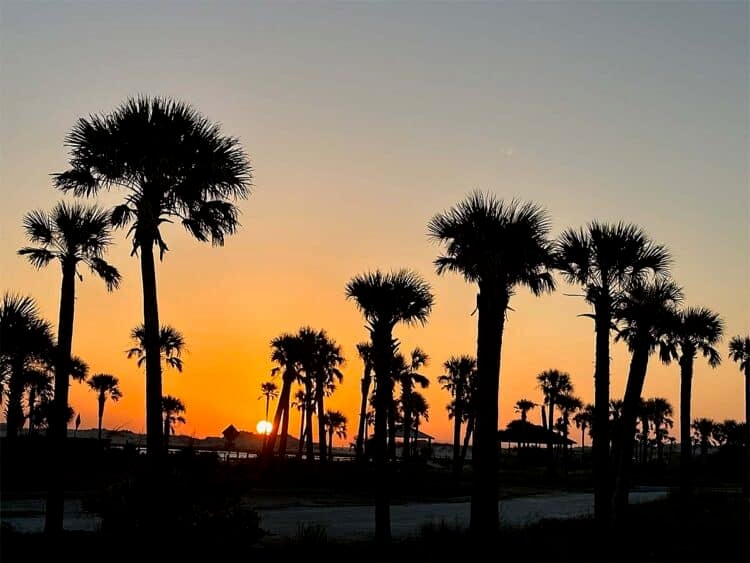
The campground and beach are on a sandbar marking the entrance to Jacksonville’s harbor.
During the day, campers are entertained by the comings and goings of shrimp boats, cargo ships and the U.S. Navy. You can even see portions of the Mayport Navy Base and Naval Air Station across the St. John’s River.
At sunrise and sunset, shore birds fill the sky. The colony of seabirds here is one of the largest on the entire East Coast.
You are technically within the city limits of Jacksonville, albeit away from city lights, on the south end of Florida’s sea islands, where the St. John’s River meets the Atlantic Ocean.
This 368-acre horseshoe-shaped park is literally a sandbar, twisting and curving out to the sea from the Talbot Islands, its sandy shores shaped by the currents of the majestic St. Johns River.
Huguenot Park’s Beaches
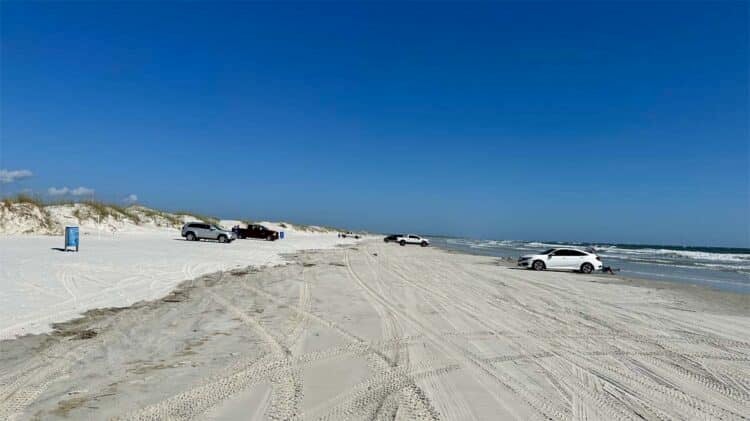
Extremely popular on weekends, the ocean beach (above) is ideal for surfers and kite boards, while the inlet cove beach (below), protected by high dunes, is popular for kayaking and paddle boards.
Both beaches allow motor vehicles and parking, but 4-wheel drive is highly recommended on the soft sands of the ocean beach. There is off-beach parking nearby for those who don’t want to risk getting stuck.
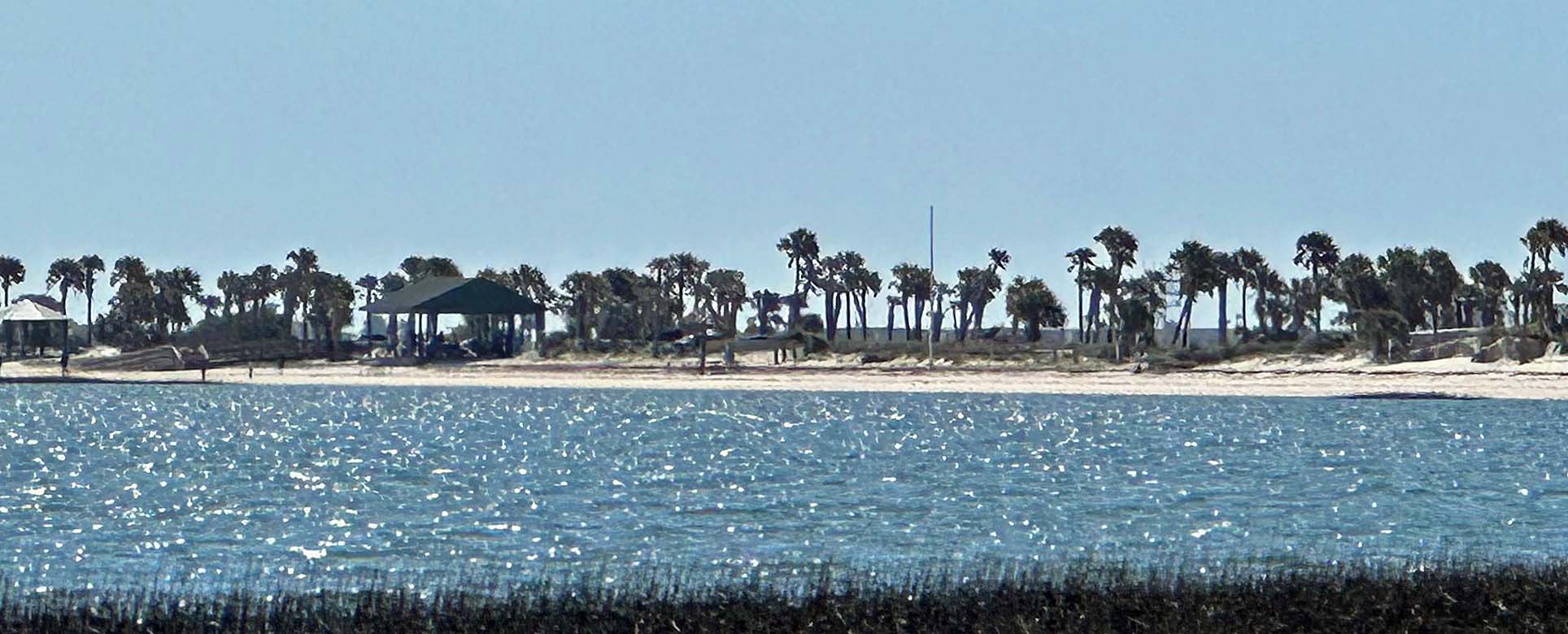
On weekends, long lines of cars line up outside the park entrance, and entry is slow at it’s peak just before noon. Day visitors should try to arrive early.
Campers should plan to arrive in late afternoon on weekends; earlier is OK on a weekday.
Day use fee is $5 per vehicle, up to six people. Each additional person is $1. Bicycles and pedestrians, $3. Annual pass, $99.46 (including tax). Hours: 6 a.m. until 7 p.m. (summer); 6 a.m. to 6 p.m. (winter).
The Campground at Huguenot Memorial Park

Huguenot Memorial Park is at the mouth of the St. Johns River, and the campground is directly across the river from the Mayport Naval Station. While the Navy ships divert into the mooring basin near the mouth of the river, the campground is directly under the flight path for the base’s runways.
We didn’t see many jets while we were camping, but we did experience frequent helicopter training missions over the campground. Fun to watch, but the constant whirr of helicopters does get old after a few days.
Boat traffic on the river was entertaining. We saw quite a few shrimp boats and fishing charters.
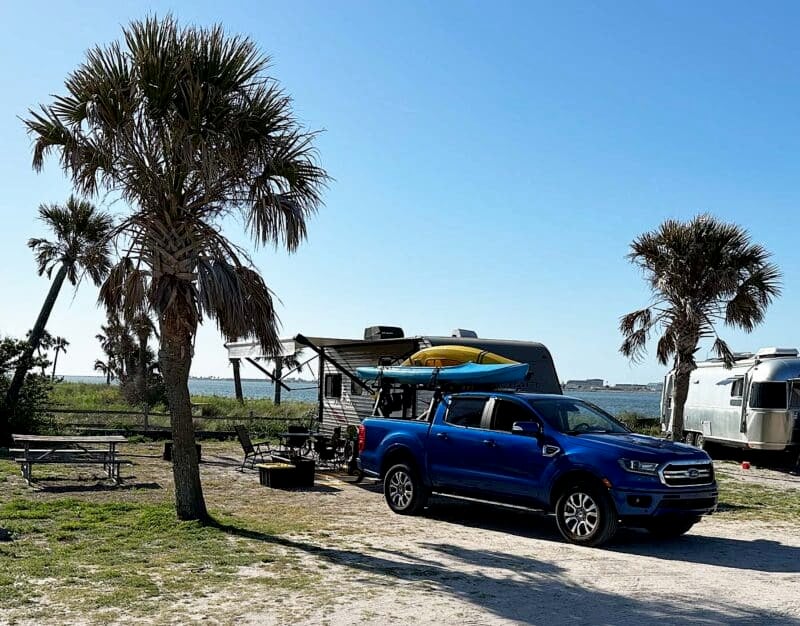
You are camping on a sandbar. There are no hookups for water or sewer, only electricity.
Bring water. Recreational vehicles should plan to arrive with a full tank. Potable water is available from a large storage tank near the bathhouse, but access to the spigot is awkward, especially for travel trailers.
There is one dump station near the bathhouses.
If you plan to arrive on Saturday or Sunday, be aware that you will wait in long lines with day-use visitors. There is only one gate entrance for both day visitors and campers. Weekend campers should try to book your site for a Friday arrival.
Weekdays are the best for both site availability and avoiding delays at the entrance.
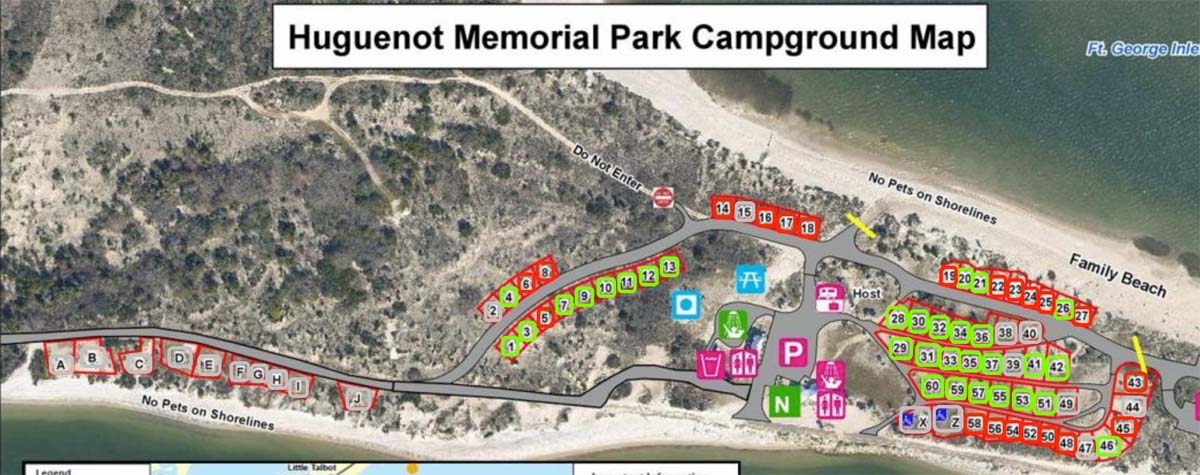
Riverfront Beach Sites (A through J) are directly on the St. John’s River beach and are ideal for tents. Only sites B, C & D are large enough for small recreational vehicles. Vans and pop-ups may be able to squeeze into the other sites. All these sites have shoreline access.
Park Road Sites (1-13) are carved into modest sand mounds and are directly adjacent to the entry road to the park. Expect significant traffic passing your site from weekend beachgoers, as well as other campers. You will not have direct access to a beach, although it’s not far to walk.

Family Beach Campsites (Sites 14-27) are on the family beach overlooking Fort George Inlet cove, but only sites 19-27 have direct beach access. Sites 14-18 are behind dunes with heavy vegetation.

Riverfront Sites 43-58 and handicap sites X and Z are great sites overlooking the St. Johns River with views of the Mayport Naval Station. This is where we camped (No. 45) for four days. While these sites are waterfront, the shoreline is not accessible because of an old park road in extreme disrepair at the water’s edge.
Interior Sites 29-42, 51, 53, 55, 57, 59 and 60 at the Huguenot Park Campground are a bit tight and lack shade, unless you create your own, but they are the most reliable for recreational vehicles on a level field of hard-packed sand.
Huguenot Park Campground, 10980 Heckscher Drive, Jacksonville FL 32226. Phone: (904) 255-4255. Day-Use Admission: $5 per vehicle; $3 for pedestrians and bicycles. Camping Fees: Tent sites. $22.70; RV sites, $27.54, including electric and sales tax. Pets are OK for campers (but not on beaches or shoreline) for $5.38 extra per pet, per day. Campground reservations can be made online or call (904) 255-4255 from 9 am-5 pm, Monday through Friday. First-night deposit required when making reservations. Check in from 1 until 9 p.m. Check out by noon.
Related story: Beach camping in Florida: 14 sandy sojourns
Who were the Huguenots?
Indigenous Timucuan Indians are known to have lived here for thousands of years, but the first Europeans to settle the area were Huguenots, reformed Protestants who fled France to avoid religious persecution and occupied these sea islands in the late 1500s.
In 1562, a group of 150 Huguenot colonists led by French Navy Captain Jean Ribault landed first in St. Augustine but soon sailed north and landed on Xalvis Island, which is now Huguenot Park.
What else is nearby?
Islands, saltwater grasslands, backcountry waterways and sparse development mark the coast here, not unlike the Sea Islands of coastal Georgia and the Carolinas.
Like its brethren to the north, these islands were also home to the Southern plantation, one of which has been preserved and open to visitors.
Kingsley Plantation
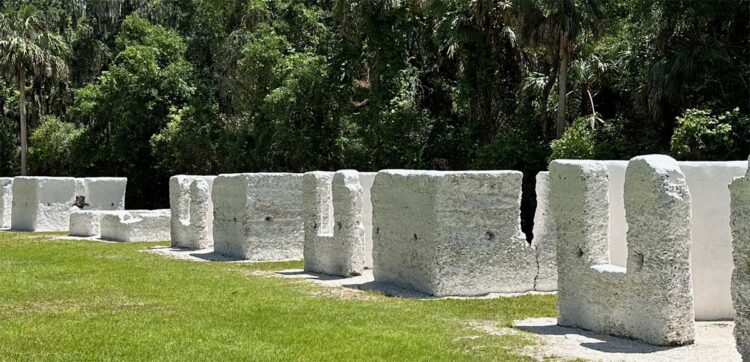
Zephaniah Kingsley established the plantation in 1814, seven years before Florida was purchased from Spain by the United States. Significantly, his Senegalese wife was a slave when he married her. After freeing her, she actively managed the plantation’s work force of about 60 slaves, who produced Sea Island cotton.
Kingsley was considered a ‘lenient’ slave holder who eventually purchased freedom for his slaves even as they continued to tend his crops. He advocated for a class of ‘free people of color’ and establishment of their rights to land ownership, all of which was undermined after the United States took possession of Florida and Southern customs took hold.
The original plantation house has been preserved, as have the slave cabins, and is managed today by the National Parks Service as part of the Timucuan Ecological and Historic Preserve.
Tabby is similar to today’s concrete and is a mix of oyster shells ground into lime, sand and water. Whole oyster shells were added to the mix to quicken hardening of the mix
Related story: Fascinating tale of slavery could only happen in Florida
Getting there: From the entrance to Huguenot Park, go west on Heckscher Drive less than a mile and turn right onto Fort George Road, a scenic three-mile drive to the plantation on a narrow country road densely shaded by Live oaks.
Hanna Park
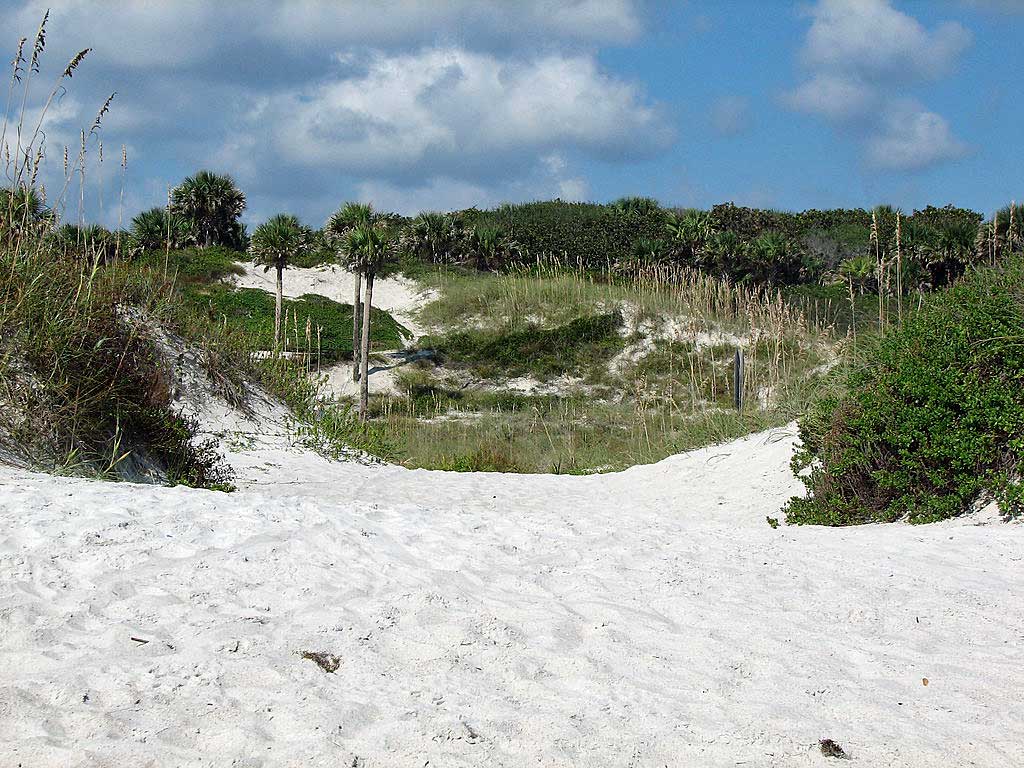
Kathryn Abbey Hanna Park is the only other campground managed by the City of Jacksonville and an excellent alternative to Huguenot Park.
This 447-acre recreation area includes more than 20 miles of biking and hiking trails through cool woodlands and access to 1.5 miles of white sand beaches with multiple access points.
Hanna Park is considered one of the hottest surfing destinations on Florida’s Atlantic Coast.
Day-use admission is $5 per vehicle. Tent camping is $20.25/night, including tax; RV, $33.75, including tax; Cabins, $33.75, including tax (Two night minimum stay.) Reservations can be booked online or call (904) 249-4700.
Related story: Great camping can be found in Florida’s little-known county parks
Getting there: From the entrance to Huguenot Park, go west on Heckscher Drive 1.6 miles to the Mayport Ferry. After disembarking from the ferry, take State Road A1A 2.5 miles to Wonderwood Drive. Turn left for one mile to Hanna Park.
Talbot Islands
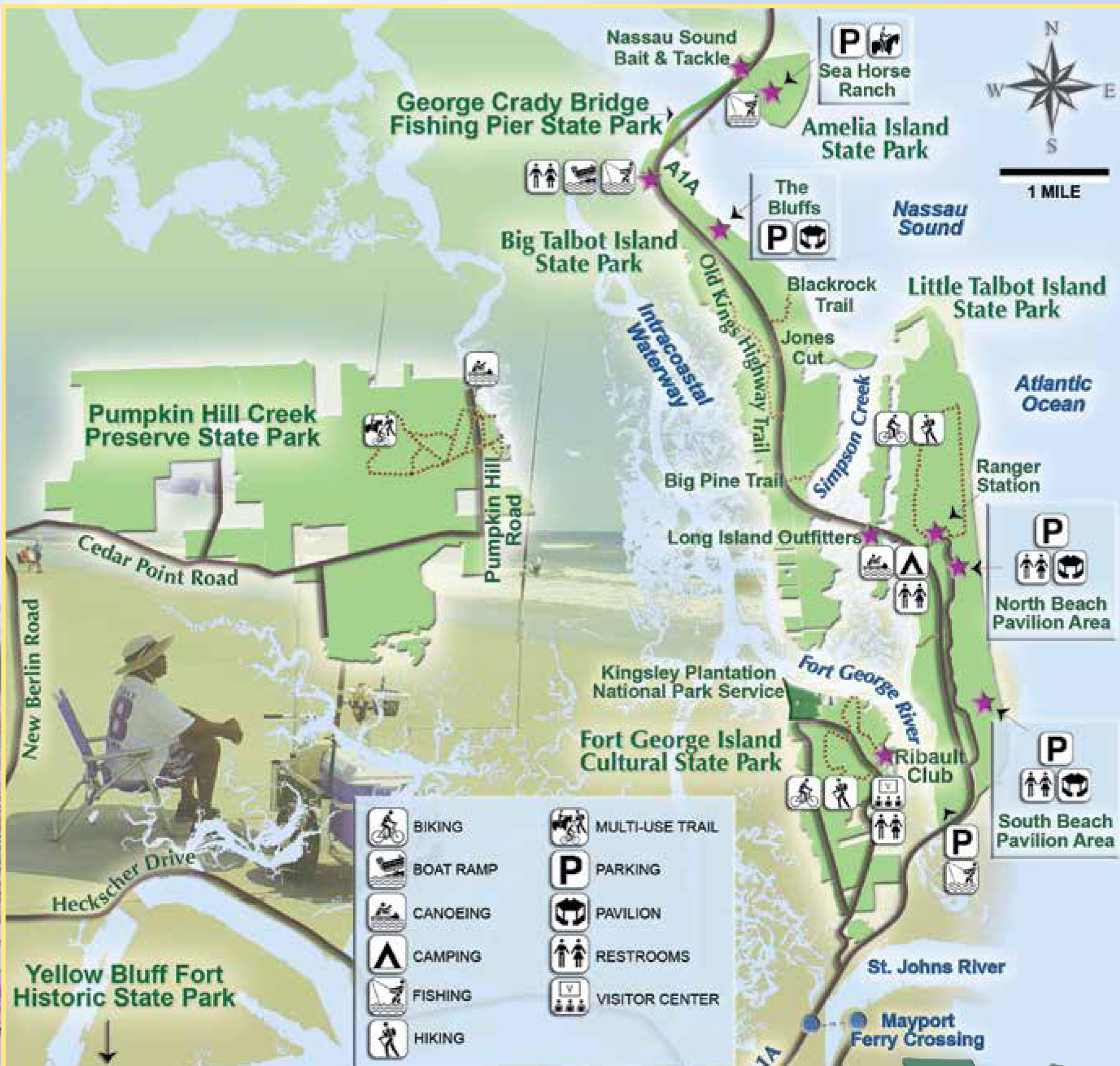
The scenic Talbot Islands consist of two popular state parks, including a campground on Little Talbot Island, and they are right around the corner from Huguenot Park, just across the Fort George Inlet. The bridge is within view of the campground.
Little Talbot Island supports five miles of impressive beach protected by natural dunes, easily accessible from three well-spaced boardwalk entry points along a bicycle-friendly 2-mile park road. The campground is on the island’s inland side of State Road A1A.
Big Talbot island encompasses diverse habitats once typical of Florida’s barrier islands. There are several nature trails for hiking, There’s a boat ramp for motorboats, kayaks and canoes to launch your exploration of wetlands and islands. Big Talbot is immediately north of Little Talbot on A1A.
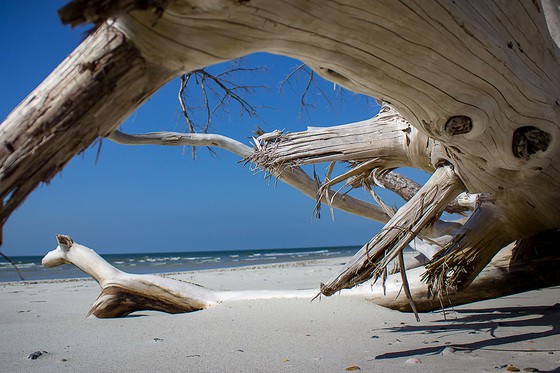
Boneyard Beach is a must-see. Twisted and tangled skeletal remains of live oaks and cedar trees, beaten down and uprooted by erosion, then repeatedly salt-washed, sea-bashed and sun-beaten. An eerie site, indeed.
The Boneyard is next to Blackrock Beach, an unusual lava-like formation that is actually hardpan sediment uncovered by severe erosion.
Definitely worth the half-mile hike from the parking lot for the Blackrock Trail.
A deepwater boat ramp is located on the north end of Big Talbot for kayaks, canoes and motor boats. The Sawpit Creek ramp has a floating dock and offers access to the Intracoastal Waterway and Nassau Sound.
Related story: The Talbot Islands: Paradise on the edge
Getting there: From the entrance to Huguenot Park, go north on Heckscher Drive across the Fort George River at the inlet. The entrance to Little Talbot Island State Park is five miles north of Huguenot Park. Go another three miles north to the Blackrock Trail.
Fernandina Beach & Amelia Island
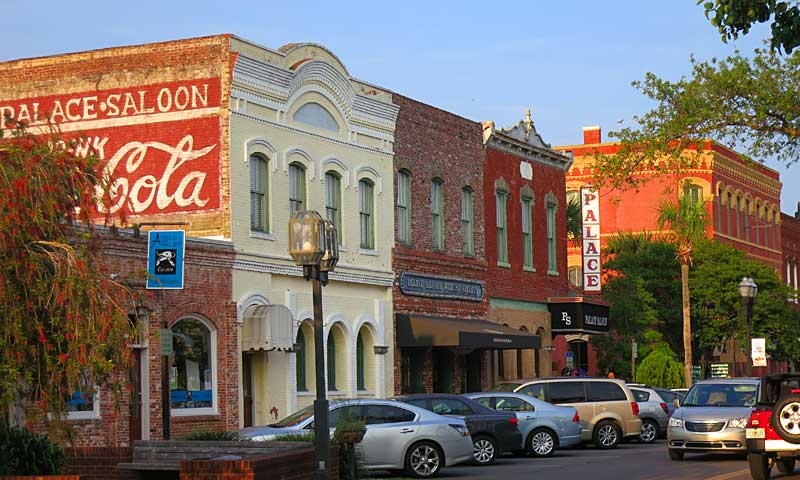
Amelia Island and its historic town of Fernandina Beach would be a superb destination if only for the walkable downtown and Victorian architecture.
But there are scads of other outdoor things to do in Amelia Island – a preserved Civil War-era fort, wide beaches so hard-packed you can bike for miles on them, scenic kayaking, hiking and biking trails and even a perfect setting to watch the sunset over water.
Fernandina Beach has flown the flags of eight different nations, including, with quick succession France, Spain, Great Britain, and then Spain again, all by 1816.
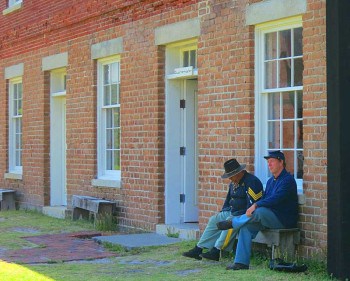
Fort Clinch is one of the best preserved Civil-War-era forts in the country, thanks to work in the 1930s by the Civilian Conservation Corps. It was built in 1847, after the end of the Second Seminole War, and was a Union garrison during the Civil War.
The fort itself is impeccably preserved and maintained with re-enactors present to bring history alive. The encompassing state park preserves a stunning landscape of sprawling oak trees and a broad beautiful beach.
Related story: Fort Clinch State Park
Getting there: From Huguenot Park, take Heckscher Drive (State Road A1A) north 11 miles to the southern tip of Amelia Island. It’s another 11 miles to the Fernandina Beach city limites.
Links of interest:
- Timucuan Ecological & Historic PreserveFlorida
- Little Talbot Island State Park
- Big Talbot Island State Park
- George Cady Bridge State Park
- Amelia Island State Park
- Pumpkin Hill Creek Preserve State Park
Bonnie Gross contributed to this report.