
Once a historic tourist attraction, Silver Springs State Park is one of Florida’s best parks
Silver Springs has been famous since the 1870s; it is Florida’s best-known spring. And yet, its location in the center of the state in Ocala miles off the expressway means lots of Florida residents and visitors haven’t been here.
You might hear Silver Springs and think “tacky tourist attraction.”
You couldn’t be more wrong. Silver Springs State Park is exceptionally beautiful and the historic attraction is tastefully preserved.
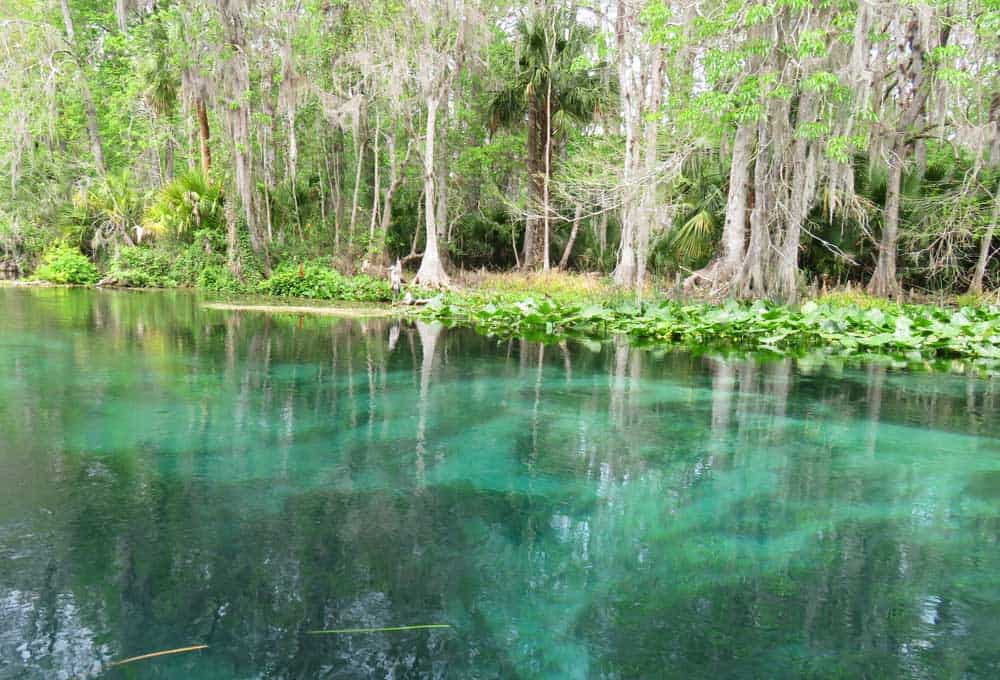
In 2013, the state of Florida took over the famous spring attraction, merging it with a neighboring state park and preserving one of the most exquisite slices of Florida natural beauty anywhere.
Silver Springs State Park now offers visitors a wide variety of activities and features.
Here are seven reasons to visit.
- The classic glass-bottom boat tour, which was Florida’s first, begun in 1878, continues, and even if you kayak the river, this is the best way to peer deep into the spring to see fish and other interesting things.
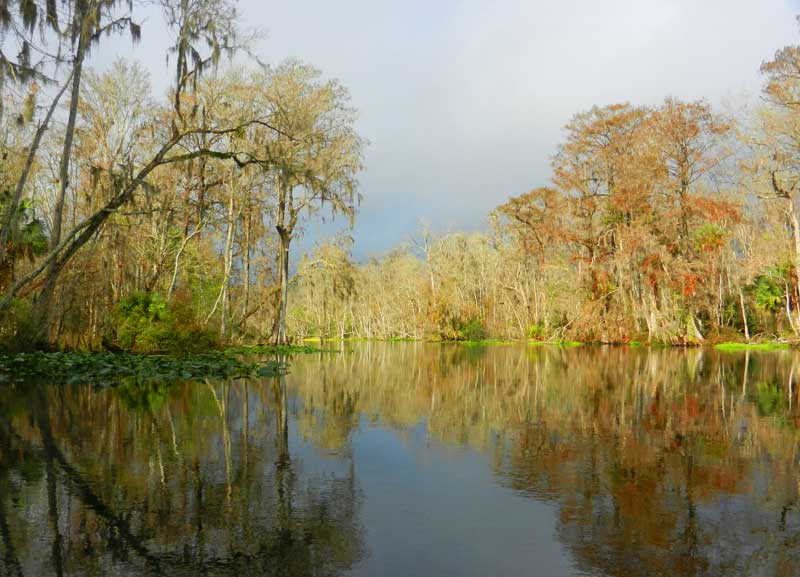
- Canoe and kayak rentals and livery service are available at the Silver Springs headwater. These allow you to enjoy pristine scenery and wildlife on what could be Florida’s most beautiful kayak trail. You can paddle easily with the current and then be shuttled back.
- Fifteen miles of lovely forest trails can be walked or ridden on mountain bikes.
- Silver Springs State Park has best state-park cabins we’ve ever stayed in – for $110 a night, you get a fully equipped two-bedroom house with a huge screened porch, a gas fireplace, surrounded by a mature forest.
- There’s outstanding camping too, with beautiful tree-shaded sites for tents or RVs.
- A museum and environmental education center is set in a village of historic Cracker buildings that were moved here to tell the story of Florida’s pioneers.
- You can go horseback riding on trails at the nearby Marjorie Harris Carr Cross Florida Greenway, part of the Florida State Parks.
In addition, Silver Springs State Park is a great base for exploring Ocala National Forest, particularly the opportunity to canoe on Juniper Springs, a half hour east, or the Ocklawaha, a half hour north, or Alexander Springs, 45 minutes east. Here’s a guide to four great rivers you can paddle if you stay in Silver Springs State Park.
Staying here, you also could visit Marjorie Kinnan Rawlings Cross Creek, a highlight of any trip to this region.
Silver Springs State Park by canoe, kayak or glass-bottom boat
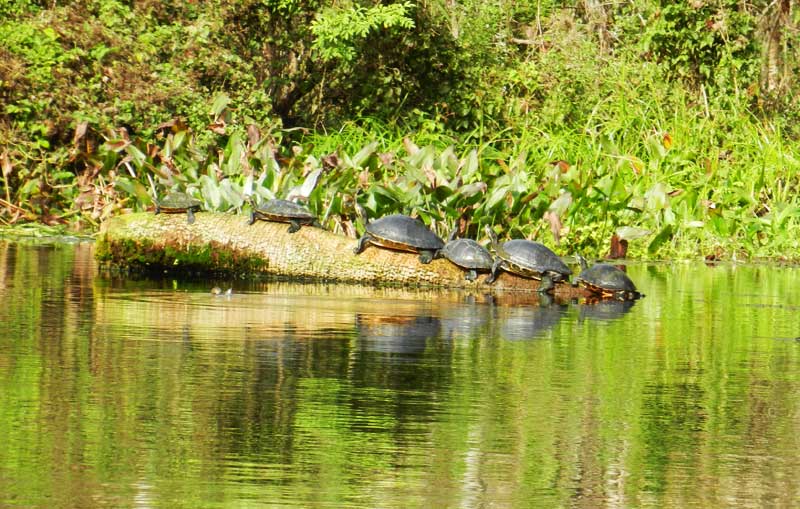
Silver Springs State Park makes it easy to kayak the Silver River. You can rent paddleboards, canoes and kayaks at the spring. You also can take the short glass-bottom boat rides.
- Glass-bottom boat trips operate from 10 a.m. to 6 p.m. The 30-45 minute tours are $12 for adults; $11 for seniors and youth.
- Canoe, kayak and paddleboard rentals start at $15 an hour. The 5-mile trip downstream by kayak with a shuttle back is $35. Details here.
- You can rent canoes and kayaks hourly all day or take a guided trip. You can also paddle the Silver River from a launch five miles downstream.
- Florida Rambler has a separate article with many more details about Silver Springs kayaking.
Trails for hiking, biking and horses at Silver Springs State Park
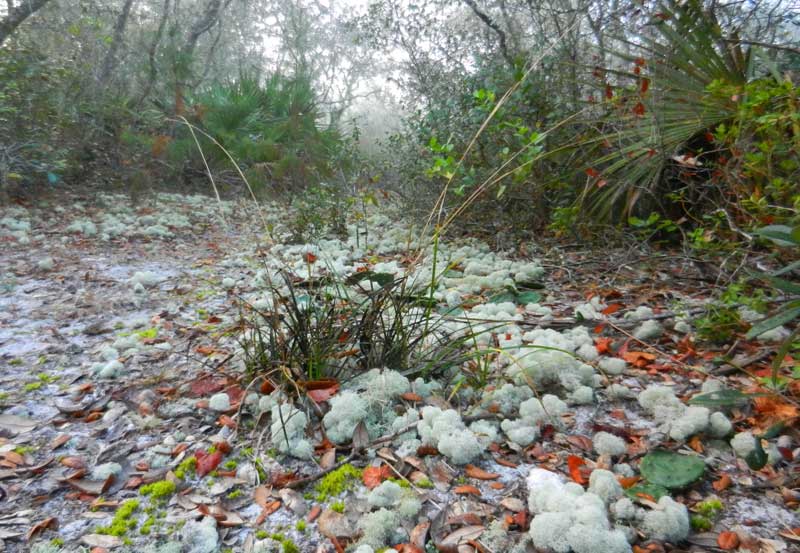
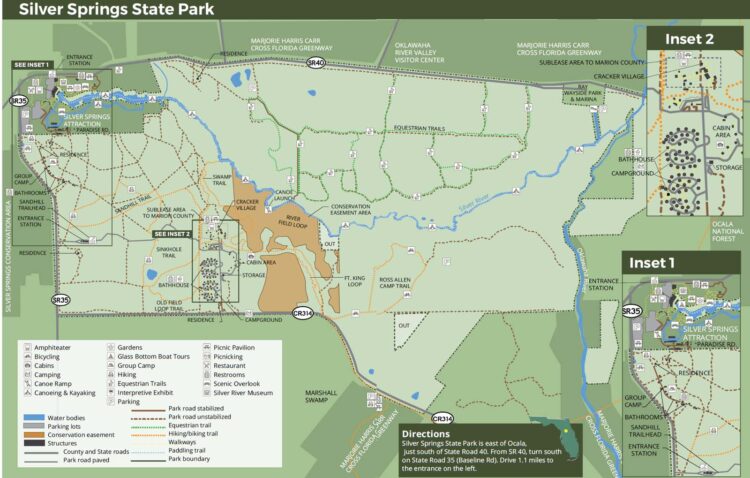
Hikers and mountain bikers enjoy Silver Springs State Park, which has almost 15 miles of biking and hiking trails meandering through wetlands, swamps, oak hammocks and pine forests. We hiked many of the trails: They are quiet, well-maintained and gorgeous.
You can access five trails from the entrance for camping and the museum:
- The Sandhill Trail, blazed yellow, has parking right next to the ranger station and is a 1.7-mile loop trail that takes visitors through longleaf pine uplands.
- The Sinkhole Trail, blazed red, is a 2.2-mile loop trail and the Old Field Loop, blazed green, is 0.8 miles. These are both upland trails. For access to these, park near the Silver River Museum in the day use area and utilize the Sinkhole Trail archway to the left of the museum.
- The Swamp Trail, blazed orange, is a 1.9-mile loop trail and the River Trail, blazed dark blue, is 1.3 miles. These are also accessible from the Silver River Museum. Both trails begin at the River Trails archway to the right of the museum in the uplands before transitioning to wetland habitats. Both provide scenic overlooks of the Silver River. The Swamp Trail has a beautiful boardwalk. The River Trail uses an old limerock road.
At the park’s main entrance, the newly created Creek Trail is a a 3/4 mile loop that can be accessed behind the Black Bear Pavilion. The trail takes you to Half-Mile Creek, the Silver River’s only tributary.
Off-road biking is permitted on all 15 miles of trails. Trails, which are sand, are for fat-tire bikes only.
In a separate area of the park, shady, forest trails are reserved exclusively for riders on horseback. Guided trail rides are offered by Cactus Jack’s Trail Rides (352-266-9326).
Silver Springs State Park cabins
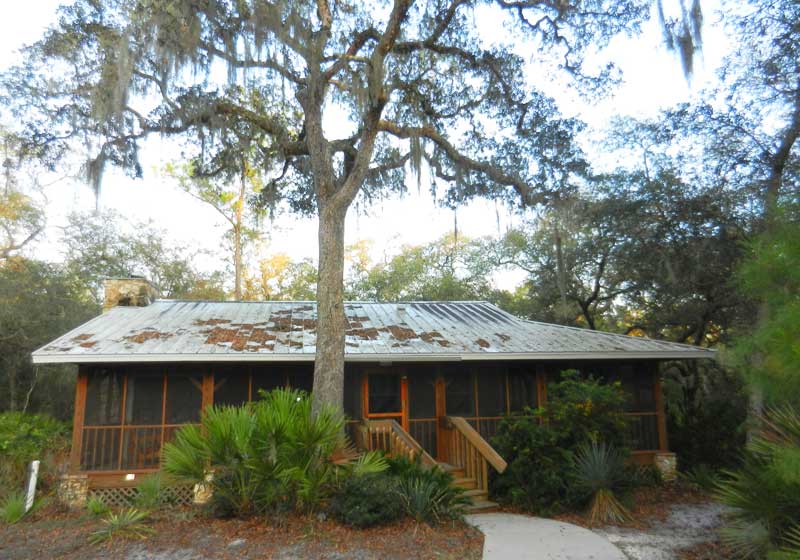
We love cabins in Florida State Parks and we’ve stayed in most of them, but these are about the best we’ve experienced.
It starts with the setting. Each “cabin” – and these are really houses more than cabins – is situated in the woods surrounded only by big trees and vegetation, separated from neighboring cabins. Out back, there’s a fire ring for campfires and s’mores. The metal roofs and big porches make these structures look like Florida Cracker houses.
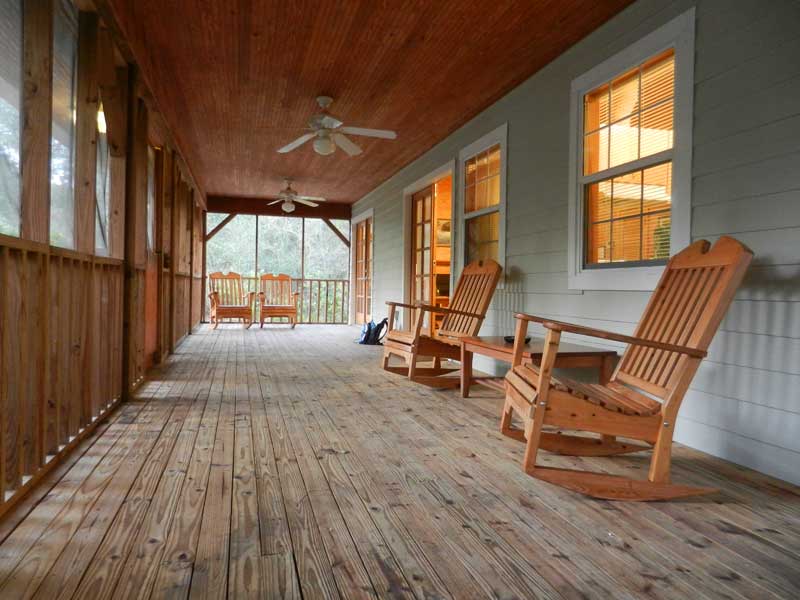
The screened porches are massive. You could hold a sit-down luncheon for 40 in the porch if there were tables and chairs. Instead, there is a big picnic table, a few rocking chairs and solitude.
Inside, there are two bedrooms, one with a double bed; one with twins. A sleeper sofa increases capacity to six. The bathroom is designed to work well with multiple guests. These accommodations would lend themselves to two families or three couples sharing.
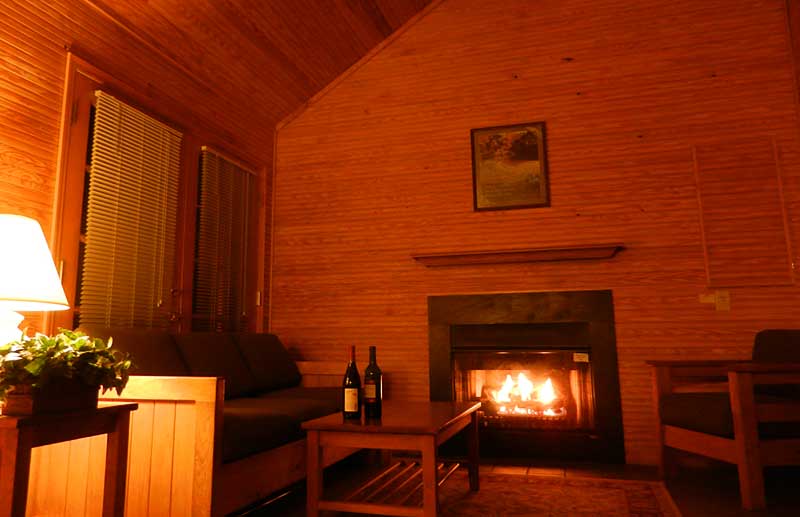
There’s a full kitchen and dining room table for six, cozy wooden cabin-like décor and a gas fireplace that provides a warm glow with the flick of a switch. At the ranger station, you can check out board and cards games, as there is no wifi, no phones and no TV. (We enjoyed an epic game of Jenga, thanks to a loaner game from the ranger station.)
The kitchen has a dishwasher and microwave. Warning: Don’t plan to do extensive cooking. There are few serving dishes, no cutting board and few pans. And our cabins had the hardest bed I’ve ever found. Consider bringing along anything that might add some cushioning.
Silver Springs State Park camping
Like the cabins, the Silver Springs State Park camping facilities are top-notch. Each of the 50 sites is unusually large, providing space to separate you from neighbors. Campsites are surrounded by vegetation that also contributes to privacy.
Reviews are very positive for the Silver Springs camping sites, from both RV and tent campers. Be aware there is no camp store or place to buy food, so do plan to bring everything you need. (Stores are not far away, however.)
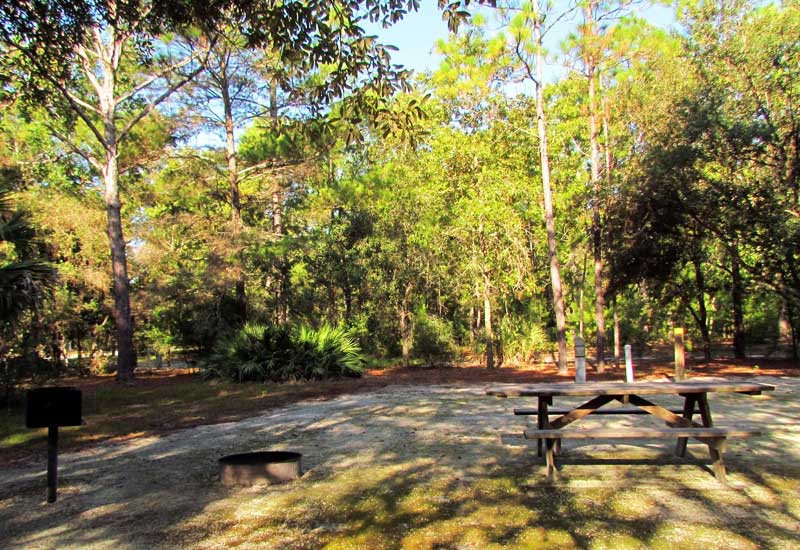
Cabins and campsites can be reserved up to 11 months in advance and you must reserve cabins for at least two nights on weekends and holidays. (And cabins and campsites do book up for weekends way in advance.) For reservations, visit the parks reservations website or call 800-326-3521.
Note: You reach the cabins, as well as the hiking trails and the Cracker village, via the former entrance to Silver River State Park, on County Road 35, NOT the entrance to the former attraction at the spring head. Your GPS will probably take you to the wrong entrance unless you enter “Silver Springs State Park campground.”
The history of Silver Springs and what it’s like today
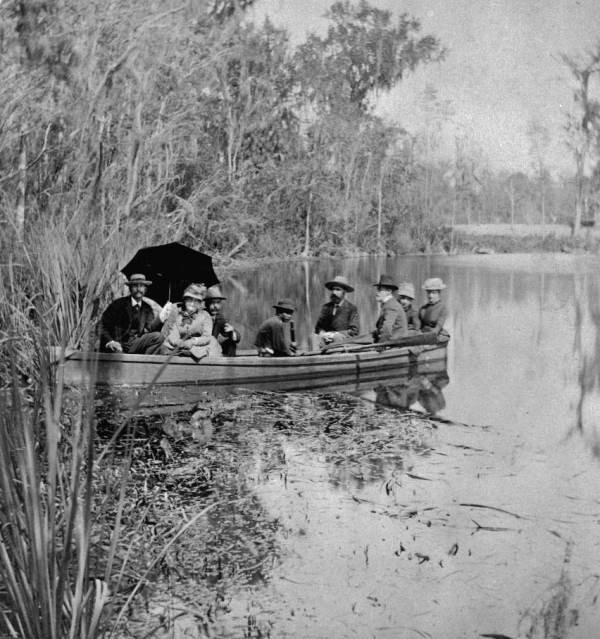
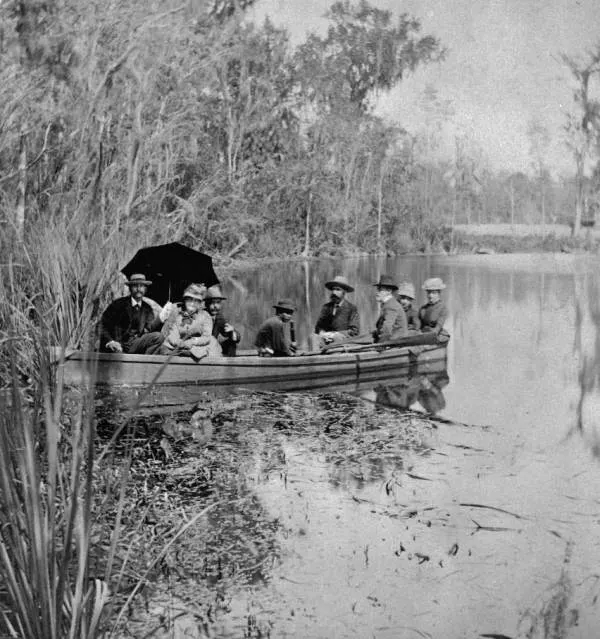
The beauty of Silver Spring, one of the largest artesian springs in the world, has been appreciated for hundreds of years. The first glass-bottom boat tours started in 1878 – incredibly early by Florida standards.
From its earliest days, Silver Springs was a commercial attraction. In the 1950s, 800,000 people visited a year, according to the Silver Springs Nature and Theme Park, the company that used to operate the attraction at the spring.
Today, the main entrance to the park is what used to be the entrance to the roadside attraction, and it still has that flavor.
The commercial area of restaurants and gift shops is still thriving. In addition, there is now an interesting exhibit about the history of Silver Springs and Paradise Park, an adjacent attraction developed for African Americans during the era of segregation.
There are paved walkways that allow you to stroll through the grounds and gardens and pavilions that have good viewpoints overlooking the spring.
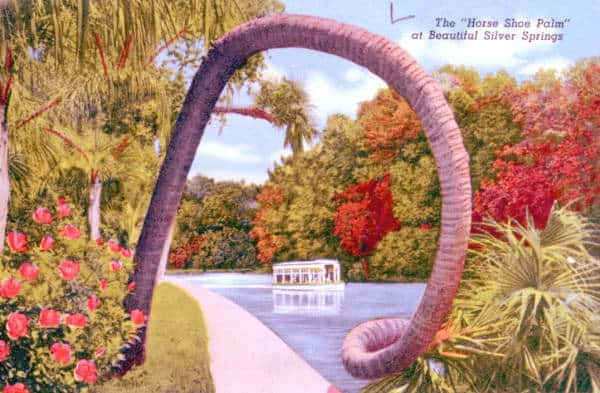
It’s a place that is obviously popular with locals as it was bustling on a sunny Sunday afternoon. There were two weddings taking place in the park that evening.
The springhead itself is beautiful, so spend some time and gaze into its clear water.
In the glass-bottom boat tours or by kayak, you can spot the statues on the bottom of the spring that look historic. In reality, they were placed there for an episode of the 1960s TV series “I Spy,” starring Bill Cosby.
They’re hard to see into the water via kayak, which is why it’s worth it to take the old-fashioned glass-bottom boat at least once.
Exhibits at Silver Springs State Park
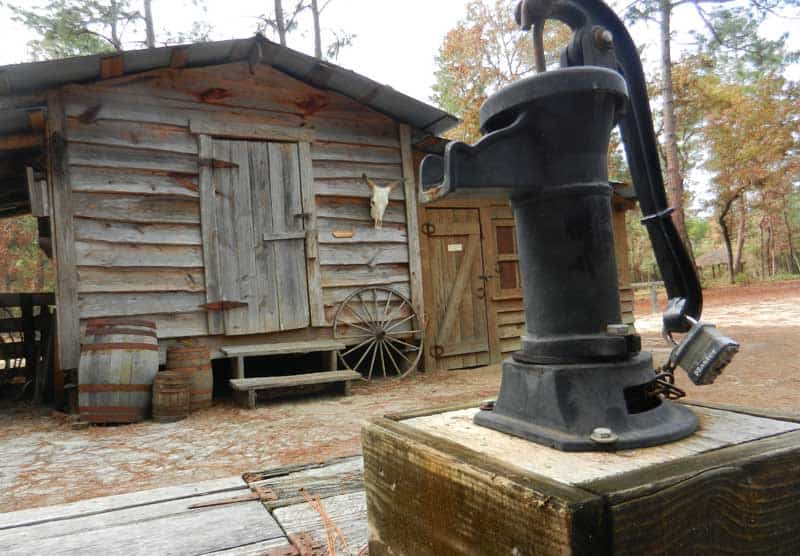
Whether you tour the museum or not, it’s fun to walk around the old Florida Cracker houses, church and other structures that have been moved to Silver Springs State Park. This area has a lot of history: Ocala was established in 1846.
The Ocala woods were home to Florida Crackers, immortalized in the Majorie Kinnan Rawlings books, including her Pulitzer Prize winner, “The Yearling.” (Some scenes in the movie starring Gregory Peck were filmed at Silver Springs.)
That Cracker culture is preserved at the Silver River Museum and Environmental Education Center, which offers exhibits on Florida’s history and ecology. The museum is open to the public on weekends and holidays from 9 a.m. to 5 p.m. Admission is $2; children under 6 are free. The museum is operated by the Marion County School District.
There are also exhibits about Silver Springs at the main park entrance.

Planning your trip to Silver Springs State Park
- Silver Springs State Park website
- The main entrance to the park, which is the site of the former attraction, is a good place to explore if a member of your group is in a wheelchair.
FAQs on Silver Springs State Park
Can I swim at Silver Springs State Park? Not at this time, though there has been discussion of adding a swimming area in recent years. A pristine spring where you can swim, Juniper Springs, is 45 minutes away in Ocala National Forest.
How far is Silver Springs from Orlando? Miami? Tampa? Silver Springs State Park is 85 miles from Orlando, 300 miles from Miami, about 100 miles from both Tampa and Jacksonville.
What movies have been filmed at Silver Springs? In the 1930s, six of the original Tarzan movies, starring Johnny Weissmuller, were filmed on location at what is now Silver Springs State Park. In the late 50s and 60s, the clear water made this the perfect location to film more than a 100 episodes of “Sea Hunt,” starring Lloyd Bridges. “Creature from the Black Lagoon” was filmed here; so were scenes from movies ranging from “Rebel Without a Cause” to James Bond’s “Thunderball.”
Is Silver Springs in a healthy conditon? Sadly, no. As beautiful as the springhead is now, the water is less clear, there is more algae and the flow of water from the springs is much reduced from the past. According to the Florida Springs Institute, too much nitrate/nitrogen has entered the water, much of it from fertilizer.
Things to do near Ocala and Ocala National Forest
- Florida Rambler story on kayaking four spectacular rivers in Ocala area.
- Florida Rambler contributor writes about hike-in primitive camping in Ocala National Forest
- Florida Rambler story on Marjorie Kinnan Rawlings’ Cross Creek
- Near Cross Creek, you can dine at the historic Yearling Restaurant, 14531 E. County Road 325, Cross Creek, just down the road from the state park. The 59-year-old restaurant celebrates the Florida Cracker culture. It serves Rawlings’ legendary sour orange pie, as well as frog legs, catfish, venison and the best cheese grits I’ve ever had. It’s decorated with antique outboard motors, old guns and enough memorabilia to be an antique store.
- Historic Micancopy, Florida’s oldest inland city, is a few miles away and is a great place to browse antique shops.
- Herlong Mansion Historic Inn and Gardens in Micancopy is a bed and breakfast known for its white pillars, wide verandas and Southern hospitality.
- Nearby Paynes Prairie State Park offers extensive hiking plus shaded sites for tents, trailers or RV camping. The park is known for its sinkholes, birdwatching and alligators.
The author, Bonnie Gross, travels with her husband David Blasco, discovering off-the-beaten path places to hike, kayak, bike, swim and explore. Florida Rambler was founded in 2010 by Bonnie and fellow journalist Bob Rountree, two long-time Florida residents who have spent decades exploring the Florida outdoors. Their articles have been published in the Sun Sentinel, the Miami Herald, the Orlando Sentinel, The Guardian and Visit Florida.
Lynnda Butler
Friday 14th of January 2022
To keep the Springs pristine and clean, all need to make sure they stop the turnpike extension from coming through. It will destroy this area! Plus this is the one thing this beautiful area does not need!
Bonnie L Tomlinson
Tuesday 18th of April 2017
Thank you, I am an old Florida Cracker of 5 generations and am planning a trip here with my grown children and grandchildren.