
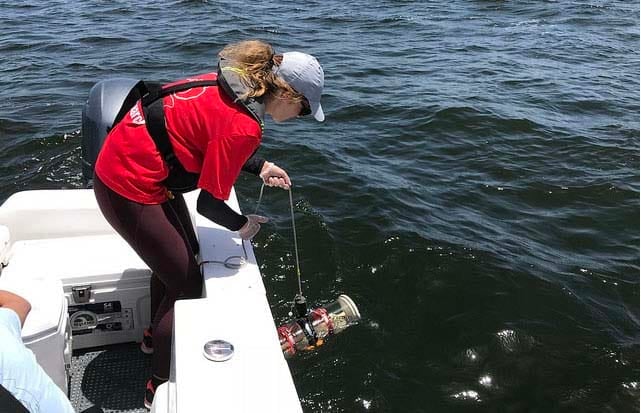
The red tide organism, Karenia brevis, was observed at background concentrations in six samples collected from and offshore of Southwest Florida, the FWC reported on October 16, 2026.
Satellite imagery from the University of South Florida and the National Oceanic and Atmospheric Administration is used to help track nearshore and offshore conditions.
- In Southwest Florida over the past week, K. brevis was observed at background concentrations offshore of Hillsborough County and background concentrations in and offshore of Sarasota County. For additional information, view the Southwest Coast report and map.
- In Northwest Florida over the past week, K. brevis was not observed. For additional information, view the Northwest Coast report and map.
- Along the Florida East Coast over the past week, K. brevis was not observed. For additional information, view the East Coast report and map.
No Fish kills suspected to be related to red tide were reported to FWC’s Fish Kill Hotline or other partners over the past week.
Respiratory Irritation suspected to be related to red tide was not reported over the past week in Florida.
Red tide FAQ
What is Red Tide? Common name for harmful algal blooms occurring along coastal regions in Florida from large concentrations of aquatic micro-organisms, specifically an organism called karenia brevis. Bloom events are stimulated by nutrients from terrestrial runoff containing fertilizer, sewage and livestock wastes.
Should I avoid red tide? Toxins from red tide can cause breathing problems and irritate your eyes, nose and throat. Reactions to red tide are worse for people with asthma, emphysema, bronchitis or any chronic lung disease. If you have health issues, stay away from areas with red tide. Pets can become sick from red tide, so keep them away from those areas, as well as contaminated marine animals and fish.
Red tide can cause illness and death in pets.

Can we swim near red tide? Don’t swim in or around red tide because the toxin can cause skin irritation, rashes and burning and sore eyes.
What should I do if I come in contact with Red Tide? Wash off with soap and water. You can get relief from respiratory symptoms by being in an air-conditioned space. For people without asthma or chronic respiratory problems, over-the-counter antihistamines can help. If your symptoms don’t get better, see a doctor.
What about the dead fish on the beach? Red tides kill fish and other marine life — avoid contact and don’t swim or walk in areas with dead fish. Keep your pets away from these areas. Don’t harvest or eat distressed or dead fish (or any animals) from or near a red tide. Fish caught live and healthy can be eaten if filleted and rinsed thoroughly with fresh water.
Are shellfish affected by Red Tide? Crabs, lobsters, shrimp, clams, oysters and scallops are filter feeders that can concentrate toxins. These and other shellfish, if harvested from red tide areas, may be contaminated.
Does freezing weather kill the red tide organism?
Freezing weather does not directly kill the organisms (Karenia brevis) responsible for Florida red tide, but it can help dissipate blooms by disrupting their growth and pushing them offshore with strong winds.
While cold snaps may reduce the severity, they do not destroy the toxins, which remain active even in cold water.
For more details, go to the FWC’s Red Tide page.
Additional Resources
- Centers for Disease Control and Prevention
- Florida Department of Health
- Protecting Florida Together
- Florida Poison Control Information Center