
Updated March 5, 2026 by Bonnie Gross
Inventor Thomas Edison discovered Fort Myers in 1885 and as his love for the city grew, he famously proclaimed: “There is only one Fort Myers, and 90 million people will find this out.”
Somehow, the word didn’t reach me.
After decades of living in Florida, I had been through Fort Myers and around Fort Myers, but I never bothered to go to Fort Myers.
A few years ago, at the end of a kayaking trip along the Caloosahatchee River, we ended up in Fort Myers and discovered a beautiful riverfront and a historic downtown. With no time to explore on that trip, I planned a return.
What I discovered this time is that Fort Myers today deserved Thomas Edison’s enthusiasm from more than a hundred years ago. Sure, a lot has changed – probably the fishing in the Caloosahatchee was better then and I’m pretty sure the traffic is worse.
But modern day Fort Myers has a lot going for it for visitors looking for a few days of enjoying the natural and authentic Florida.
For me, Fort Myers’ key assets are these:
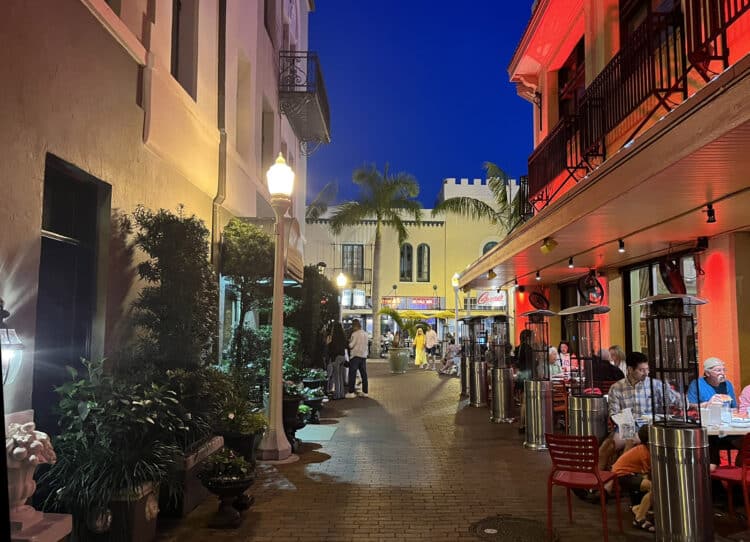
- A surprisingly lively downtown, called the River District, which is a compact, walkable area packed with well-preserved historic buildings plus many restaurants, bars and shops. It also has several options for performing arts.
- The Edison and Ford Winter Estates are fascinating for the historical stories they tell – you really cannot top Thomas Edison as an inventor and creator. But just as impressive are the grounds themselves, 30 acres that stretch out along the Caloosahatchee River studded with exotic trees that Edison had planted and citrus trees heavy with oranges and other fruit.
- Within 30 to 45 minutes from downtown Fort Myers, you can reach the spectacular Gulf beaches and islands, including Fort Myers Beach and Sanibel.
- There’s a lot to offer lovers of outdoor recreation. Kayakers will find several excellent options for getting on various waterways. Those looking for a stroll will find two special preserves with boardwalks, wildlife and beautiful scenery.
We stayed in an AirBNB in a charming historic district, Dean Park, a half hour walk from the River District. Dean Park is a neighborhood of about 80 historic homes built between 1916 and the mid-1920s. I loved the Craftsman style bungalows. The neighborhood is on the National Register of Historic Places. It’s just one of the hidden gems I found in Fort Myers.
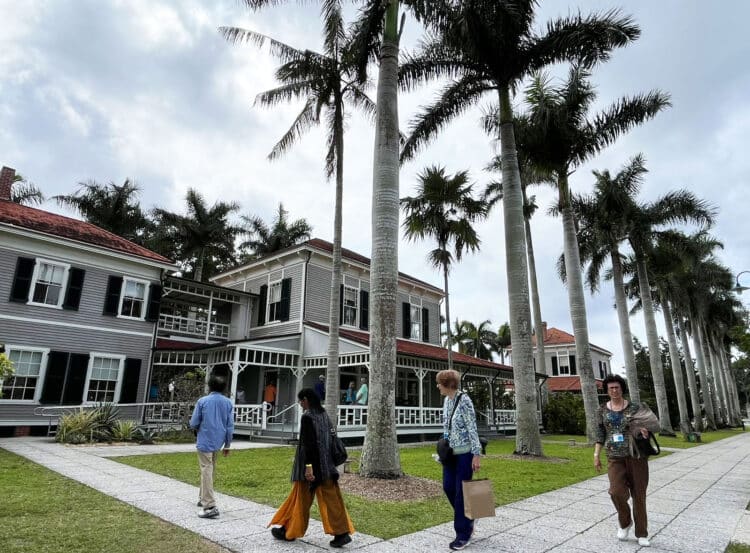
Edison and Ford Winter Estates: A classic Florida stop
The Edison house has been open to tours since 1947, so if your grandmother vacationed on Florida’s Gulf Coast, chances are she visited here.
Perhaps as a result, the historic site has the logistics down pat for running tours for vast numbers of visitors every day. There are self-guided audio tours, guided tours, a once-a-week automotive tour, an “inside the homes tour” and even a weekly German language tour with a historian. (The automotive tour focuses of the collection of historic and antique vehicles.)
I love historic sites, so for me, this place was worth two or three hours (I’m the person who reads all the signage) and the hefty admission ticket. Most people will spend an hour or two.
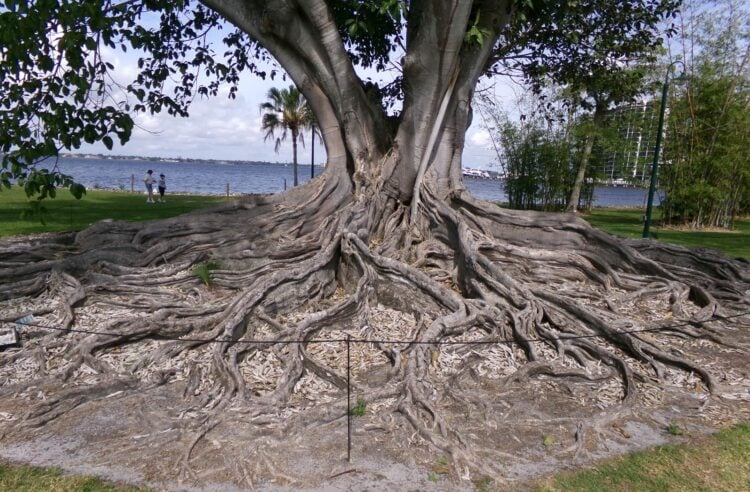
What’s especially great about this property is its beauty, with its big views of the wide Caloosahatchee River, its giant banyan trees and flowering specimens on the grounds and the beautifully preserved vacation homes of Edison and Ford.

Don’t expect Mar-A-Lago. Edison and Ford liked camping in the Everglades and fishing in the river. Edison disdained Palm Beach. Their homes are modestly sized and relatively simple, although there are rooms for servants and few people lived so beautifully and comfortably 100 years ago.
You learn a lot about Edison, who by so many measures was as important, original and brilliant as any person in the 20th Century. The emphasis is on Edison and less on Ford, who is included because he was a lifelong friend who spent a few weeks each winter in his house next door.
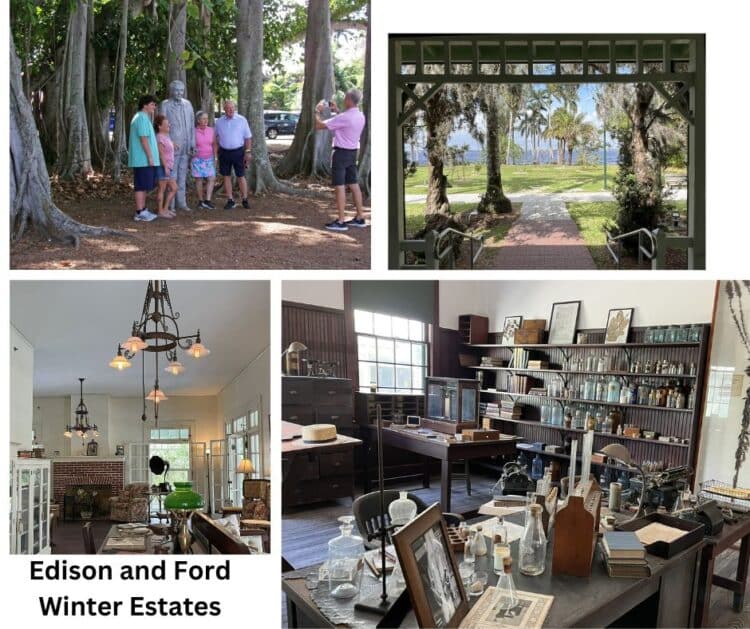
The historic site’s focus is on Edison’s relationship to his adored Fort Myers, and what he did there. In his winter home, he continued to research and invent but also spent free time enjoying the tropical trees and plants and his quest for reeling in a tarpon.
I enjoyed the visit a great deal. You’ll enjoy it most if you love learning about plants and trees, because there are so many well-labeled specimens on the grounds, and/or if you like science and engineering, because much of Edison’s and Ford’s works is on display here with information that lets you learn more.
If you don’t want to pay the admission, you can park in the historic site’s lot, shop at the beautiful garden store, browse the butterfly garden, admire the impressive banyan tree and view the grounds from the street.
Edison and Ford Winter Estates
2350 McGregor Blvd., Fort Myers, FL 33901
(239) 334-7419
2025 tickets: Adults $28; teen $20 (ages 13-19); children $15 (ages 6-12); children 5 and under and free.
Downtown Fort Myers, the River District
Over the last dozen years, downtown Fort Myers, called the River District, has been invigorated with restaurants, bars and shops and become a lively place for dinner, live music and live theater.
Originally developed in Florida’s boom years at the start of the 20th Century, it had fallen into disuse as business fled to malls and suburban sprawl. It was like a lot of downtowns around America – empty, with perhaps a government building or two, but lacking vitality.
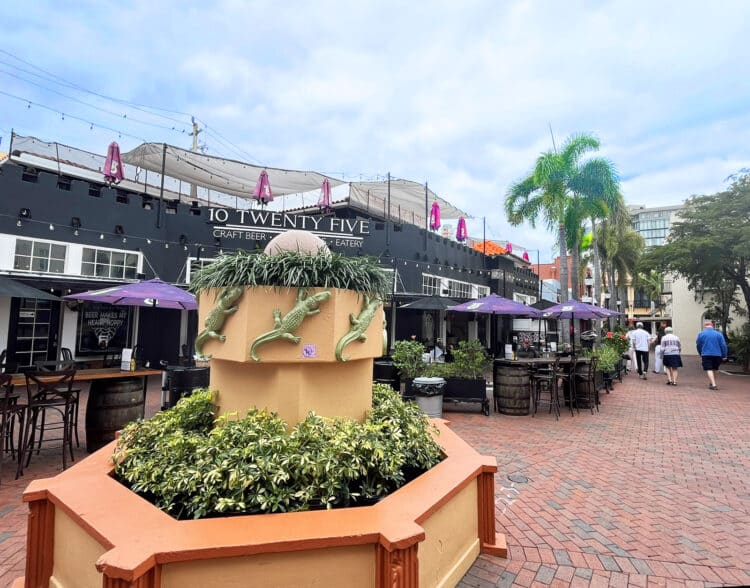
But the area had good bones. It was a district where remarkably intact historic buildings were being restored around a walkable human-scaled layout, like the Patio De Leon off First Street. Built between 1913 and 1915, Patio De Leon is a public square with fountains, landscaping and benches. Back in the day, it featured alligators kept in a large fountain as a tourist attraction. Today the plaza has a large planter decorated with alligators as a nod to its history.
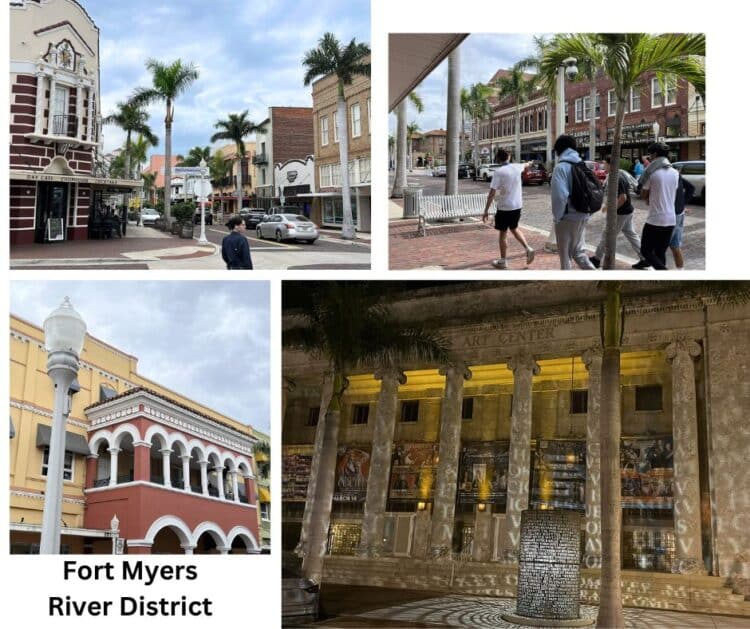
Over the last two decades, the city spent $20 million to improve the streetscape, a project completed in 2010. With this project, the original 1920s-era bricks that were buried under years of road resurfacing were excavated and re-used to pave streets on several blocks. With the addition of trees, benches and parking, the River District attracted new businesses and today it is a buzzing magnet for people from the region.
During our February visit, we found even on weeknights, there were many people on the streets strolling and waits at the most popular restaurants.
If you’re planning a visit, check on the schedule of activities at two important downtown arts institutions: the Davis Arts Center, which is located in a historic 1933 post office, and the Florida Rep Theater, located in the Historic Arcade and ArtStage Studio.
Our appreciation of the historic River District was enhanced by a well-done River District history tour from True Tours.
Take a walk, or kayak or swim at the beach
Fort Myers is a river town, not a beach town. But some remarkable beaches are only a half hour to 45 minutes away and make a great way to spend a day or an afternoon.
You can head to Fort Myers Beach or Sanibel, both accessible by (separate) causeways and both offering famous beaches and communities.
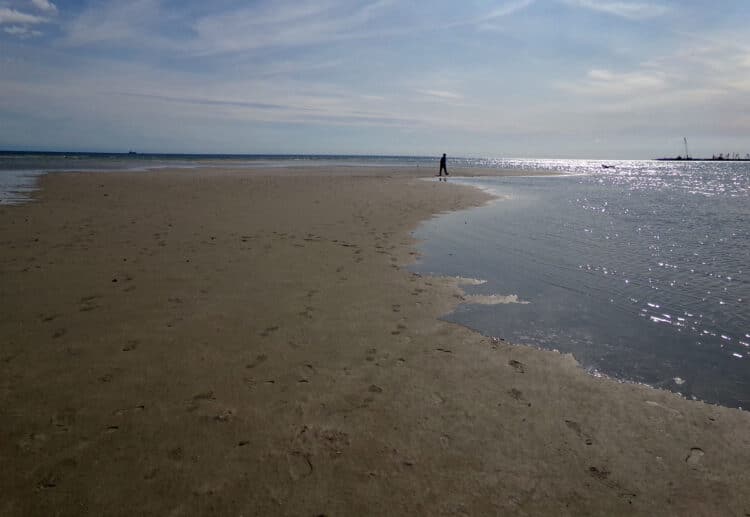
The closest spot, however, and one of our favorites, is Bunche Beach, 25 minutes south of Fort Myers. The wild and undeveloped beach area does not open to the Gulf, as do Sanibel and Fort Myers Beach. Instead, Bunche Beach faces San Carlos Bay, the protected body of water between the mainland and the barrier islands. From it, you view Fort Myers Beach on the left and the Sanibel Causeway on the right. Look closely and you’ll see the Sanibel Lighthouse.

Bunche Beach was considered a lesser beach destination and thus was designated as “the colored beach” in the days of segregation.
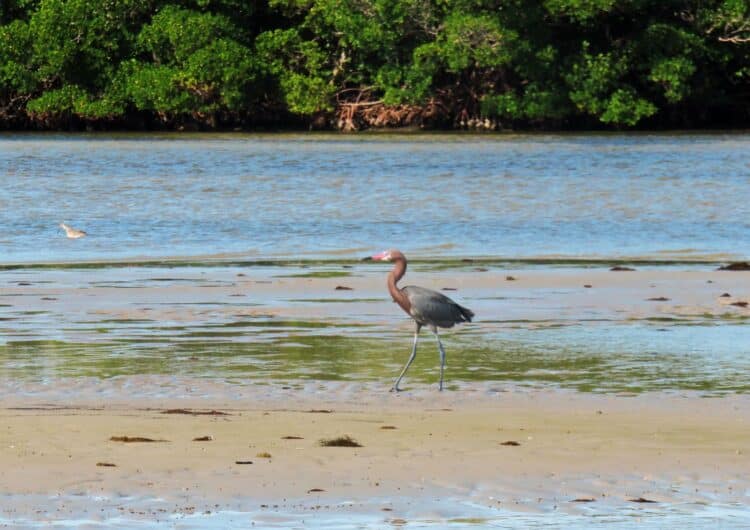
One result of that, however, is that Bunche Beach has few roads to reach it, no hotels and no nearby development. What is does have is the same beautiful soft white sand as the barrier islands, along with marine and bird life.
After 2022’s Hurricane Ian, the vegetation at Bunche Beach, like the whole coastline, looks like it has been attacked by a giant with a machete. And yet, the white sand is still soft, the water is clear and as we strolled its approximately one mile length, we found live shells, sea glass and other treasures.

Bunche Beach is very shallow with big sandbars stretching into the bay during low tide. In the morning, it’s a good place to see birds.
There’s a kayak rental place at this beach with maps to show you how to paddle through mangrove tunnels and out into the bay along the sandbars. When we kayaked here a few years ago, we were rewarded with amazing wildlife and scenery.
It would be easy to spend a half or full day enjoying kayaking, beachcombing and swimming here.
San Carlos Bay/Bunche Beach Preserve
18201 John Morris Road, Fort Myers
Here’s more on Bunche Beach from Florida Rambler.
Two excellent boardwalks near Fort Myers
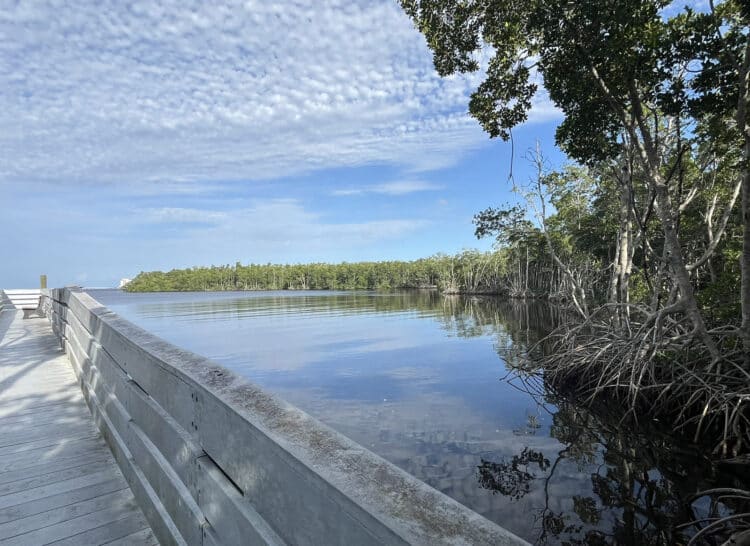
Four Mile Cove Ecological Preserve is directly across from Fort Myers in Cape Coral. It is a long shaded boardwalk through a thick mangrove forest. There are two spots where the boardwalk extends into the Caloosahatchee River for grand views. It’s free, well-maintained and there are restrooms. About 20 minutes from downtown Fort Myers, it is a good place for an hour of easy walking.
The only wildlife we spotted was a black racer snake (which is harmless) on the boardwalk, but I’m sure at the right time, such a great habitat also features birds and other wildlife. On weekends, you can rent kayaks to paddle on a trail through mangrove tunnels.
Four Mile Cove Ecological Preserve
2500 SE 24th St., Cape Coral, FL 33990
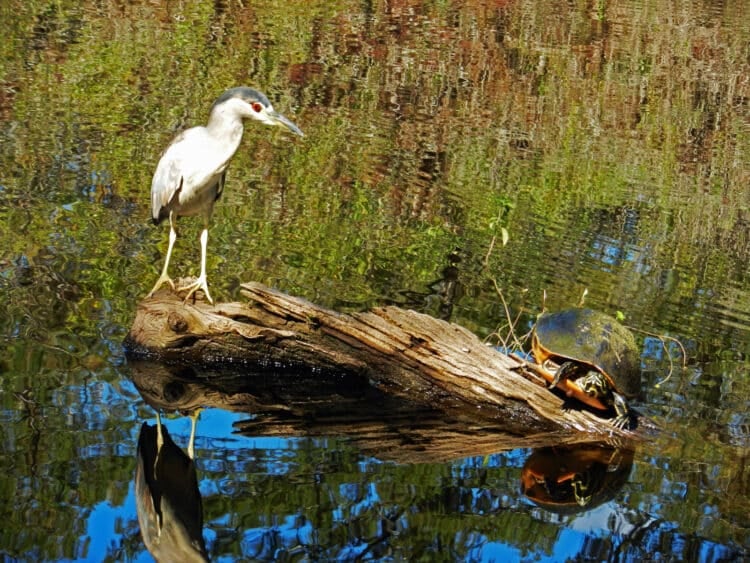
The Six Mile Cypress Slough takes you to a wide, slow-moving river that eventually empties into Estero Bay. In addition to saving a pristine cypress swamp, the Six Mile Cypress Slough serves as a natural corridor through which wildlife can travel. Along the boardwalk, you pass lakes (formed by dredging for nearby roads) where you might spot alligators. The cypress slough swamp is lush with a variety of ferns but the stars of the place are the gnarly old cypress trees, garlanded with airplants.
On our walk, we saw a gator, many turtles, herons, anhingas, cardinals and gar. Big, bright pileated woodpeckers are frequently seen, along with dozens of other types of birds.
You could stroll the boardwalk in an hour. But be warned: Once you enter the quiet, lovely world of Six Mile Cypress Slough, you will want to pause and linger. We meant to make ours a quick stop. Two hours later, we left promising to return and spend more time. The boardwalk has two loops with many benches and one spot set up as a blind for better wildlife viewing. More on Six Mile Cypress Slough from Florida Rambler.
Six Mile Cypress Slough
7751 Penzance Blvd., Fort Myers, FL, 33966
Fort Myers is a good base for several great kayaking locations
We’ve paddled on many waterways near Fort Myers, including a few places where visitors can rent kayaks. Lee County was one of the first Florida counties to establish a “blueway,” a series of kayak trails with markers and maps. Here’s more about the Calusa Blueway from Florida Rambler.
Here are several good kayaking options near Fort Myers:
Bunche Beach, described above in regards to its beach, is served by the friendly folks at Kayak Excursions. It’s an easy place to rent a kayak and follow a map for a self-guided tour, but you also can join a naturalist-led eco tour. The company has three locations. In addition to the Bunche Beach, we visited the Pelican Bay location at 18450 San Carlos Blvd., Fort Myers, because this is a place where a large flock of white pelicans likes to hang out in the winter. (And I love white pelicans.) Here’s more on Bunche Beach from Florida Rambler.
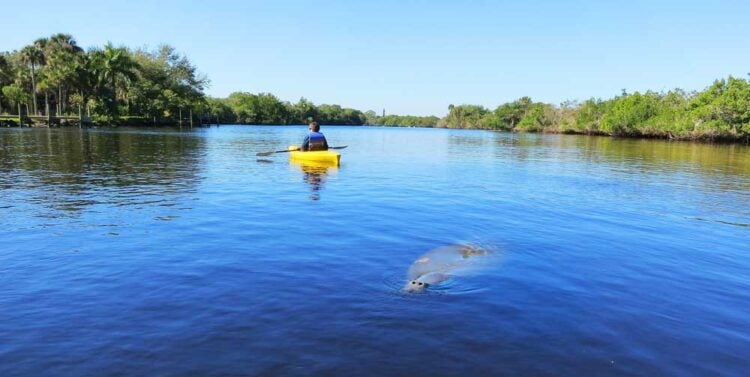
Manatee Park on the Orange River is near a power plant that discharges warm water, thus attracting manatees during winter cold spells. It’s a delight to kayak from here and have manatees approach your boat and be visible as they loll around in their spa. But the upstream paddle on the Orange River is also a gorgeous and peaceful route.
The brackish Orange River starts out wide and deep with pleasant scenery. As you paddle upstream, it gets narrower and the Old Florida ambiance grows, with live oak branches arching overhead fuzzy with airplants. After a few miles, the water is shallower and clearer and you begin to see small schools of fish. The farther upstream you paddle, the prettier it gets.
We saw a variety of heron and ibis with the real treat being a barred owl that flew across the river right in front of us and watched us from a perch in the woods. Another paddler told us to watch for an eagle that is frequently seen.
Calusa Blue Outfitters operate out of Manatee Park in the winter seven days a week from 9 to 5. Information: 239-481-4600.
More on Kayaking the Orange River at Manatee Park from Florida Rambler.
Manatee Park
10901 Palm Beach Blvd., Fort Myers, FL 33905
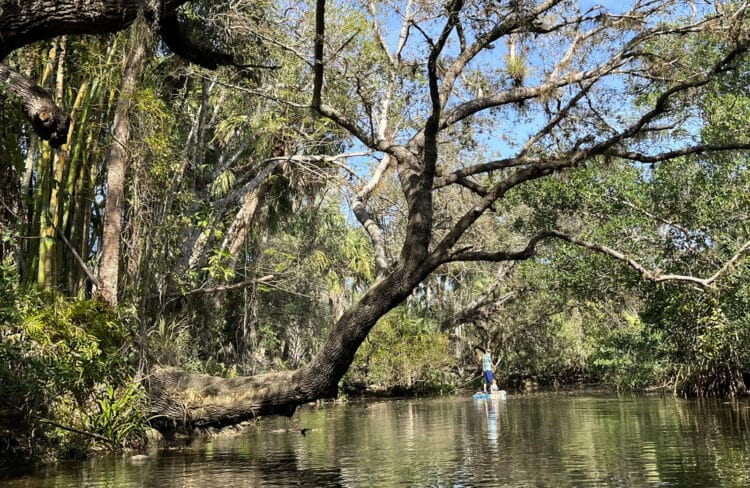
The Estero River upstream from Koreshan State Park is a beautiful two-hour round trip with magnificent arching oak trees and wildlife just a half hour from downtown Fort Myers. It offers the kind of Florida scenery I love — at first, mangroves hugging the banks of the narrow-ish river, then huge arching live oak trees shading our way, turtles sunning on the rocks and great blue herons fishing in the shallows. A highlight: We saw otters slinking in the mangroves along the shore.
If you don’t have a kayak, head for Estero River Outfitters, located right at the bridge where U.S. 41/Tamiami Trail crosses the Estero River. The shop is open seven days a week, even allowing you to launch as early as 7 a.m. Details: 20991 Tamiami Trail, Estero, esteroriver@gmail.com, (239) 992-4050.
Here’s more about paddling the Estero River from Florida Rambler.
Koreshan State Park is well worth a visit in its own right. It celebrates one of our earliest settlers who was a wacky eccentric who moved his cult here in 1894. Thanks to him, though, a lovely wooded site on the Estero River was preserved through the years for us to enjoy. There are guided tours, self-guided tours and 11 historic buildings. Here’s more about Koreshan State Park from Florida Rambler. (Koreshan also has an excellent campground, and sites are generally available a few weeks out.)
Koreshan State Park
3800 Corkscrew Road, Estero, FL 33928
Things to do near Fort Myers
- Lovers Key: Great beach, kayaking, manatees
- Mound Key Archaeological Park
- Barefoot Beach is on Southwest Florida’s wild side
- Estero Bay Preserve State Park, just west of Koreshan, has longer hiking trails.
- Corkscrew Bird Rookery Swamp Trail: Excellent for shady hiking with abundent wildlife.
- Kayaking Imperial River in Bonita Springs
- Shangri-la Springs, the site of the original spring in Bonita Springs, has beautiful grounds you are welcome to stroll, an organic restaurant that serves breakfast and lunch and a 1921 hotel with eight updated hotels rooms.
- Everglades Wonder Garden has survived since 1936. Now it’s a small but serene spot to enjoy glorious flora, colorful birds, gators and more. It’s located on Old 41 Road right on the Imperial River.

I have a winter home in downtown Ft Myers and really enjoyed your article. You enlightened me and reminded me of the beauty and interesting history of our area. Thank you!
Greetings! I’m from Wisconsin so I have little knowledge regarding the kayaking in Florida. It sounds like a very nice area to kayak however you don’t say a word about encountering alligators. We’re clueless up here as far as dealing with them but I know they’re there. Can you address that issue please? Otherwise your articles are very well done. Thanks! Dan
I’m a native Floridian and terrified of alligators. At age 12, I would not go with my family on a canoe trip in Georgia’s Okefenokee Swamp due to the gators there. My family survived that trip without incident.
Now in my 60s, yes there are lots of gators in most bodies of water in Florida. To my knowledge there have been no attacks by an alligator on a kayaker. They typically show no reaction when paddling by them but I always paddle as far away as possible when I see one!
Dan, the quick answers is that alligator attacks are extremely rare and when they do happen, the people are IN the water, usually at dusk or often with a dog present. I’ve canoed and kayaked in Florida waters with alligators for decades and universally, the alligators are shy, dipping or sometimes splashing under water to hide. On a popular kayaking route like the Estero River at Koreshan State Park, I bet the alligators hide after a few paddlers have passed during the morning and few are seen for the rest of the day. I wouldn’t take a dog (they DO look like prey to an alligator) and I wouldn’t approach an alligator or get unnecessarily close (why would you? You shouldn’t disturb any wildlife.) My husband and I have been on some narrow rivers where an alligator did not retreat immediately and we just waited for a while and it eventually did. If you are concerned about alligators, though, you can paddle in salt water. Alligators need fresh water, and thus a trip like the one I describe at Bunche Beach, through mangrove tunnels and along tidal flats, would rarely if ever have alligators present.
Thanks for visiting our site! I hope this is helpful.
PS Wisconson folks are the best! That’s where I grew up and learned to love the outdoors.
Makes sense. thanks for the update and all the work you do with this website !
Awesome article!