Naples is a very rich place. It is where Fortune 500 executives retire and by some accounts, it has one of the highest proportion of millionaires per capita in the U.S.
For lovers of the natural outdoors, Naples is also very rich.
It starts with spectacular beaches, but Naples also has one of the largest swaths of old-growth cypress that remains at Corkscrew Swamp Sanctuary and easy proximity to several state and national parks preserving Florida’s wildest lands.

The outskirts of Naples are home to the rare Florida panther and the Gulf waters teem with marine life, with dolphins, rays and all sorts of birds regularly viewed from the beaches.
Several nearby beaches are rated among the best in the nation and offer a variety of water-oriented activities. The area’s historic sites included here make good day trips.
In winter, Naples makes a good base for activities in the Everglades and the Ten Thousand Islands, the maze of mangrove islands that form the southwest coast of Florida below Naples. There is a great variety of places to kayak, hike, camp and some of the best places to get stone crabs during the season.

1. Explore small ‘secret’ beaches by bike
Bicycling is a great way to explore Naples and its older Gulf-front neighborhoods with their lush tropical landscaping and billionaire’s mansions.
These neighborhoods have a series of small beach-access parks. They have little or no parking and are designed for use by locals. But by bike, you can sample several of these “secret” beaches and find a stretch of sand and water to yourself.
Here’s a Florida Rambler story on biking and beach-hopping in Naples.
All the beaches in Naples are splendid, but historically the star has been the free fishing pier. A portion of the pier is open, but the larger structure was badly damaged by Hurricane Ian in 2022 and plans to rebuild it are advancing slowly. The Naples Pier was built in 1888 and has been rebuilt five times after hurricanes.
Located at the west end of 12th Avenue South off Gulf Shore Boulevard, it is a favorite place to watch the sunset.

The most popular and family-friendly beach in Naples is at Lowdermilk Park, which has ample parking, a concession stand that serves hot dogs and hamburgers, sand volleyball courts, two children’s playgrounds, picnic tables, benches plus restroom and showers. It’s at 1301 Gulfshore Blvd. North.
2. Ride the tide at Clam Pass Beach
Ready to explore? Try Clam Pass Beach. It qualifies as one of the “secret places” in Naples, Florida, that is off the beaten path.
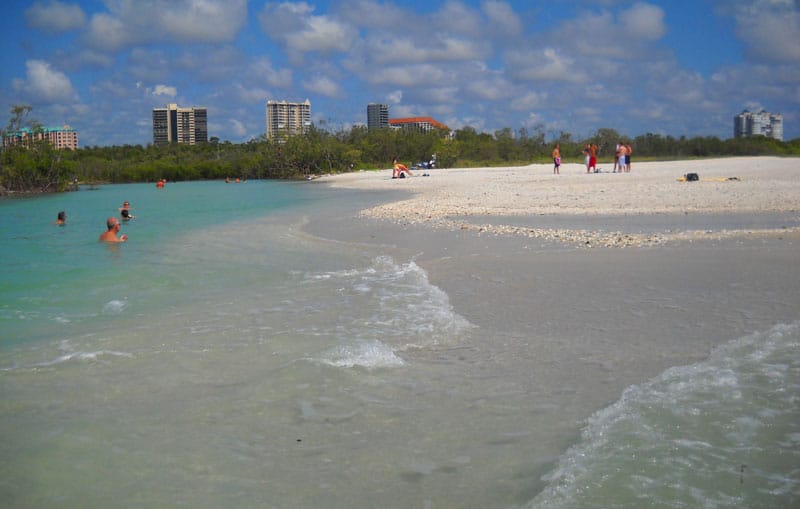
First, just reaching it is an adventure: You can walk or take a free tram from the parking lot down a three-quarters-mile long boardwalk through a mangrove forest. Then, from the shady mangrove tunnel, you emerge to a beach with sand that is blindingly white and water impossibly turquoise.
The pass itself is a narrow river-like opening in the mangroves, shallow enough an adult can stand at the center except at the highest tide. If you hop into the waters of the pass, you are gently swept away by the tide. If the tide is coming in, you float into a shallow mangrove-fringed lagoon. If the tide is going out, you float out into the Gulf, which remains shallow for a great distance. It’s a natural “lazy river” adventure, where the pull and depth of the water is safe but still fun. Located at Seagate Drive and Crayton Road.
Florida Rambler story on visiting Clam Pass Park.
3. Snorkel at Delnor-Wiggins Beach State Park
Delnor-Wiggins Pass State Park is a great destination: You can enjoy so many activities in one place – kayaking, surf-fishing and a one-mile-long powdery-white sand beach.
The beach is a rare Gulf Coast spot where snorkeling is popular. There is a hard bottom reef that runs parallel to the beach near parking areas one and two. It’s in about 8 or 10 feet of water.
Delnor-Wiggins was hit by hurricanes repeatedly in recent years. It reopened in early 2025 but still does not have all its amenities. People still flock here for the spectacular beach. Florida Rambler story on Delnor Wiggins Pass State Park.
Nearby, directly across the pass on the north end of Delnor Wiggins is another great beach — Barefoot Beach in Bonita Springs, once proclaimed the second-best beach in America by the professor who goes by the name Dr. Beach.
Though it’s easy to reach, Barefoot Beach makes you feel miles away from highways and highrises. It’s one of the last undeveloped barrier islands on Florida’s southwest coast. You may find sand-dollars, shells or spot a bottle-nosed dolphin in the water in the distance. Gopher tortoises and their burrows are plentiful along the nature trail that runs between the sand dunes and the hammock. It’s located on Barefoot Beach Road off Bonita Beach Boulevard.
Still looking for a fresh beach to explore? South of Naples, Tigertail Beach in Marco Island is a pristine sand spit with great birding. You wade across a lagoon to reach the beach.
4. Visit the spectacular Naples Botanical Garden
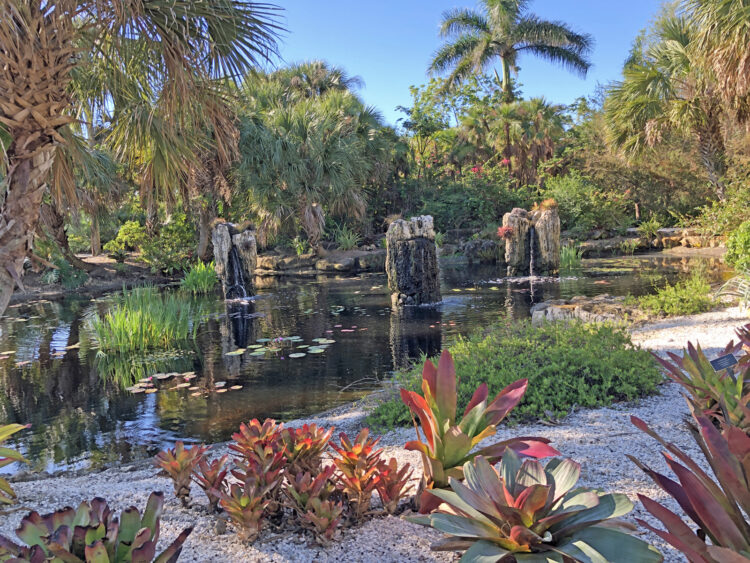
Ever-changing yet always stunning, there is something special to see at the Naples Botanical Garden at every time of year. As you enter, you are greeted by a lush landscape with plenty of color from bromeliads and other plants, a water-lily-studded pool dappled with sunlight coming through palm fronds and the soothing sound of water falling. The attraction features eight garden areas and two natural preserves within its boundaries.
Here’s a Florida Rambler story on the Naples Botanical Garden.
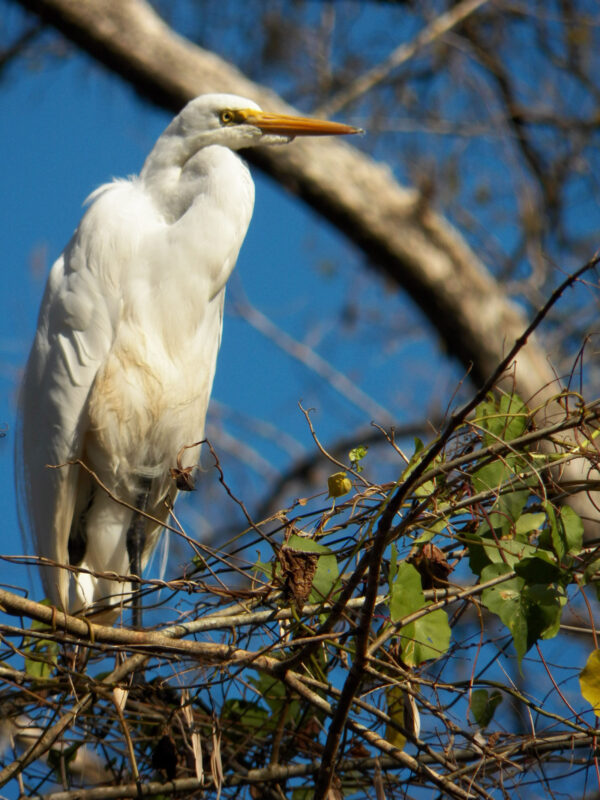
5. Experience one of the last virgin cypress swamps at Corkscrew Swamp Sanctuary
One of the most exquisite parcels of land that has been preserved in Florida is found about 15 miles east of Naples — the Corkscrew Swamp Sanctuary. Its 2.25 mile boardwalk takes you into a green and liquid world where at every turn you see scenes so beautiful they could have been arranged by the world’s best floral designer. Birds, gators and all sorts of flora (including rare orchids) can be seen along the boardwalk.
I’ve visited Corkscrew Swamp both in winter and summer, and have found it to be a beautiful and quiet place, where you can hear a rustle in the brush that signals a snake’s movement.
In August, the very rare ghost orchid (famous from the Meryl Streep movie, Adaptation) blooms and can often be spotted. (Here’s our story about the ghost orchid.)
Don’t be afraid of a summer visit. The boardwalk is largely shaded and the gambusia fish eat mosquito larva, so the bugs aren’t bad. For those who do not wish to walk the full 2.25 miles, an optional trail shortens the walk to one mile.
Admission is $17 for adults. The address is 375 Sanctuary Road West.
Here’s a Florida Rambler story on Corkscrew Swamp Sanctuary.
6. Cruise on the Gulf on a shelling boat trip
With so many waterways, Naples is a great place to take a boat tour, and there are several. We enjoyed the shelling trip aboard a large catamaran Sweet Liberty. It’s three hours and you spend about an hour on Keewaydin Island, the largely undeveloped barrier island just south of Naples.
In winter, we’ve also enjoyed a sunset cruise to see bird rookeries from the Southwest Florida Nature Conservancy.
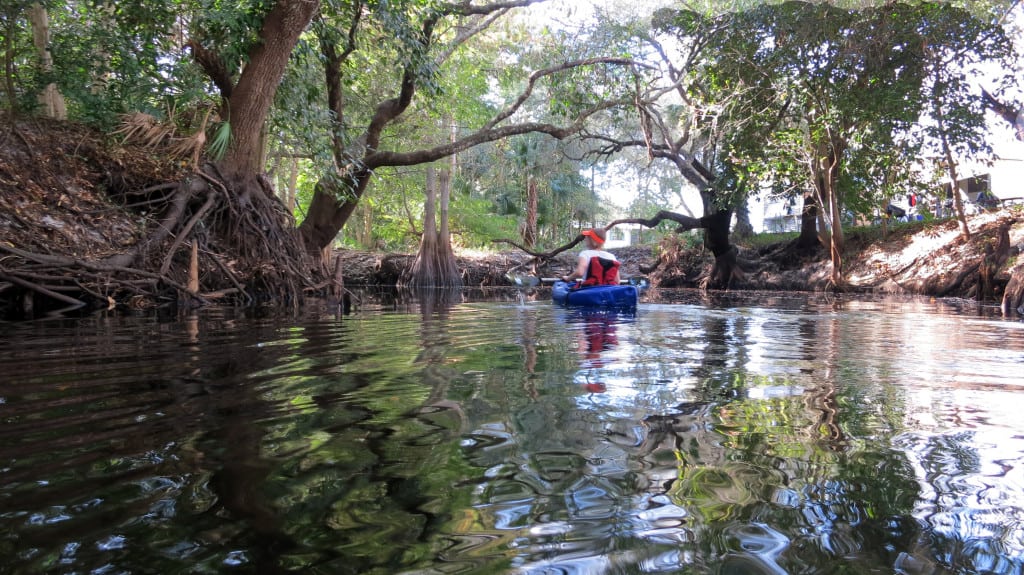
7. Kayak through old Bonita Springs on the shady Imperial River
Near Naples is Bonita Springs, where you will find a delightful well-shaded kayak trip through Old Florida scenery.
The Imperial River sounds rather grand, but it is actually a shallow river that flows under a canopy of oaks and pines, narrowing into a twisty cypress-lined creek as it gets too shallow to paddle near its headwaters.
The tea-colored water is clear and the bottom is sandy at spots, allowing visibility to see fish, turtles and, if you’re lucky, manatees. (We were lucky on a March visit.)
A kayak and SUP rental company operates on the river in downtown Bonita Springs.
Here’s a Florida Rambler story on paddling the Imperial River.
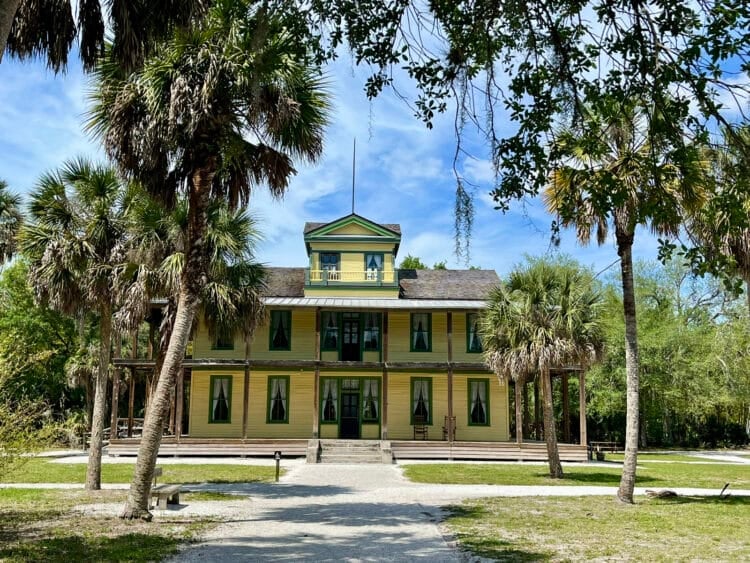
8. Learn some wacky history at Koreshan State Park
Florida’s wierdness goes back to its first settlers, and Koreshan State Historic Site celebrates one of our earliest eccentrics. Thanks to this cult leader, though, a lovely wooded site on the Estero River was preserved through the years for us to enjoy.
The walking tour of the grounds and buildings tells the story of Dr. Cyrus R. Teed, who led the utopian community that eventually attracted 200 followers. They were an industrious group, operating a bakery, sawmill, printing facility, even a restaurant and hotel on the main road, U.S. 41.
Today Koreshan State Park offers great natural beauty. Sprawling along the lovely Estero River, there are gardens and exotic bamboo forests left over from the community’s beautification efforts, 11 historic buildings and attractive, shaded picnic sites and an excellent campground.
Several of the historic buildings are open.
Florida Rambler story on visiting Koreshan State Park.
9. Take a day trip along the Tamiami Trail to Clyde Butcher’s Studio
When you’re ready for a visit to authentic Old Florida, take a daytrip from Naples south into the Everglades.
Without hiking, you can get a taste of the Everglades driving the Tamiami Trail. The main artery through Naples, the Tamiami Trail continues into the Everglades as you take it south and east. It gets you close to Everglades scenery and offers several stops along the way.

One destination should be Clyde Butcher’s Big Cypress Gallery, 52388 Tamiami Trail. Butcher is a world-renown photographer whose large-scale black-and-white photos are designed to make viewers feel like they are at the center of the photo. Butcher’s studio overlooks a scenic pond, frequented by alligators and wading birds.
The photographer’s studio is very close to the entranceway off the Tamiami Trail to the controversial detention center called Alligator Alcatraz.
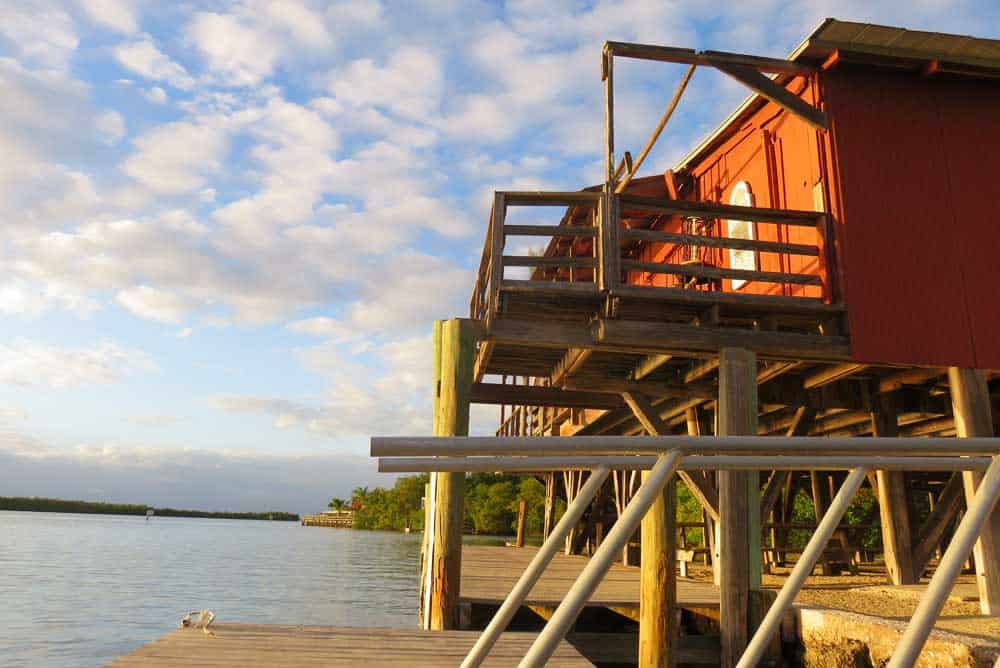
10. Discover Everglades City and the visit Historic Smallwood Store
About an hour south of Naples, the Tamiami Trail and then County Road 29 take you to the island that is Everglades City and then ends altogether in another remote island, Chokoloskee.
Everglades City is a small fishing town about 35 miles south of Naples. Dozens of fishermen are based on its Barron River, and so are several informal, unpretentious seafood restaurants. (The town is very seasonal, so not all restaurants are open in summer.)
It’s a picturesque little town, with a historic city hall that has survived terrible hurricanes that have flooded this town repeatedly over the decades.
A great thing to do in the summer is visit the very professionally done Museum of the Everglades, which is free and air-conditioned. I learned all kinds of things about the building of the Tamiami Trail and the people of the Everglades.
Here’s a Florida Rambler story an itinerary in Everglades City. (In winter, Everglades City is a good base for visiting the national parks and preserves in this region.)
If you keep driving on Route 29, you reach Chokoloskee, the end of the road on Florida’s west coast. Here you’ll find Historic Smallwood Store, a general store that is now a museum. It’s open in the summer and admission is $5.
Smallwood Store opened in 1906 when Chokoloskee was the Wild West and Ted Smallwood was a pioneer. This wooden building was an Indian trading post, post office and general store. It’s still owned and run by Ted Smallwood’s family.
Here’s a Florida Rambler story on Historic Smallwood Store.
Beyond our top 10 list: More things to do in Naples
We’ve grouped a few more things to do that are probably better experienced in the winter, although on a cloudy day wearing mosquito repellent, you could have an excellent time doing these.
Enter the Everglades and hike
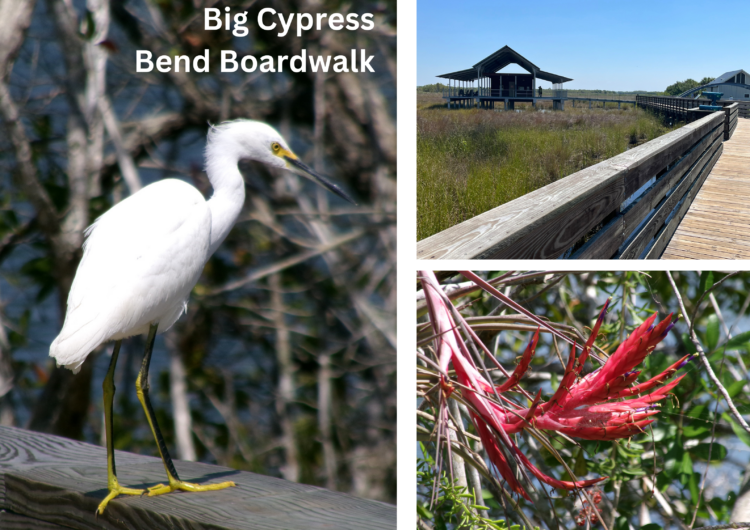
Fakahatchee Strand Preserve State Park — the biggest state park in Florida — is a vast, wild place near Everglades City, about 25 miles southeast of Naples. It’s a great place to immerse yourself in the Everglades and you can hike for miles here on old logging roads with good possibiities for seeing wildlife.
Fakahatchee includes the Big Cypress Bend Boardwalk.
Here’s a Florida Rambler story on Fakahatchee and the Big Cypress Bend Boardwalk.
The Gordon River Greenway
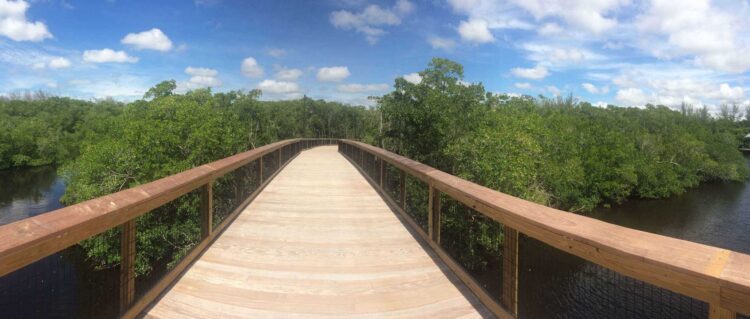
In the heart of Naples, a 2-mile-long boardwalk and trail through wetlands connects several natural spots. The free Gordon River Greenway opened in fall 2014. Park at 1590 Goodlette-Frank Road in the joint parking lot between Naples Zoo and the Conservancy of Southwest Florida.
The trail is designed for walkers and bicyclists and has wildlife viewing stations, benches, educational signs and restrooms. You also can launch kayaks here.
A National Historic Engineering Landmark at Collier-Seminole State Park
As you head into the southwest corner of Florida, the world gets wilder and wetter. Vast stretches look like thickly forested land, but they’re actually mangrove swamps, impenetrable except by boat. Collier-Seminole State Park, 17 miles south of Naples on the Tamiami Trail (SR 41), preserves 7,271 acres of this Florida wilderness.
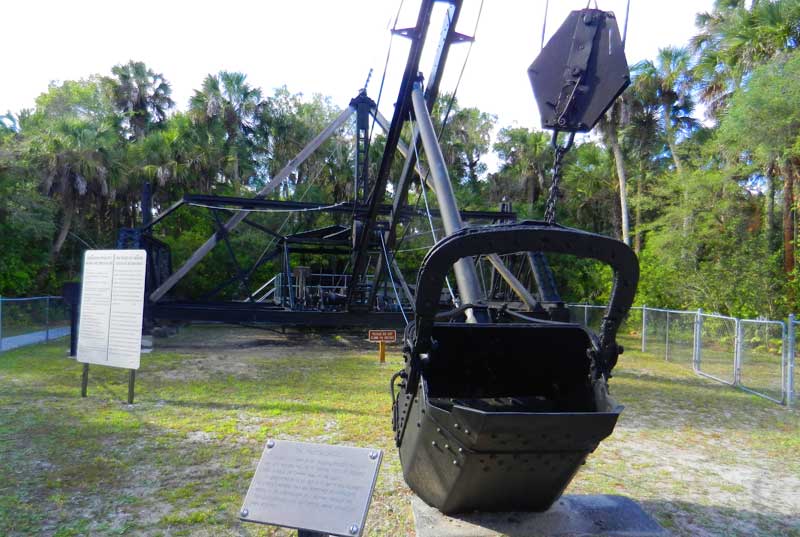
Collier-Seminole State Park draws people who love the natural Florida for camping, hiking and paddling. It’s also home to the 1924 Bay City Walking Dredge, and how often do you get to visit a “National Historic Mechanical Engineering Landmark”? The hulking dredge was used to build the first road across the Everglades, a feat many doubted was possible. The signage at the dredge tells its interesting history.
Note: Mosquitos can be fierce here May to October. Here’s more about Collier-Seminole.