
Last updated on November 14th, 2025 at 09:04 am
High Springs, FL –– A few miles northwest of Gainesville, the Santa Fe River runs deep, disappearing into a sinkhole at O’Leno State Park and re-emerging three miles downstream in another state park, aptly named the River Rise Preserve.
This unique characteristic was destined to be preserved in a region populated with sinkholes and bubbling springs, leading O’Leno State Park to be developed into one of the state’s first state parks by the Depression-era Civilian Conservation Corps.
The historic nature of the park is everywhere you look, from the original camping cabins and dining hall to the old swimming hole and picnic areas frequented by local residents since the early 1900s.
The Corps developed the park as a training camp for the state’s fledgling Forest Service, becoming one of the original nine Florida State Parks in 1940, all of which were built with the help of the CCC.
Besides a popular swimming hole, historic buildings, multiple campgrounds and a kayak launch, O’Leno State Park features 11 miles of multi-use trails for hiking and off-road cycling, connecting to another 35 miles of multi-use trails in the River Rise Preserve.
Hiking in O’Leno State Park
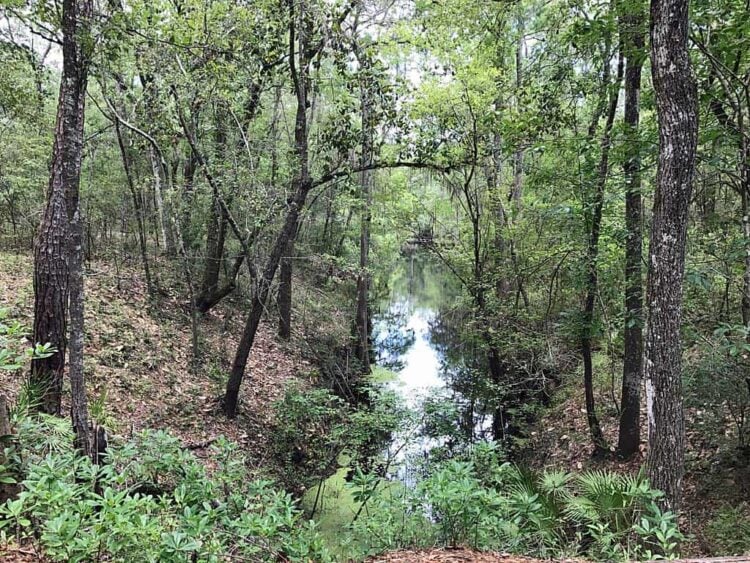
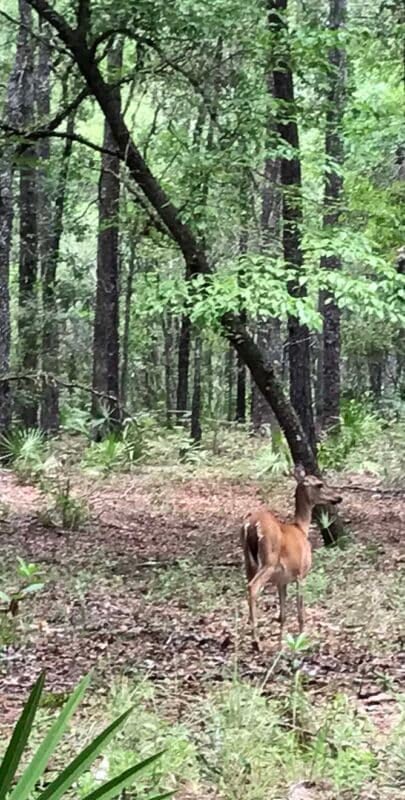
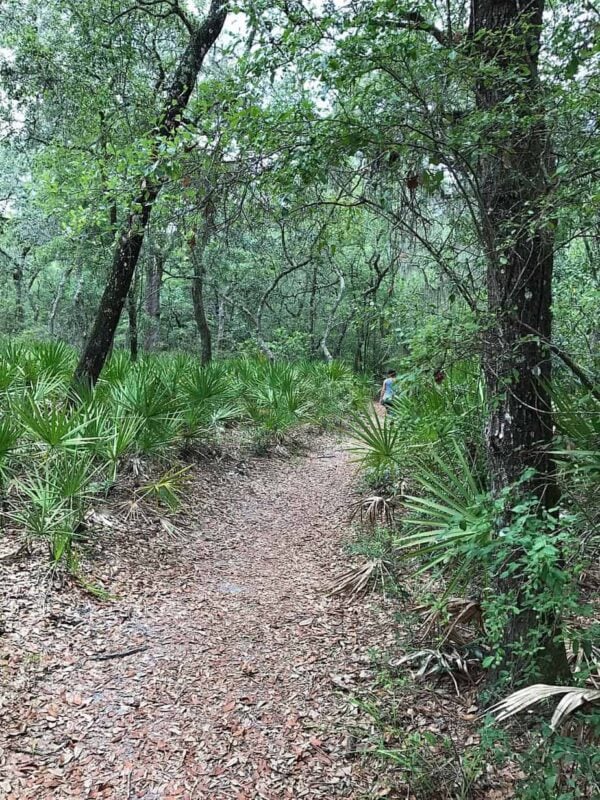
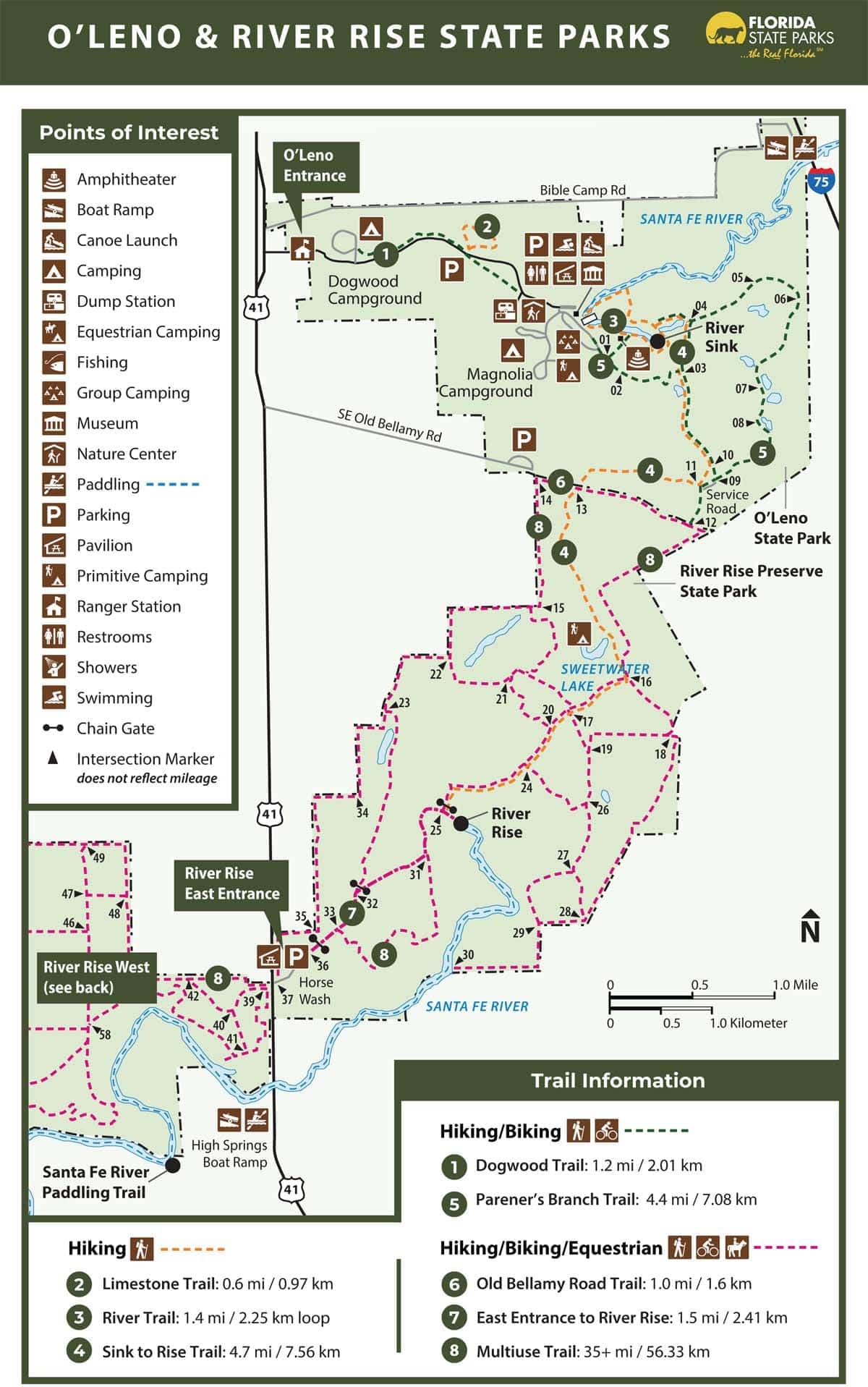
The 1.3-mile River Trail is the most direct route to the river sink, where the river disappears, but you may also want to consider the 4-mile-long Parener’s Branch Trail, which will take you along a series of small lakes that pop out of the ground without warning.
These lakes have a slight current and are part of the underground Santa Fe River system, giving them a unique distinction of having no surface inflow or outflow. Underground, the Santa Fe is also feeding the Floridian aquifer, from which most Florida residents get their water.
These trails also introduces you to a series of natural levees that were carved out of landscape by flood waters, as if planned by Mother Nature as protection against future flooding.
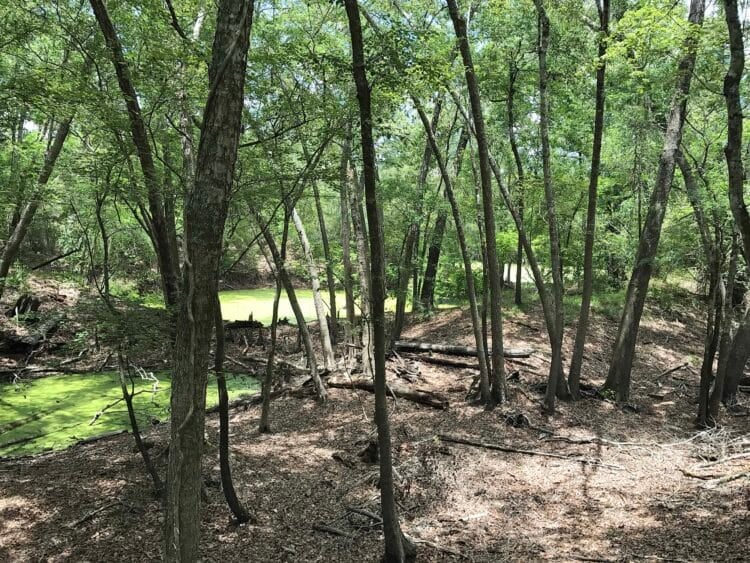
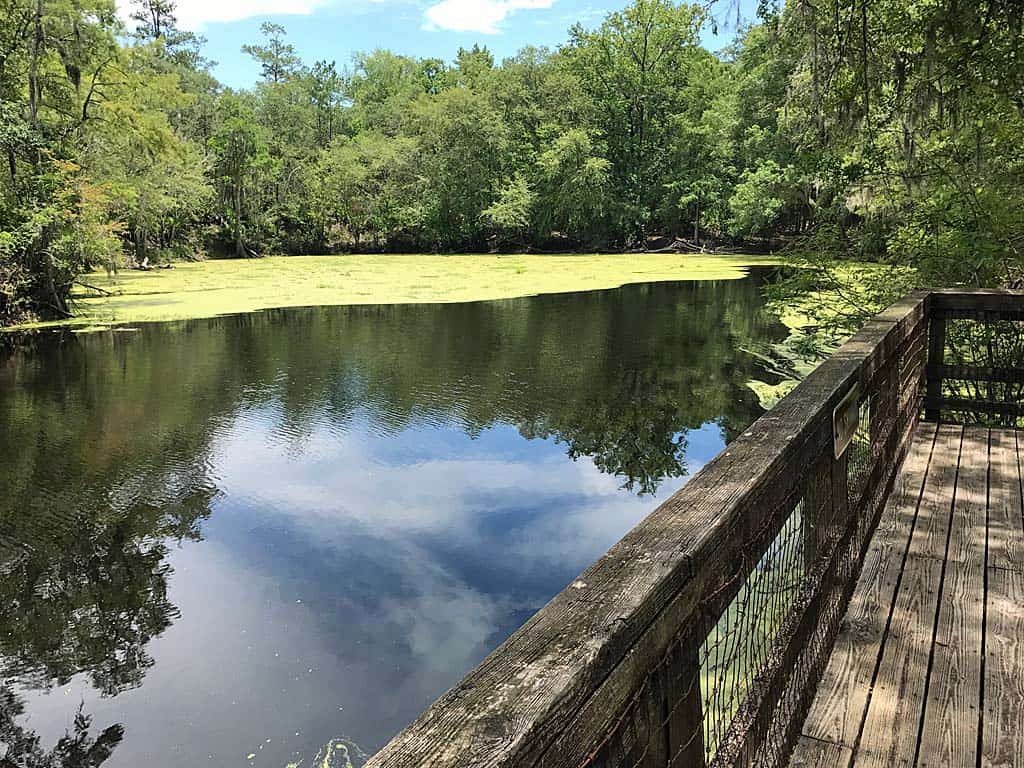
The prize, of course, is the pond where the river disappears. When the water is low, it’s hard to tell, but after a heavy rain, you can see the swirl as the river seeks its escape. The day we were there, the water was low and the swirl indistinguishable, unfortunately.
More adventurous hikers and off-road bicyclists may want to tackle the multi-use Sink-To-Rise Trail, a five-mile journey that will take you into the River Rise Preserve State Park.
Once in the preserve, you can connect to a network of multi-use trails that cover an additional 35 miles. Most of these trails are shared with equestrians, whose horses can access the trails from the River Rise Preserve East Entrance on U.S. 441/41. (see map lower in this story.)

The park’s historic wooden suspension bridge built during the Depresssion is currently closed due to storm damage. The park’s swimming area, which is next to the bridge, was open when we last checked. (Photo by Bob Rountree)
There are three gated entrances to the preserve. The gate you want to access the trail to the River Rise is off US 41 / 441, south of the entrance to O’Leno State Park and north of High Springs.
The second entrance is on Bellamy Road, north of the US 441 entrance. A third entrance, off US 27, allows access to the west portion of the River Rise trail system and equestrian camping.
You must visit or call the O’Leno State Park ranger station at (386) 454-1853 to pay entrance fees ($5 per vehicle) and obtain the gate combination to enter River Rise Preserve from either U.S. 441/41 or U.S. 27.
Swimming and kayaking
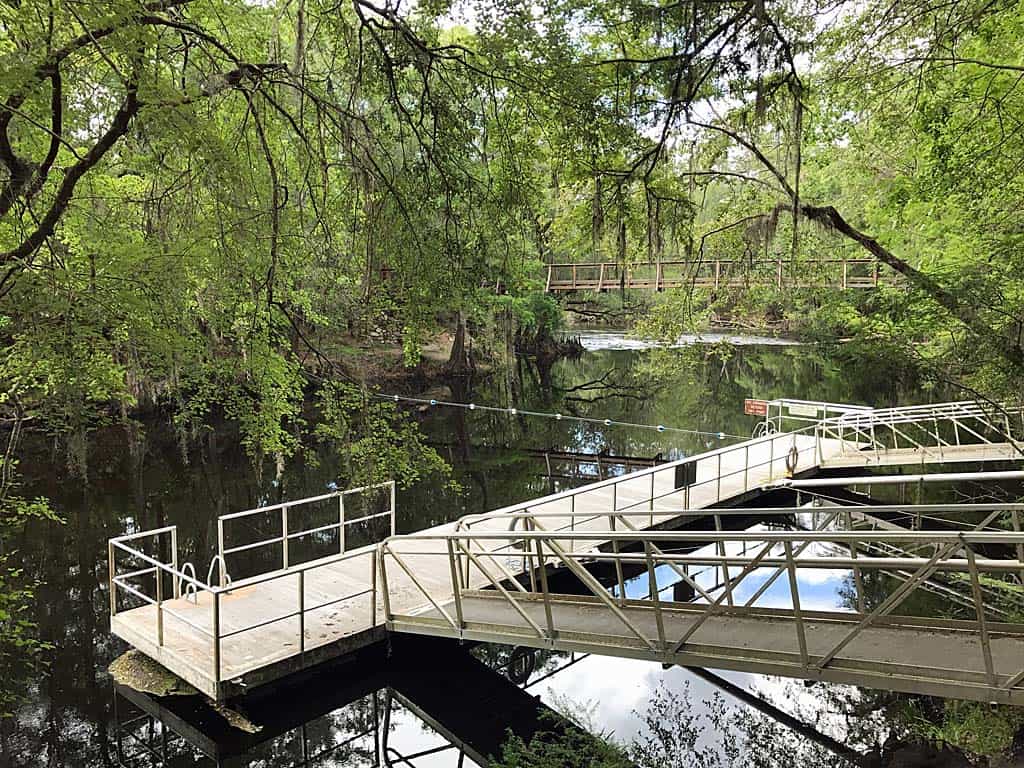
O’Leno State Park has a designated swimming hole near the suspension bridge that is popular in summer. There are no lifeguards, and the swimming area is closed in winter.
This is a finicky section of the Santa Fe River that experiences substantial changes to the water level. As a result, swimming and kayaking conditions change quickly. Visit the park’s website or call the ranger station at 386-454-1853 for updates.
There are two canoe/kayak launches with access to the northern, upriver leg of the Santa Fe River. One is accessible from the park’s main parking lot. You must paddle upriver and return from this launch. The swimming hole is downriver and off limits to kayaks and canoes.
A second launch is accessible from Bible Camp Road, off Sprite Road, north of the entrance of O’Leno State Park. Paddlers launching here may explore upstream outside of the park and then back downstream into the park, as far as the swimming area.
Paddling below the River Rise
You cannot launch a kayak or canoe inside the River Rise Preserve, but you can launch outside the park and paddle back upstream.
But the real paddling adventure, and the most picturesque, is downstream from the boat ramp. The river moves downstream at a decent pace for another 26 miles to its junction with the iconic Suwannee River, fed by more than a dozen significant springs.

Those who have their own downriver shuttle plan, or expect to paddle upstream to the River Rise, there is a free public boat ramp and kayak launch at the Santa Fe Canoe Outpost Park next to the bridge over the river on U.S. 441/41.
READ MORE: Florida Rambler’s Bonnie Gross wrote about her paddle on the river in this story: Kayaking Santa Fe River: Springs & scenery make it a treasure
Spacious, wooded campground

The first thing my wife and I noticed upon arrival was how spacious and inviting was the campground.
But access to the sites, especially in the Dogwood Campground, was a little tight. We didn’t have any trouble navigating our 25-foot travel trailer through the Magnolia Campground, but I could definitely see a few tricky maneuvers that would have been required in Dogwood Campground.
The individual sites in both campgrounds are outstanding with lots of privacy afforded by low growth and dense forest offering plenty of shade.
“I love the trees!” was my wife Kathy’s first comment as we were setting up camp.
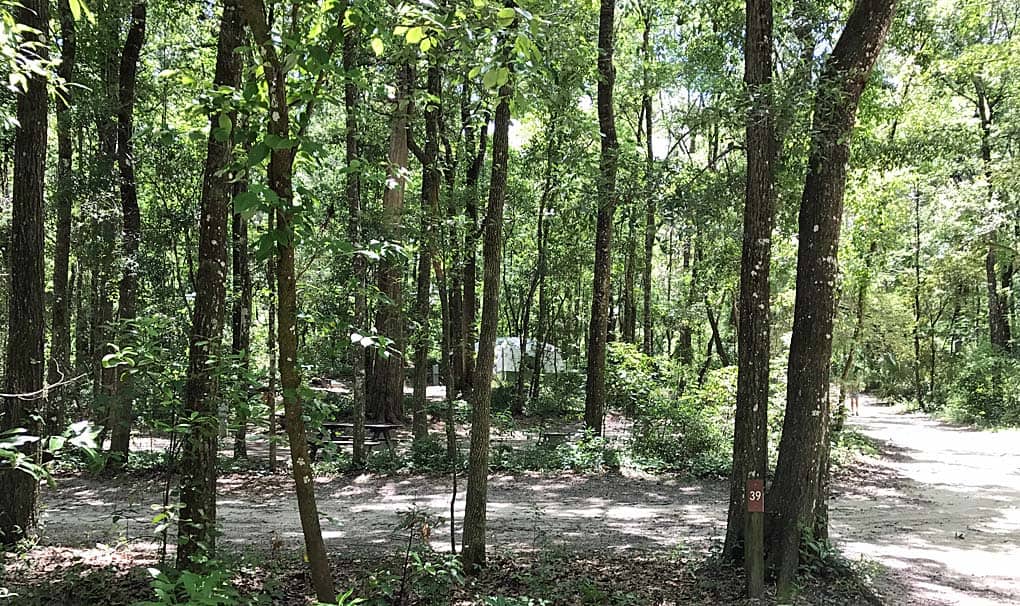
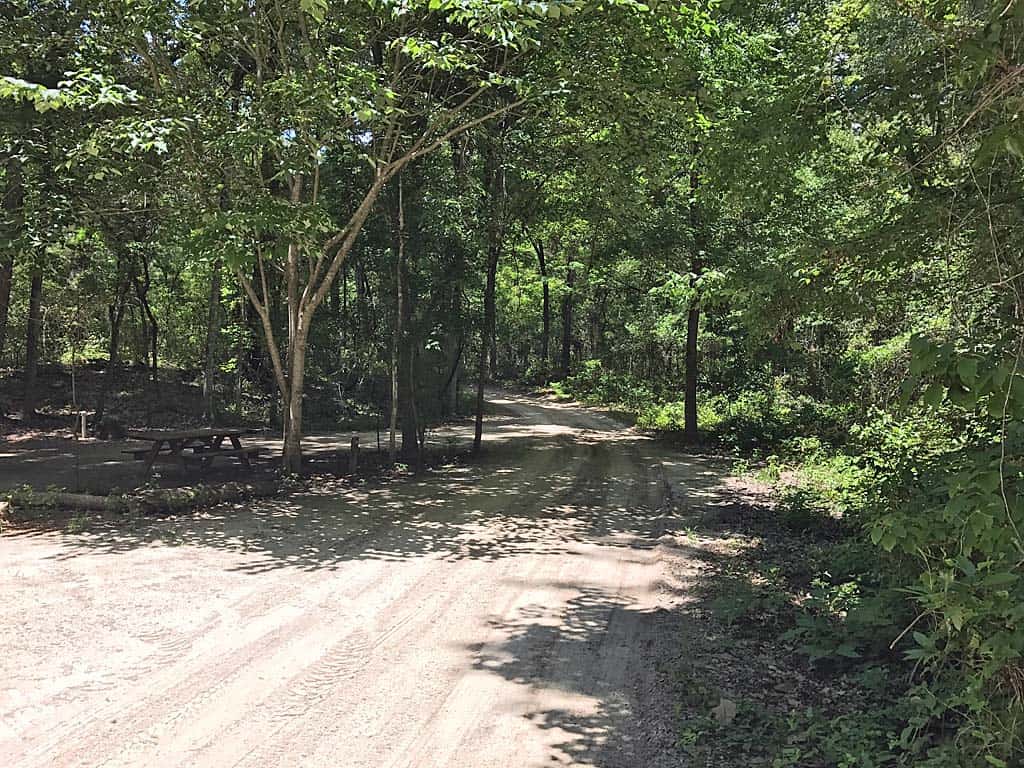
The forest consists of a variety of hardwoods, including tall (but not sprawling) oaks peppering the forest, both in the campground and elsewhere in the park.
There are about 60 campsites at O’Leno — 27 in Magnolia, 26 in Dogwood and 5 tent sites — all with water and electric hookups, in-ground grills and picnic tables with centrally located bath houses. Two sites are handicap accessible, site 4 in Magnolia and site 47 in Dogwood. There is a dump station in the campground.
Backpackers can hike three miles to primitive lake camping deeper into the park.
Hammocks are allowed in sites 33, 34, 37, 39, 40, 42, 50, 52, 53, 54, 55, 57, 58, 59, 61. Pets are allowed (on a leash) throughout both campgrounds. A dump station and trash dumpsters are located off the main park road.
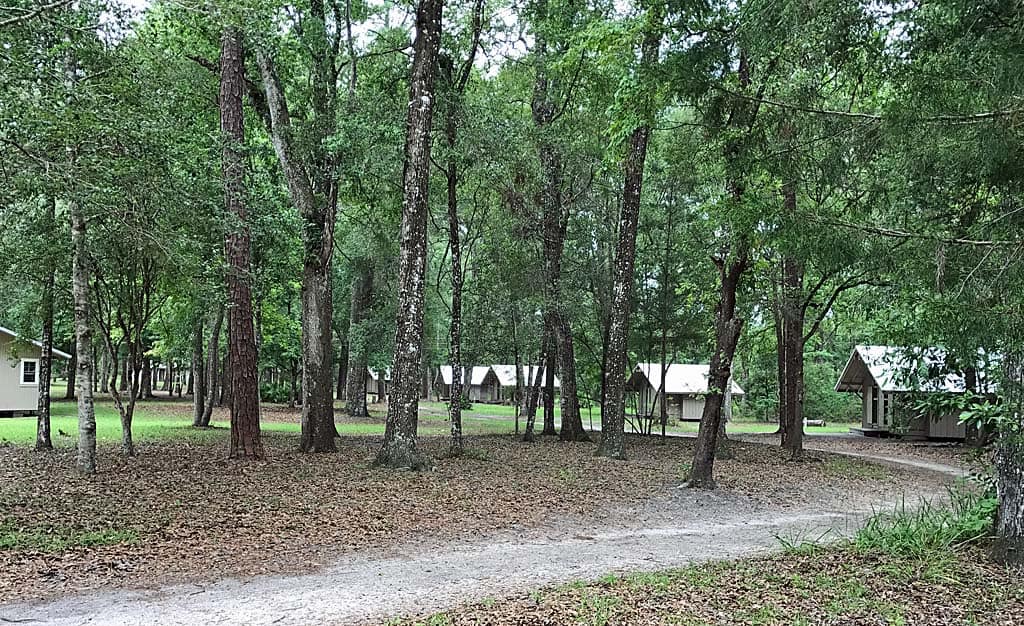
O’Leno has 16 historic cabins intended for groups but available to individual campers when they are not reserved for groups. This is a great option for large families.
The cabins vary in size and include a bunkhouse style that sleeps 6-8 (bathrooms in separate building) as well as two-bedroom cabins with bathrooms and kitchens. None of the cabins have air conditioning or heat.
Between 1935 and 1936, the Civilian Conservation Corps cleared land, built roads and trails, and constructed many of the buildings found in the park today, including the camping cabins. A small museum dedicated to the history of the CCC is located in the cabin area. Open 9 a.m. to 3 p.m. daily.
O’Leno State Park, 410 SE O’Leno Park Road, High Springs, FL 32643. Phone: 386-454-1853. Pets are OK and alcohol is permitted within the confines of your campsite. 60 RV sites with water and electric hookups. Day-use admission: $5 per vehicle. Camping rate for RVs: $18 per night plus a daily $7 utility fee. For reservations, Florida residents can reserve sites up to 11 months in advance, non-residents up to 10 months in advance, by booking online at reserve.floridastateparks.org, or call 800-326-3521.
Rent a Cabin: $25 to $150 per night plus $7 utility fee. Contact the ranger station directly at 386-454-1853 for availability and to make reservations. Primitive Backcountry Camping: Fees for backcountry primitive sites are $5 per person per night and must be booked in person at the ranger station.
Related links:
- O’Leno’s campground is popular with visitors to Ichetucknee Springs State Park.
- Camping also available along the Santa Fe River at Gilchrist Blue Springs State Park.