
Last updated on June 26th, 2026 at 11:29 am
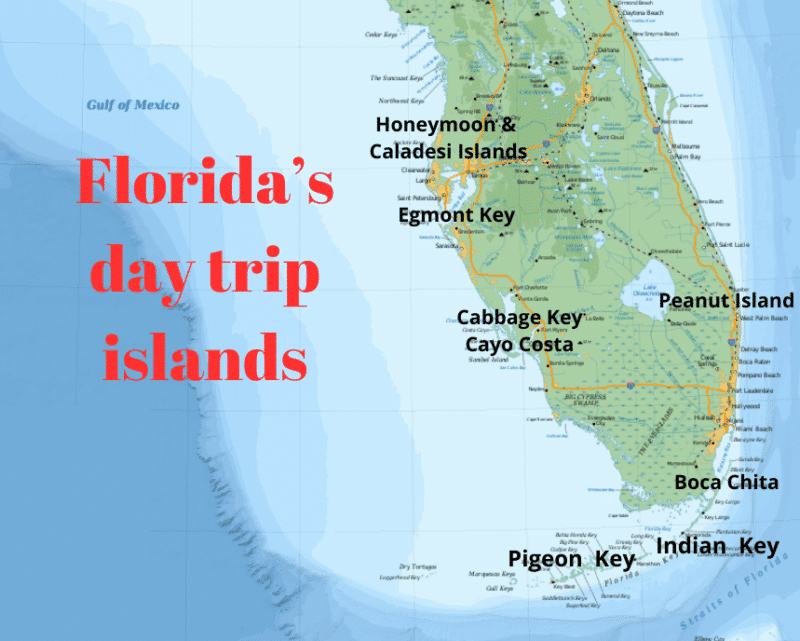
Few destinations are as intriguing as islands, and Florida has plenty — 4,510 islands that are 10 acres or larger.
Many of them are simple green patches of mangroves, but a few are places with interesting histories, distinctive structures, gorgeous scenery or specacular sandy beaches. Some have all four of those things!
There are some islands where you can book a room in an Airbnb or resort and spend a glorious week Sanibel, Islamorada, Anna Maria Island or Amelia Island, for example.
Then there are less developed islands without hotels and traffic, which make great day trips. Some you reach by boat or kayak only. Some offer camping or lodging. Each of them can bring you a fascinating day of escape. If you want more details about each of these islands, there are links to full stories on each from Florida Rambler.
Boca Chita in Biscayne National Park south of Miami
Biscayne National Park is unique – it’s 95 percent underwater. Located off Homestead south of Miami, the park includes 42 islands. Most are reachable only by private boat and most are too far for kayakers to safely reach.
One of the most popular activities in the park is the excursion by boat to Boca Chita Island, located about nine miles off the coast, reachable in about an hour.

We loved the trip because you travel over the dazzling turquoise waters of Biscayne Bay to stop briefly on an island that was designed to be a rich man’s paradise. The island has a small rocky beach and a decorative lighthouse you can tour (built by the businessman who owned the island.) It’s listed on the National Register of Historic Places.
Why we think it’s worth visiting: It’s a beautiful boat ride and the island’s history (including a 1748 cannon) is fascinating. This island is actually one of the northernmost islands in the chain we call the Florida Keys.
Here’s a Florida Rambler story about Boca Chita and the national park.
Camping: If you arrive on your own boat and reserve ahead, you can camp here at a primitive campground with no showers, sinks or drinking water. There is also camping in Biscayne National Park at Elliott Key. Camping details.
Cabbage Key and Cayo Costa in the Pine Island Sound off Fort Myers
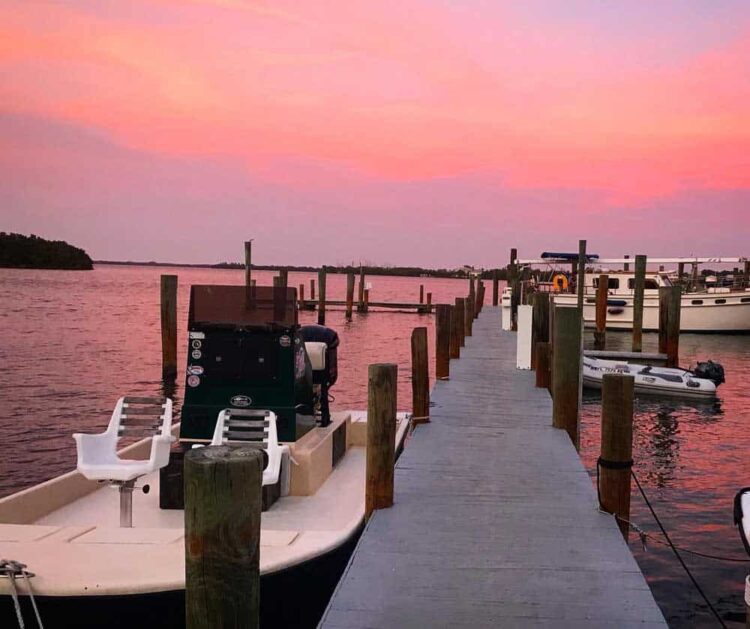
Cabbage Key is a privately owned island, home to the historic Cabbage Key Inn. Owned by the Wells family for almost 50 years, the 100-acre island can be visited on a luncheon excursions from marinas in nearby Captiva and Fort Myers.
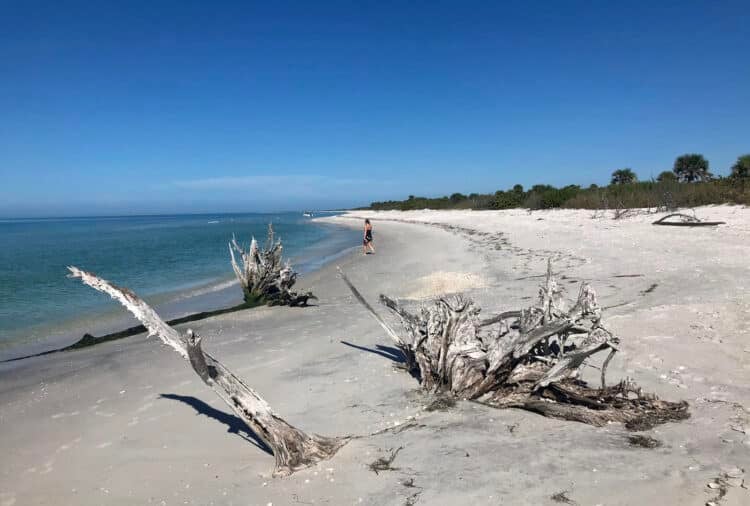
Immediately west of Cabbage Key, Cayo Costa is a state park that preserves nine miles of pristine beaches. It is and always has been accessible only by boat. The park once had a beloved campground and rustic cabins, which washed away in Hurricane Ian in 2022. Today, you can only visit the island from 8 a.m. to 4 p.m. and two companies offer day trips for visitors.
Most people visit Cabbage Key on boat excursions that include lunch at the Cabbage Key Inn. On these excursions, you’ll get a view of Pine Island Sound and pass other historic islands, including Useppa, a historic island that is home to an exclusive private club, and a few fishing shacks on stilts.
We were lucky enough to stay two nights at the Cabbage Key Inn, and we got to enjoy the island’s charms by being there before and after the lunch crowd. We used it as a base for kayaking the area, including visiting Cayo Costa.
In the golden evenings when only those staying on Cabbage Key and a few visiting boaters were around, we loved sitting at the iconic Dollar Bill Bar, papered with more than $70,000 in signed dollar bills from patrons, including Jimmy Buffet and Jimmy Carter.
Why we think it’s worth visiting: Cabbage Key is one of a kind – historic, scenic, home to gopher tortoises and wading birds, and full of interesting stories. (The original owner of the island was a famous mystery writer of the early 20th century.) Cayo Costa is one of the most beautiful and wildest beaches you’ll find in Florida.
Here’s a Florida Rambler story about Cabbage Key and one about Cayo Costa.
Egmont Key in Tampa Bay
If you like visiting crumbling old forts or ghost towns in a jungle, as I do, then Egmont Key makes a splendid day of adventure.
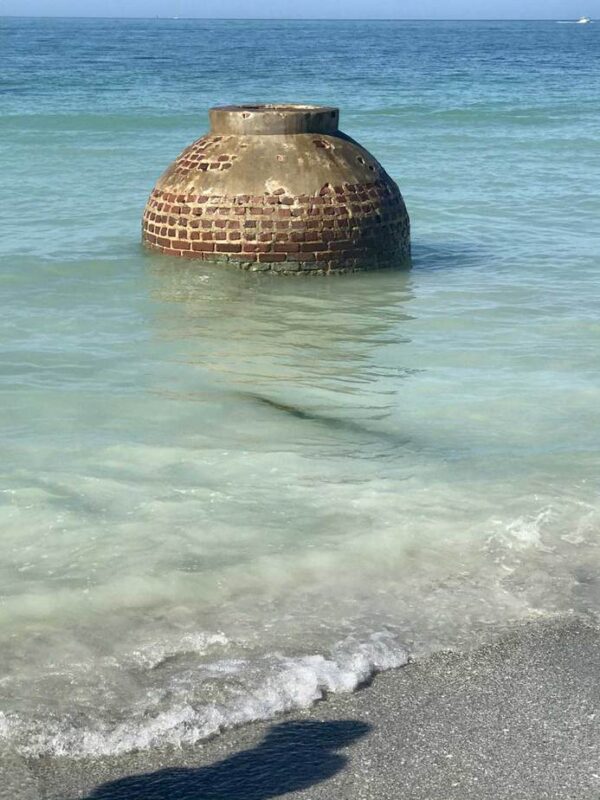
This 275-acre island is located in the mouth of Tampa Bay, a mile and a half out from St. Pete Beach. It’s composed of Egmont Key National Wildlife Refuge, which is an important habitat for 25,000 nesting pairs of gulls, terns and other birds, and Egmont Key State Park, which preserves the romantic ruins of Fort Dade and its historic red brick roads.
In the 1910s and ’20s, the island was a bustling fort outpost with 300 residents, electricity, telephones, a hospital, a jail, a movie theater, a bowling alley and tennis courts. Much of it is gone; what’s left are foundations and ruins.
It’s a popular destination for people arriving both by ferry and private boat. (Kayaking there is for experts only.)
There are no amenities, including restrooms, so visits are only a few hours long, enough time for a tour, a picnic and a swim.
You can visit via a ferry from either St. Petersburg’s pier area or Fort DeSoto Park.
Why we think it’s worth visiting: We loved exploring the ruins of the fort, meeting many gopher tortoises along the lanes, and picnicking along a gorgeous beach.
Here’s a Florida Rambler story on Egmont Key.

Honeymoon and Caladesi Islands, state parks off Dunedin
These two islands are each Florida State Parks and they are separated by Hurricane Pass, an inlet that was formed by a powerful storm in 1921, which split Hog Island in two. The northern barrier island formed was renamed Honeymoon Island in a delightful marketing scheme. The southern island was named Caladesi.
Today, you can drive a scenic 2.5 mile causeway to Honeymoon Island State Park, which features miles of spectacular beaches with good amenities, loads of wildlife and hiking trails.

To reach Caladesi, a more remote experience, you must arrive by boat. You can take a ferry from Honeymoon Island, which is how most people arrive, or you can kayak across the clear aqua waters of Dunedin Channel. I recommend it: It’s a spectacular place to kayak!
We love the history of Honeymoon Island, which is told at a park exhibit. To draw attention to the island, which the owner hoped to develop, he built 50 “honeymoon cottages” in 1940 and with Life Magazine, created a contest to award stays on the island to newlyweds. Response was huge. Fortunately for us, World War II interrupted the bigger development plans and the island became a state park in the 1970s.
Why we think it’s worth visiting: Honeymoon Island is a large, unspoiled barrier island but is easily accessed by car. If you like long walks on a wild beach, which stretches for four miles, this is for you. Caladesi makes a terrific day of kayaking in addition to also having a spectacular beach. (Its beach is also about four miles long.)
Here’s a Florida Rambler story on Honeymoon Island and one on Caladesi Island.
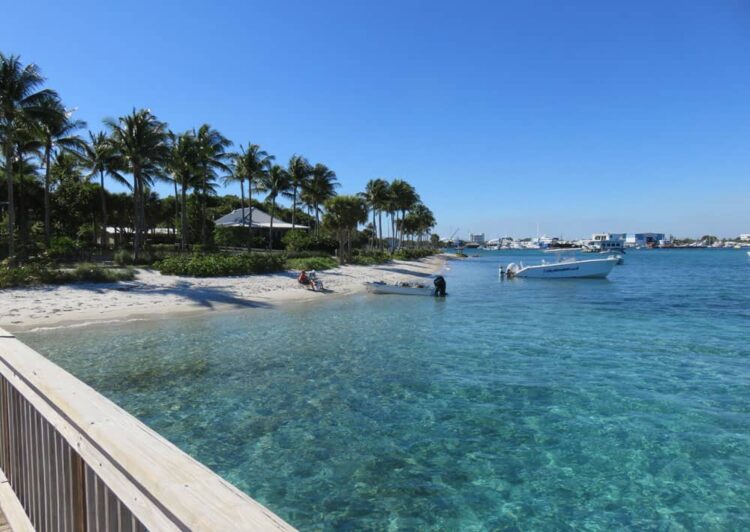
Peanut Island with clear waters and snorkeling in Palm Beach County
The clear Caribbean blue color of the water around Peanut Island Park in Riviera Beach is like nothing else nearby.
The 80-acre island, an exceptional county park, is located in the mouth of the inlet to the Port of Palm Beach, so the water is direct from the ocean, flushed thoroughly with each tide.
As a result of this clear ocean water, Peanut Island is an excellent place for snorkeling, kayaking, paddleboards and other water-related activity.
But this beautifully landscaped gem offers even more. Accessible only by ferry, water taxi or private boat, it makes an ideal destination for easy-to-reach camping.
The island is man-made, built from earth piled here during dredging for the port in 1918. It has a fascinating historic structure, an underground bunker built for President John F. Kennedy during the Cold War. The bunker, which you once could tour, is not currently open but is being refurbished by Palm Beach County.
Why we think it’s worth visiting: Whether you take the shuttle or kayak to the island, Peanut Island feels like a much more remote island than it is. It’s also one of the best places to snorkel from shore.
Here’s a Florida Rambler story on Peanut Island.
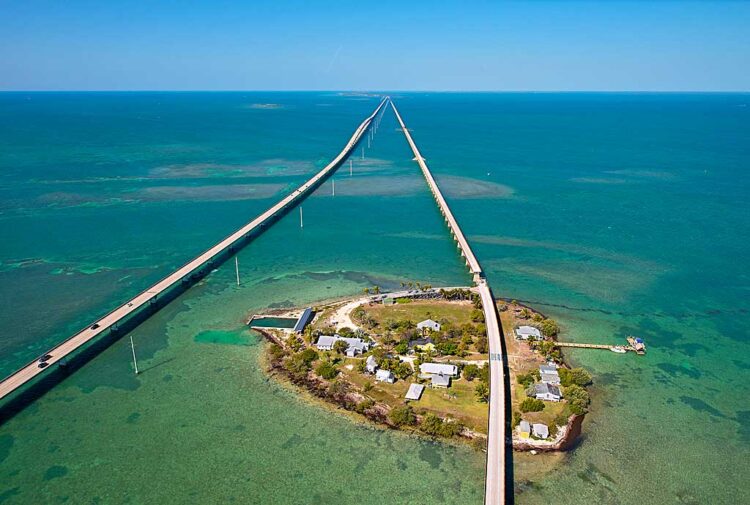
Pigeon Key, the historic island in the middle of the Seven Mile Bridge
If you’ve ever driven to the Florida Keys, you know the allure of the many islands on each side of the highway. One of those islands, adjacent to the Seven Mile Bridge in Marathon, is like a postcard from 140 years ago, Pigeon Key.
Pigeon Key housed the workers who built the Seven Mile Bridge from 1908 to 1912 for railroad magnate Henry Flagler, a partner of John D. Rockefeller. The yellow wooden structures create a historic village that tells the amazing story of the bridge and Flagler’s railroad to Key West.
You reach the island by walking, bicycling or taking a train-themed tram from Marathon along the two remaining miles of the original Seven Mile Bridge. There is an admission fee to the island, which includes a guided tour that tells you its remarkable history.
The story includes the deadly 1935 Labor Day hurricane that killed some 400, including 250 World War I vets washed to sea from work camps. The hurricane destroyed the railroad line and Flagler eventually sold the bridge to the U.S. government.
Why we think it’s worth visiting: It is a joy to spend time on this historic island and wander among its picturesque cottages and palm trees, soaking up its history. Extend your visit by bringing a picnic or snorkeling off the dock.
Here’s a Florida Rambler story Pigeon Key.

Indian Key: A ghost town island in the Florida Keys
This is one of our favorite island day trips, but we can’t count it on our list this summer because Indian Key is currently closed to visitors because of dock reconstruction. It is projected to be open by September or October. An alternative island destination by kayak in the same area is Lignumvitae Key Botanical State Park. Ferry service is not available in the summer.
My favorite island in the Florida Keys is one of those small green mangrove circles you see off the Overseas Highway – Indian Key. You reach it with a short paddle across shallow open water.
This isn’t just any mangrove island, though. Indian Key Historic State Park is a ghost town which was, improbably, the county seat of Miami Dade County in 1836. It’s an uninhabited, undeveloped island where you still walk the roads of the original village, past the ruins of historic building foundations. And what a dramatic history!
It’s sparsely visited, perfectly quiet and seems utterly timeless. It’s a great place to bring a picnic and snorkel off the coral rock shore.
Why we think it’s worth visiting: Indian Key shows you what one of the Florida Keys was like before 5 million people started visiting every year.
Here’s a Florida Rambler story on Indian Key.