
Updated October 4, 2026 by Bonnie Gross
With a name like the Historic Jungle Trail and a listing on the National Register of Historic Places, I knew this 8-mile Vero Beach road would be my kind of place.
Parts of the road have that authentic Old Florida feel — live oak trees forming a canopy over narrow lane of hard-packed sand; a restored pioneer house, and a picturesque dock on the Indian River.
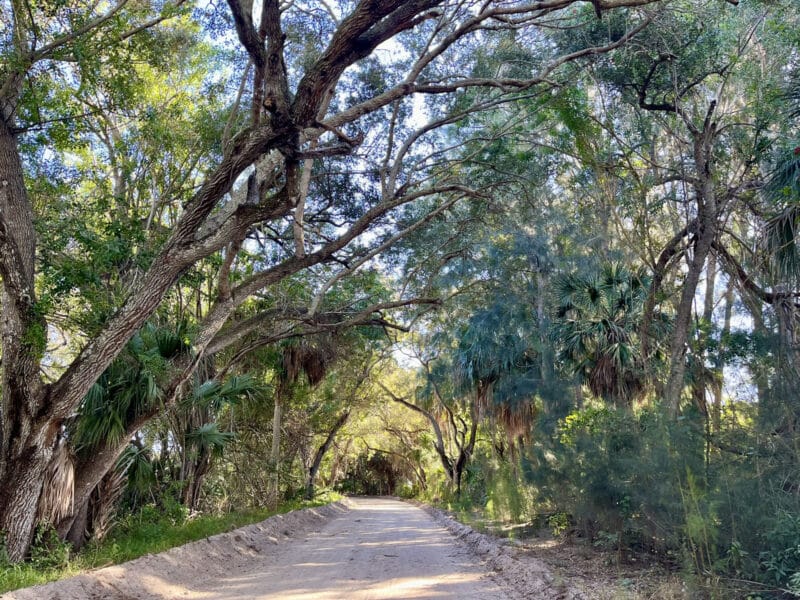
But residential development squeezes in along much of the trail and some of the trees and plants that line the road are invasive exotics.
Still, if you’re exploring Vero Beach, it’s a great route for fat-tire bicycling, jogging, and a slow driving route into Pelican Island National Wildlife Refuge or to the historic Jones Pier area.
- Read more about Vero Beach: Laid-back beach town charms visitors
The story of the Historic Jungle Trail
This was the original road, the original A1A. It’s hard to even imagine.
It was built in the 1920s so citrus growers could bring their produce to docks on the Indian River for the first leg of the trip up north via Henry Flagler’s railroad. This area had no bridges over the Indian River Lagoon until 1920.
The barrier island was soon filled with miles and miles of groves growing the delicious Indian River citrus that became world famous. At one point, Indian River County was the largest producer of grapefruit in the world.
Over the course of the next 100 years, the citrus industry was hit by a series of calamities — freezes, hurricanes and, finally, in the 1980s, a devastating disease called citrus greening.
Today, citrus groves are gone from the barrier island, and the Historic Jungle Trail is strictly a road for recreation, not an essential route for a community.
What to see along the Jungle Trail
The unpaved road has a 15 mph speed limit and its surface is hard enough for fat tire bikes. On a sunny Saturday morning, we primarily saw bicyclists on the road and only an occasional car.
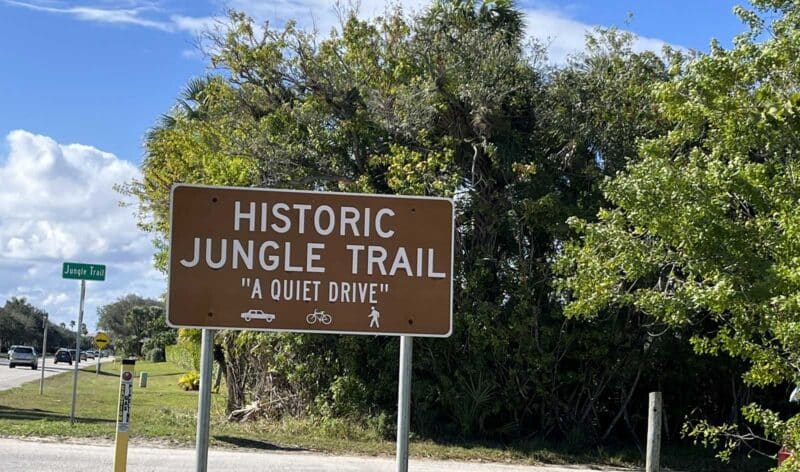
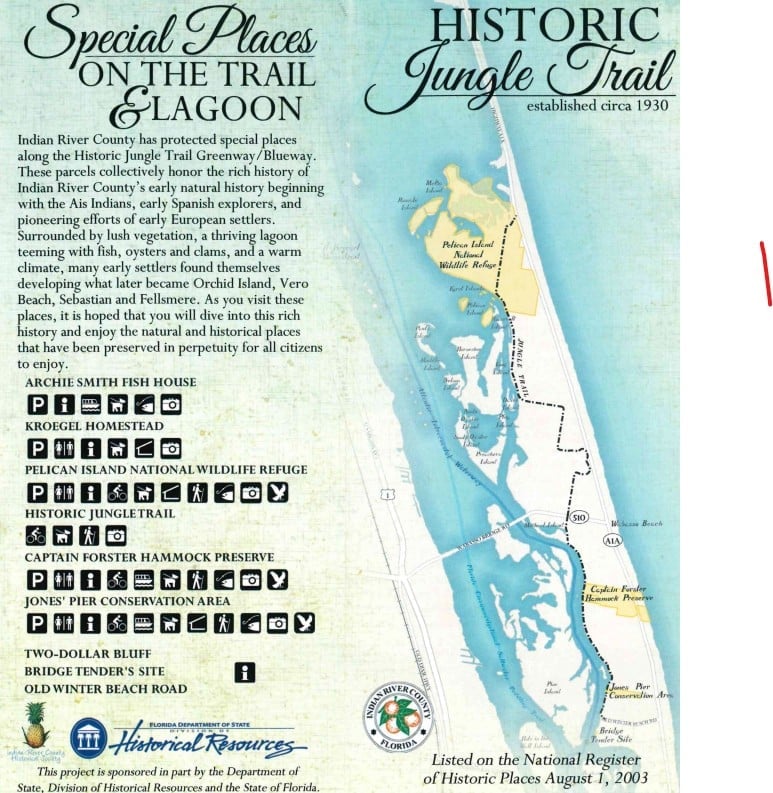
The Jungle Trail extends both north and south from Wabasso Beach Road, where there are large signs marking the turn for the trail.
The prettiest section of the Jungle Trail is between Wabasso Beach Road and Pelican Island National Wildlife Refuge. While there is residential development visible beyond the tree-lined road, here is where you find the sections with a beautiful canopy of live oak trees. Managers of the refuge have worked for decades removing the exotic Australian pines that once lined the road as windbreaks.
The Jungle Trail ends at Pelican Island National Wildlife Refuge, a place worth visiting. It was the first refuge in the United States, created by an executive order from President Theodore Roosevelt in 1903 to protect the colonies of birds from — well — fashion. Plume hunters were wiping the wading birds, gathering feathers fashionable then for lady’s hats. Pelican Island was a critical nesting spot for the brown pelican.
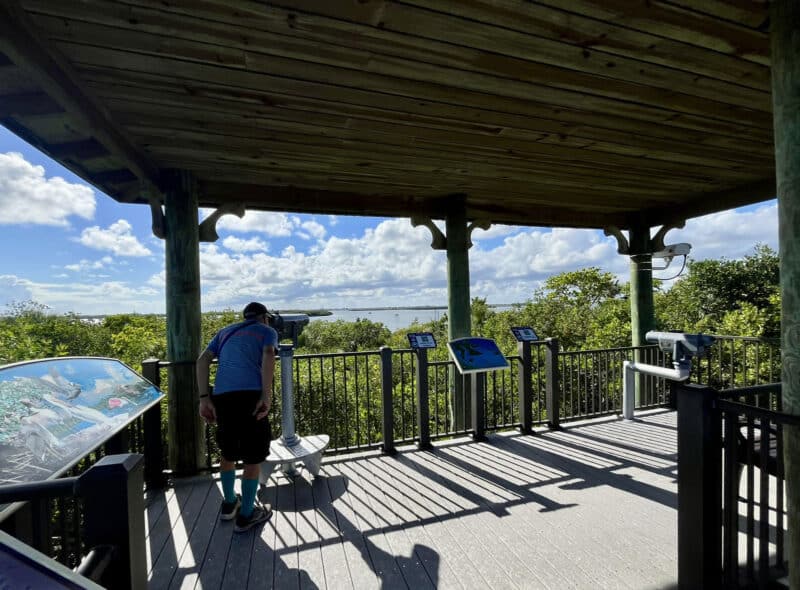
Today, Pelican Island offers interesting interpretive signs and hiking trails where you may spot wildlife. Our favorite walk was the Centennial Trail, a boardwalk whose planks list every National Wildlife Refuge in order of its creation, ending with the first, Pelican Island, at a beautiful viewpoint and pavilion.
Historic Jungle Trail to Jones Pier
South of Wabasso Beach Road, the Jungle Trail runs between the Indian River Lagoon on its west side, with a line of residential development on the east side.
This southern section may be less scenic, but is home to two historic treasures.
Heading south, you first come to Captain Forster Hammock Preserve, 8610 Jungle Trail. It’s the last stretch of original maritime hammock, a jungly forest of live oaks and ferns. Imagine the whole barrier island once looked like this, and this is the only section left.
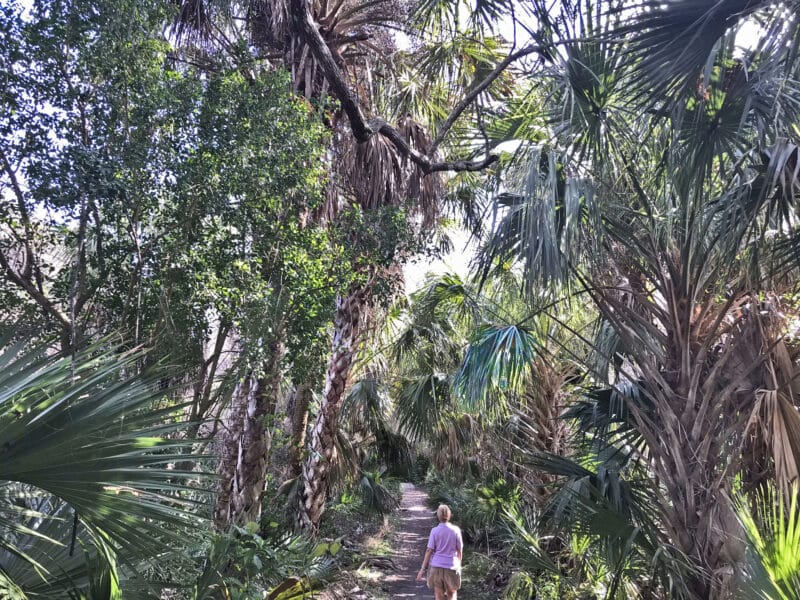
There are a number of short trails, but the main one is well groomed and shady and extends from Indian River Lagoon to A1A. One highlight is a green pond where a bridge takes you to a tiny island with a single bench. Captain Forster was an early pioneer and a chimney is all that’s left of his lagoon-front home.
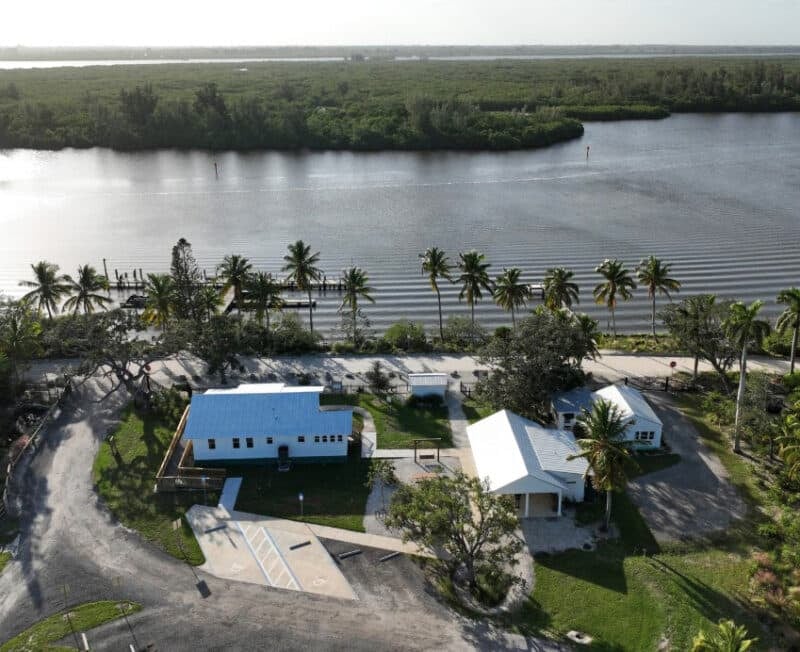
Next comes the Jones Pier Conservation Area and remnants of Indian River pioneer life. This recently developed complex has parking, bathrooms, covered picnic tables, interpretive signage and several things to see.
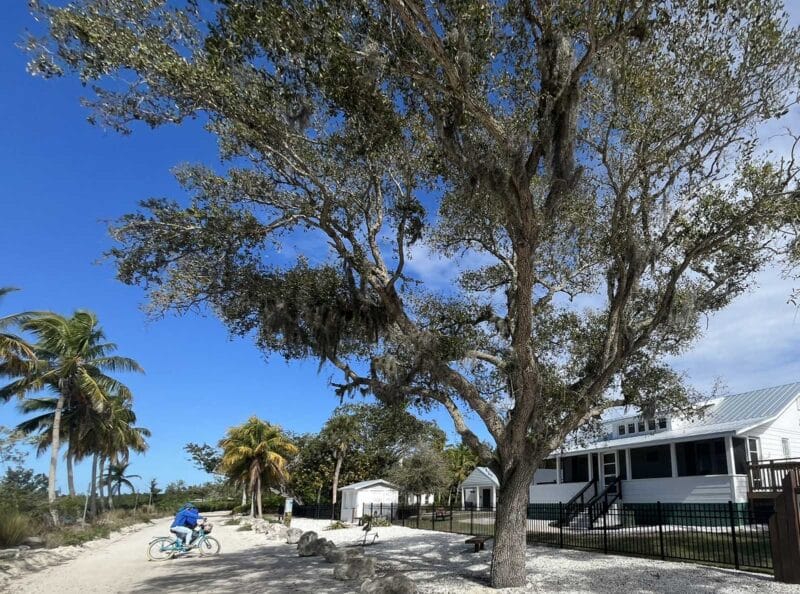
There’s a beautifully restored family home (raised in height to preserve it from hurricane tides.) The bungalow was built in the 1920s and is the original home of the Jones family, who homesteaded 160 acres on Orchid Island in 1889. (The building will house an exhibit that is under developement.)
Richard “Dick” Jones (1919-2011) lived in the house until his death and interacted with visitors, some famous, including Walter Cronkite, who stopped here annually for fruit on his way to Palm Beach, and Billie Graham, who hired Jones as his fishing guide, according to the Vero News.
Next door to the house is a replica of the 1930s fruit stand, where pioneers in the area could buy produce from the Jones family. (It is open during special events.)
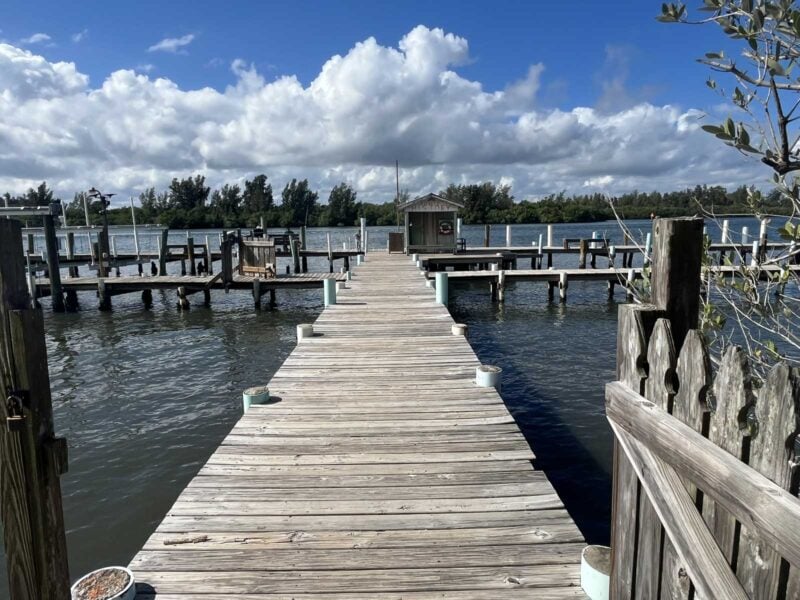
Across the Jungle Trail is Jones Pier, an idyllic spot with a view of the Indian River Lagoon with no buildings visible. It probably looked like this when the the family built the first pier here in 1907. It was the county’s first dock and visitors to Orchid Island would moor their boats here and buy produce from the fruit stand. Three generations tended the pier and the family lived on the site.
When we visited, just as in the bygone days, fishermen were enjoying casting (and catching fish) on Jones pier. Bicyclists paused to explore and admire the site.
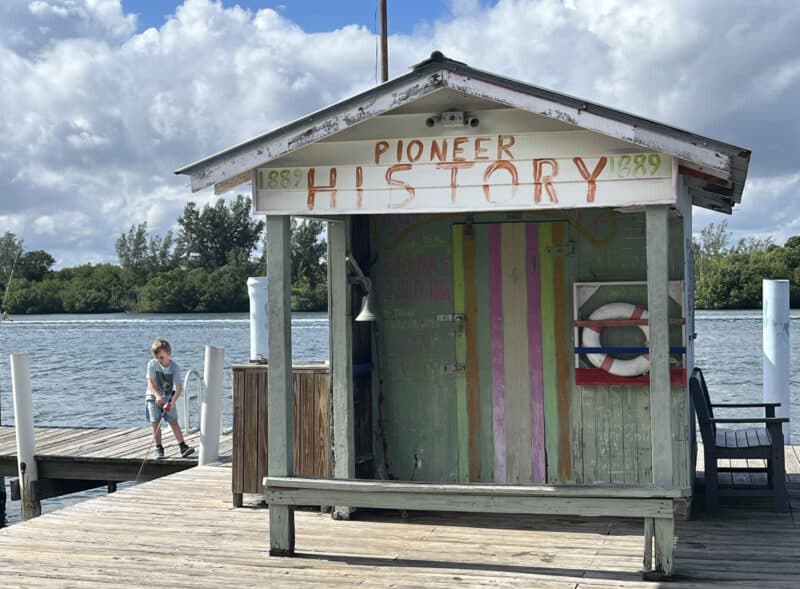
The 16-acre Jones Pier property has a trail around its border, which includes overlooks to a 4-acre salt marsh that attracts birds and wildlife. The salt-marsh loop is .4 miles; the larger loop around the property is .8 miles.
From Jones Pier, the Jungle Trail continues until it meets Old Winter Beach Road, which takes you back A1A.
On A1A, if you head north, you reach the beautiful Sebastian Inlet State Park. If you head south, you’re a few miles from Vero Beach, where you can find lots to do in laid-back and lovely Vero Beach.
If you’re a history buff, we recommend McKee Botanical Garden, which was opened in 1932 by pioneer developer Waldo Sexton, whose funky Historic Driftwood Inn and Resort, is a fun place to dine or stay. Both places are listed on the National Register of Historic Places.
Why then, other than the obvious answer, are the county commissioners approving development???? Why can’t we have some “original” green space?????