
Midway between Vero Beach and Melbourne, low-key Sebastian won us over with its riverfront, its wildlife and its interest in the environment.
Sebastian started as a fishing village and that connection to the Indian River Lagoon has shaped this city of 25,000. Every city sign proudly proclaims “Home of Pelican Island,” which is the first national wildlife refuge in the United States, located across the lagoon from Sebastian.
Today, there are remnants of Old Florida evident in Sebastian along with abundant wildlife to see. It’s a terrific base for several days of kayaking, hiking, enjoying the beaches and experiencing local history.
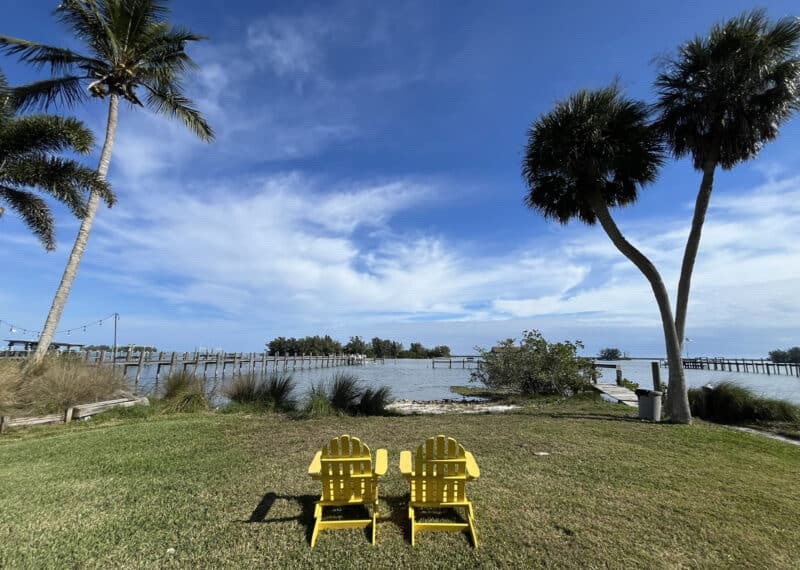
Why we went to Sebastian
We stumbled on Sebastian because we wanted to explore this less-populated stretch of Florida’s Atlantic Coast. I looked at the area around Sebastian Inlet State Park and saw there were only a few places to stay on the barrier island. But Sebastian, on the mainland, was only 20 minutes away, just over a bridge on the Indian River Lagoon, and I found the perfect accommodations for us there. (Campers: we have the perfect place for you in Sebastian too, lower in this story.)
We stayed right on the Indian River Lagoon at Island View Cottages, 11450 S. Indian River Drive. From the outside, this is a Florida fish camp from the 1950s – 12 cottage units on a spacious lot on the Indian River, with live oaks full of air plants and Spanish moss arching overhead and a long pier into the shallow lagoon. Inside, the cottages have been completely gutted and rebuilt with modern décor, kitchenettes and bathrooms.
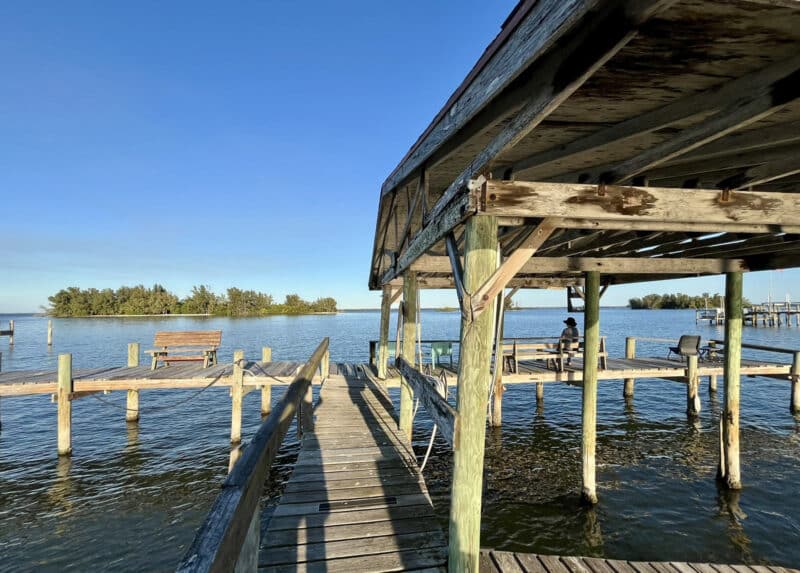
The first thing we did was go out on the pier. As we approached the pier, the great blue heron and egret that had been perched on it moved to the next pier. Within minutes, dolphins cruised by and we heard the keer-keer-keer of an osprey hunting overhead. Along the lagoon, we were always near wildlife. The view faces directly on Spoil Island IR9A, with many other islands within sight, all easily accessed by kayak.
During our stay, we visited this pier on the Indian River Lagoon over and over – first thing in the day to see the morning light; at low tide, to gaze into the water; at sunset to see the gorgeous sky. We could have had a great stay just hanging out on that pier.
Sebastian’s riverfront walk along the lagoon
Our lodging allowed us to start a scenic walk right from our cottage. The cottage complex is located on Indian River Drive, just a few blocks from the start of a 1.5-mile paved river walk, which is also popular with bicyclists.
Strolling here, you pass many long picturesque piers into the lagoon, some open to public use.
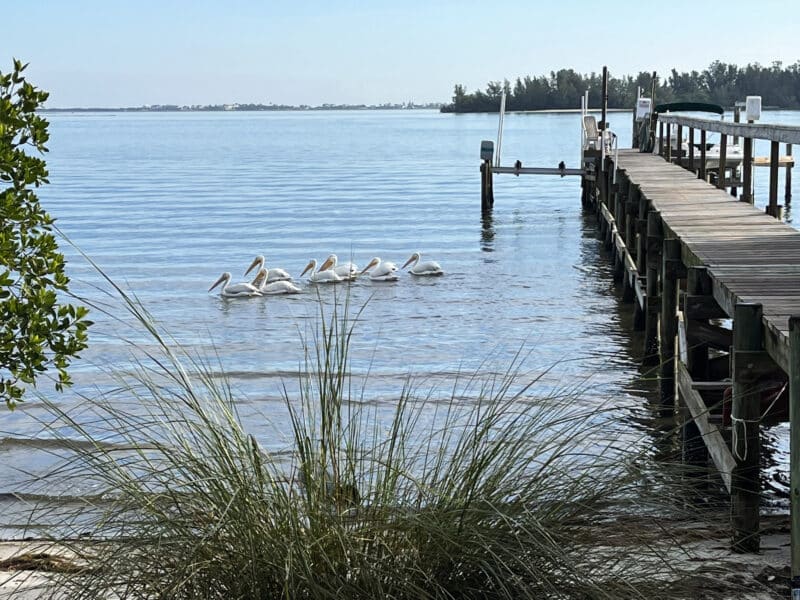
On our walk, we were thrilled to see a dozen white pelicans swimming just off shore. These migratory birds are among North America’s largest and they are a spectacular and common sight here in winter.
There were plenty of other birds too, from wading birds like egrets and herons to shore birds like terns, gulls and oystercatchers. Regularly, we’d spot dolphins. (There are manatees here, too, but we didn’t spot any.)
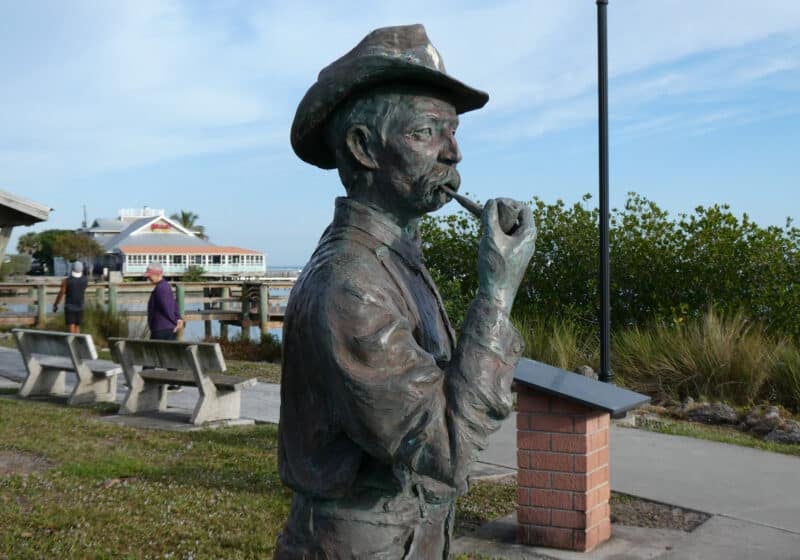
Along this walkway, there are interesting signs that demonstrate the city’s environmental awareness.
One said “Become a dolphin spotter citizen scientist.” A statue and plaque honored Paul Kroegel (1864-1948), the first warden at Pelican Island, whose dangerous work protected nesting birds from the plume hunters who were killing them for their feathers.
There was a sign about manatees, one explaining the program to create oyster reefs on the shoreline to help improve water quality, and another on the value of mangroves.
Just walking around Sebastian was an environmental education.
This route also highlights Sebastian’s heritage as a fishing town. There’s a pier built specifically for the needs of commercial fishermen, who continue to be active here, and recreational fishermen and their boats are plentiful everywhere.
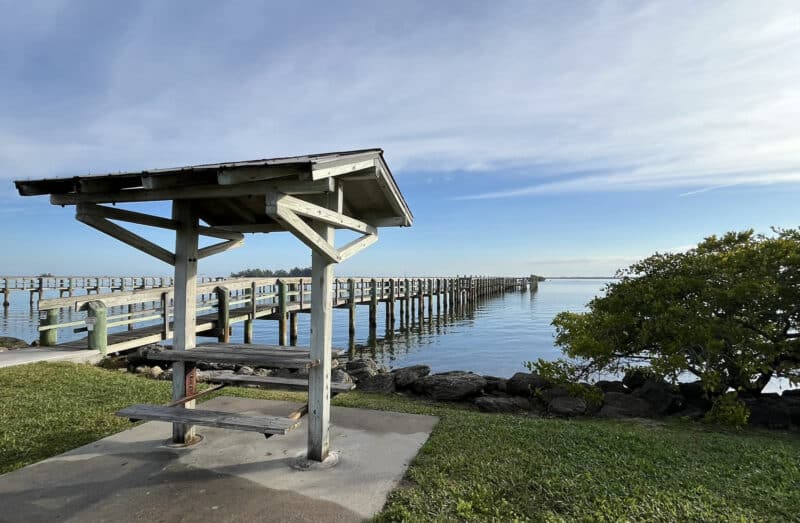
We spent a lot of time on Indian River Drive, because it is also home to a series of outdoor waterfront bars and restaurants that offer great views, fresh fish and a fun ambiance. There were excellent choices for food and drink all along this route.
As much as we liked our own dock and the fascinating riverfront, we had plenty of places to go, truly more than our four-day stay allowed.
Terrific beaches are just 15 minutes away
We started our stay with a rewarding visit to Sebastian Inlet State Park, only 20 minutes from the town of Sebastian. This is a spectacular state park for beachcombing, swimming, surfing, fishing and kayaking.
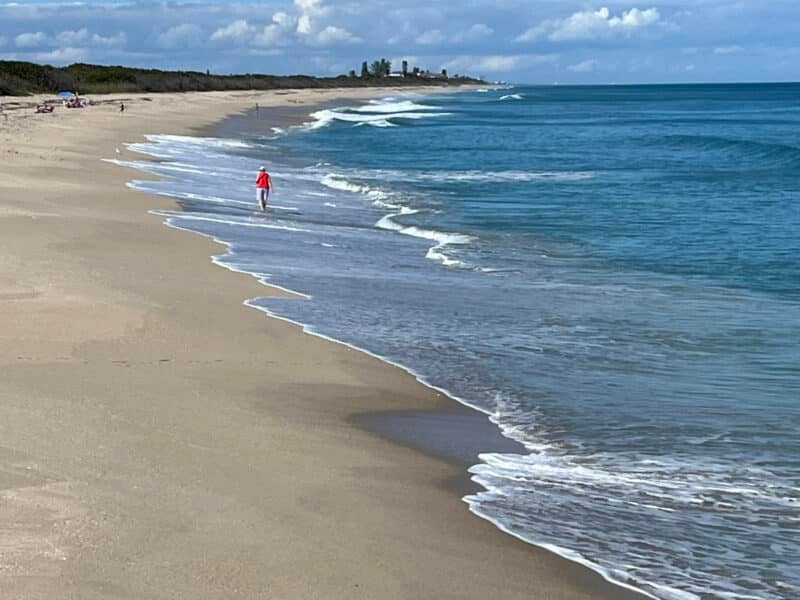
The park is divided into two sections, with the inlet between them. The campground and some of the best surfing are on the south side. The fishing pier, hiking trails and family-friendly tide pool are on the north side.
We visited on a sunny mid-70s day in January, but the three miles of Sebastian park beach were nearly empty. The waves are often high enough here to make this park a surfing destination.
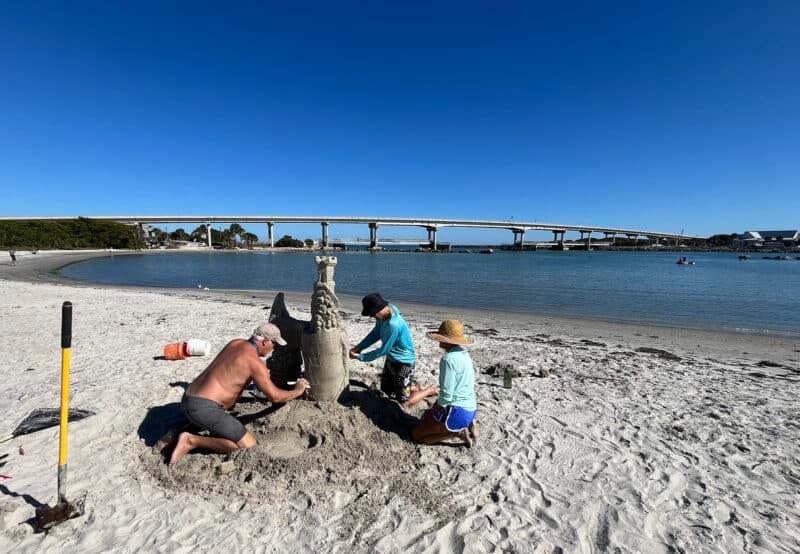
For a beach without waves, head to the north side of the inlet on the west side of A1A, where there is a pretty tide pool swimming area off the inlet. It has a sandy bottom that stays shallow a long way out. We saw snorkelers, people building sand castles and a dolphin that we were told hangs out regularly at the edge of the tide pool.
The free fishing pier on the north side of the inlet is popular and for a good reason – fishing is exceptionally good here. While we strolled the pier watching the action, we saw one fisherman reel in three Spanish mackerels over a brief period.
The state park isn’t the only beach in the area. Within a half hour driving on A1A, you’ll find nearly a dozen beach access points with parking (mostly free). This section of coast has extensive beachfront preserved. Just north of Sebastian Inlet is the Archie Carr National Wildlife Refuge, created to benefit sea turtles, who nest here in large numbers. The refuge has an excellent visitor center too.
Kayaking to Spoil Islands from Sebastian
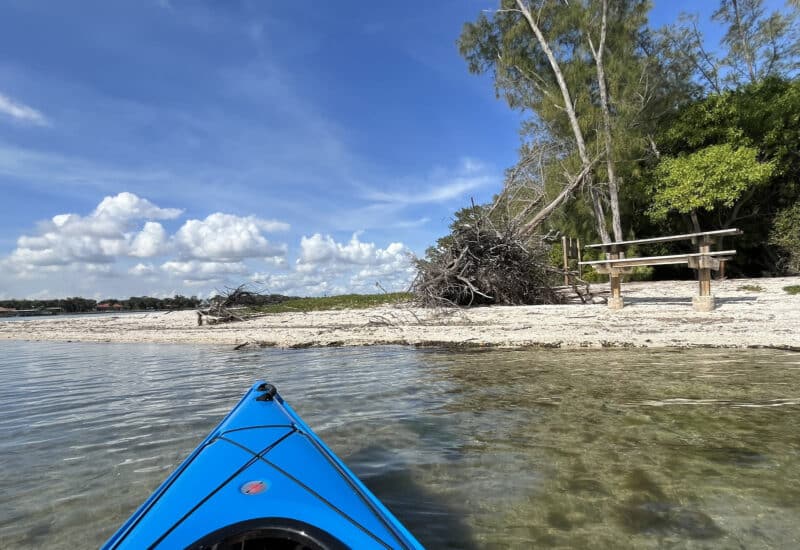
On our second day, we went kayaking in the Indian River Lagoon. The lagoon has more than 150 spoil Islands — places where you can land, explore, relax, swim, picnic, watch the wildlife or even camp. There is no fee and we island-hopped for hours.
The islands were created in the 1950s during the dredging of the Intracoastal Waterway.
We spent four hours kayaking to and around about a dozen nearby spoil islands, covering about six miles round trip. We launched from the cottage complex where we stayed, paddling in both directions to islands, all of which had appealing beaches and shade.
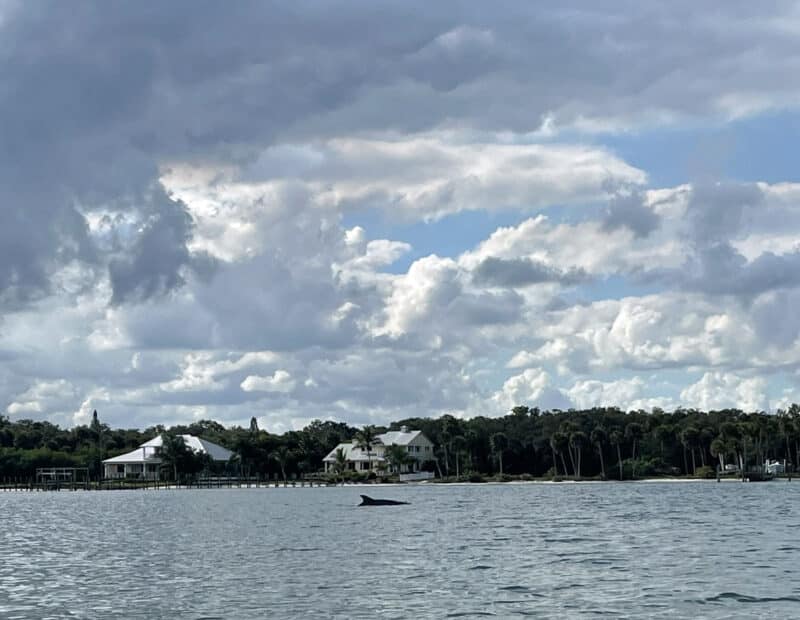
The wildlife made our paddles to the spoil islands memorable. Dolphins are commonly seen cruising in the Indian River Lagoon, which is home to a resident population of about 1,000 bottlenose dolphins.
The only kayak rental spot we could find was from Capt. Hiram’s Resort. (The Island View Cottages had several kayaks available for guests at no charge.) If you bring your own kayak, a convenient launch is Sebastian’s Main Street boat ramp.
Another great kayaking option: the St. Sebastian River
The next day, we kayaked in a completely different environment, on the St. Sebastian River.
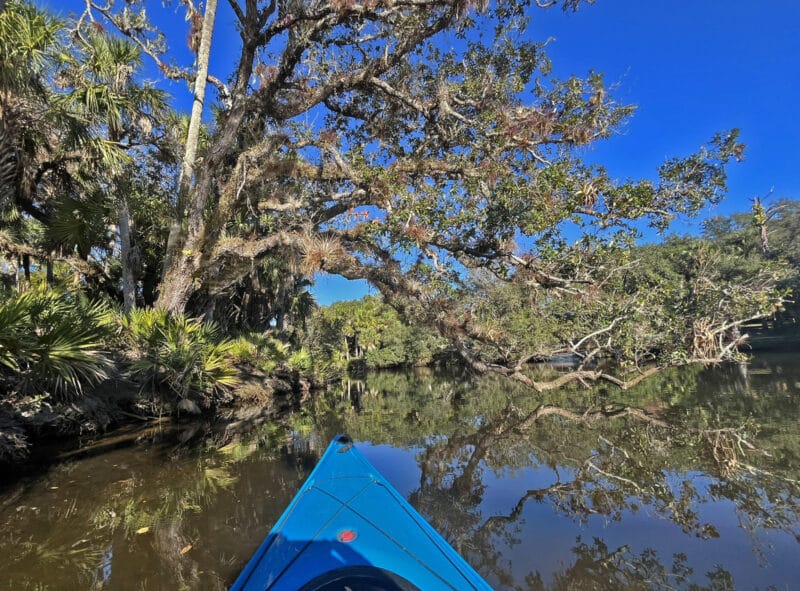
This river is remarkable because it is so close to the Atlantic coast and has not been extensively developed. There are a handful of homes, but for hours you can paddle through a natural landscape of magnificent oak trees, cypress trees, and lush native vegetation.
The river is full of wildlife — ospreys, wading birds, cormorants, kingfishers and more.
It’s the rare spot where I have paddled and seen both a dolphin and alligators. Manatees are common, though I didn’t see any.
We launched at a very nice facility, Wimbrow Park, and paddled upstream to the Sebastian Canoe Launch park and back.

I recommend doing it in the reverse of our route, because the narrow, prettiest part of the paddle is upstream, at the canoe-launch park. From there, you would paddle downstream and turn around at whatever point you chose and paddle back. (The current was not strong.) It’s a couple of hours to Wimbrow Park, but it has the advantage of having a restroom and picnic table for a nice break. Places to land and stretch your legs are rare along this heavily forested river.
If you need to rent a canoe, you will start from Wimbrow, as we did, because the only outfitter is across the street, About Kayaks River Rentals. You’ll face a longer paddle to get to the prettiest part of the river, but you will have current behind you when you return.
A fun element of kayaking on this river near Wimbrow Park is the opportunity to see parachutists floating in the sky. Skydive Sebastian is located close to the park in a small airport and we saw a half dozen parachutists.
Take the Historic Jungle Trail to Pelican Island and Jones Pier
Our final day in the area, we explored a cluster of fascinating historic sites linked by the unpaved scenic Historic Jungle Trail in Vero Beach.
From the closest road that bridges the lagoon to reach the barrier island – Wabasso Beach Road – you can access the Historic Jungle Trail, which runs both north and south from the intersection with Wabasso Road. Watch for the sign at the intersection, it’s easy to miss.
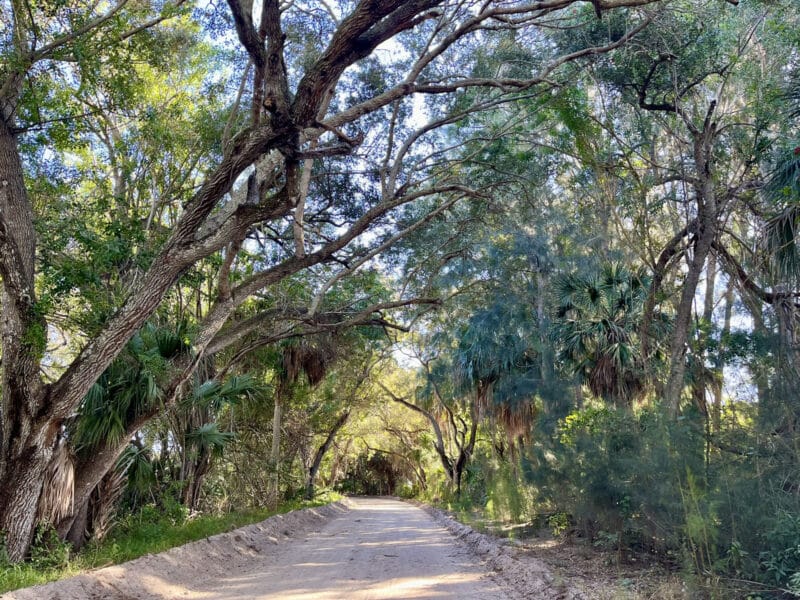
Jungle Trail was the original A1A, built in the 1920s so citrus growers could bring their produce to docks on the lagoon for transport to points north on Henry Flagler’s railroad.
The picturesque 8-mile sand road takes you past historic landmarks, including the first U.S. wildlife refuge and a pioneer homestead overlooking the Indian River Lagoon. You can walk, bicycle on fat-tire bikes, or drive it slowly.
The north segment takes you to Pelican Island National Wildlife Refuge, a place worth visiting. The first US refuge, it was, created by an executive order from President Theodore Roosevelt in 1903 to protect the colonies of birds from plume hunters.
- Read more about Pelican Island National Wildlife Refuge from Florida Rambler.
The southern segment takes you to the Jones Pier Conservation area, which preserves remnants of Indian River pioneer life. This recently developed complex has parking, bathrooms, covered picnic tables, interpretive signage and several things worth seeing.
There’s a beautifully restored family home built in the 1920s, the original home of the Jones family, who homesteaded 160 acres on Orchid Island in 1889. (The building will house an exhibit that is under development.)
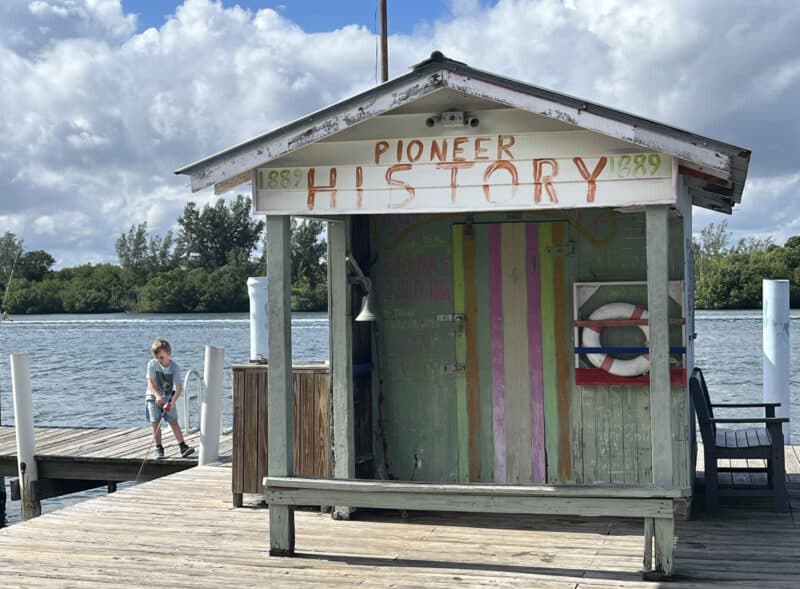
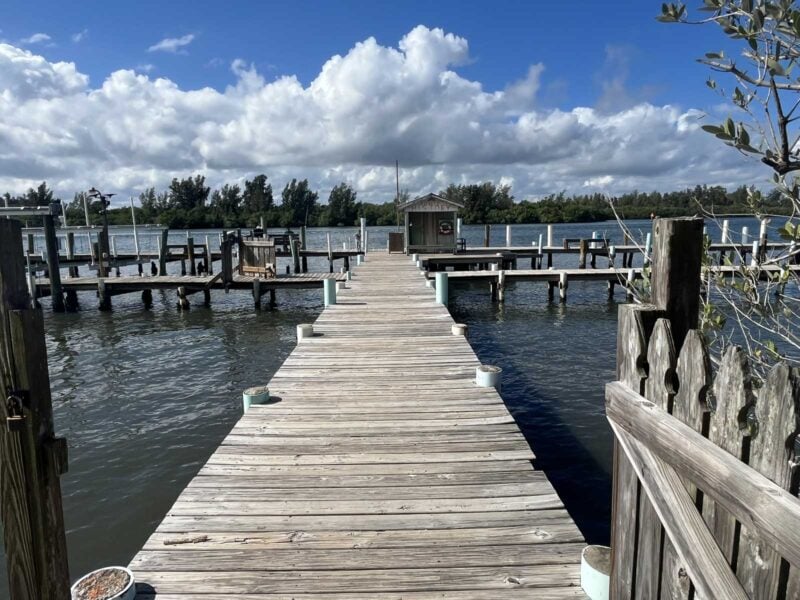
Across the Jungle Trail is Jones Pier, an idyllic spot with a view of the Indian River Lagoon with no other buildings visible. It was the county’s first dock in 1907 and visitors would moor their boats here and buy produce from the fruit stand. Three generations of the family that lived on the site tended the pier.
- Read more about the Historic Jungle Trail and the sights along it in this Florida Rambler story.
Other things to do in Sebastian
We didn’t have time for these activities, but there are several more:
- The River King Cruise provides pontoon-boat cruises including sunset tours and eco-tours.
- Mel Fisher’s Treasure Museum is in the center of town. It’s a small museum about the underwater treasure hunting that occurred right off the coast in this vicinity.
- The McLarty Treasure Museum is on A1A and is part of Sebastian Inlet State Park.
- Sebastian Fishing Museum is another small museum. It’s free with entry to Sebastian Inlet State Park. The museum commemorates three of Sebastian’s early families that operated fish houses.
Where to stay in Sebastian
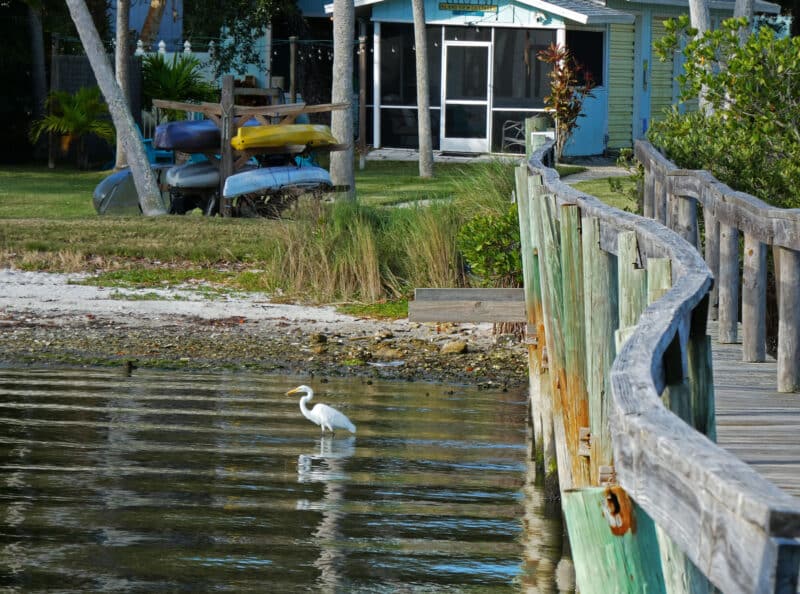
There are several choices if you want to stay on the Indian River Lagoon in Sebastian, which we found enchanting: Island View Cottages, which we loved; Capt Hiram’s Resort and Sebastian Saltwater Lodge. The are several other lodging choices plus vacation rentals in the area.
Camping in and near Sebastian
My partner here at Florida Rambler loves the hidden-gem campground on the St. Sebastian River, Donald MacDonald Park. He describes it this way: “This is one of those cozy little campgrounds you want to keep to yourself. Lush vegetation and access to a natural river with an abundance of wildlife.”
The campground is small, just 31 sites on 37 acres, and only five sites have water and electric hookups for RVs. The remainder are primitive sites, some of which can accommodate camper vans but not RVs.
Other good choices for campgrounds in the area are Sebastian Inlet State Park and Long Point Park Brevard County, 700 Long Point Rd, Melbourne Beach, FL 32951.
Where to dine in Sebastian
Sebastian has a number of outdoor waterfront restaurants and bars. We especially enjoyed Sebastian Saltwater Marina Restaurant, a waterfront restaurant that was lower volume than several lively places on the water, and Mo Bay Grill, which has exceptional fish and Caribbean food in a colorful dining room across the street from the lagoon.
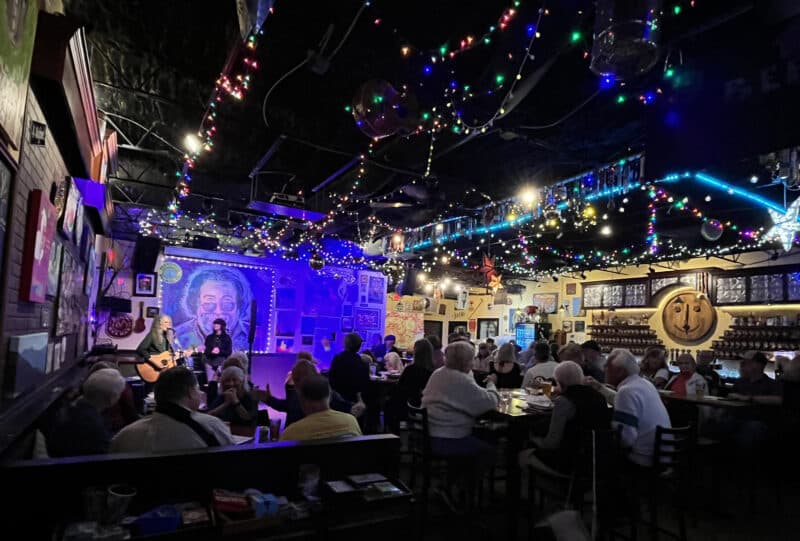
We enjoyed an evening at Pareidola Brewing Company, where we liked the beer, fish dip and our bar-food dinners. That night there was live music, which completely filled the place up. (And based on the good performance, I can see why.)
Related Stories
- Where to see white pelicans, spectacular birds wintering in Florida
- Vero Beach: Laid-back beach town charms visitors
- McKee Botanical Garden: Six things not to miss at this hidden gem
Thank you, Bonnie, for this wonderful Rambler feature on Sebastian, where I lived for 4.5 yrs while working at the medical center there. I bought my first kayak and paddled from the northern-most Sebastian spoil island down to Vero. Right before the large part of the Wabasso Bridge is an environmental center, and at the Atlantic end of the bridge, off A1A, are nice family beaches (as well as a Disney resort). But of particular interest to you, I would recommend the north prong of the Sebastian River. There’s a kayak dock on the narrow bank of the St. Sebastian River State Park. You can tie up and stroll along the forest trails, unless there’s an alligator sleeping on the dock.
Thanks so much for your tips, Maier! Lots to explore in that area, and you’ve suggested some good additions.