
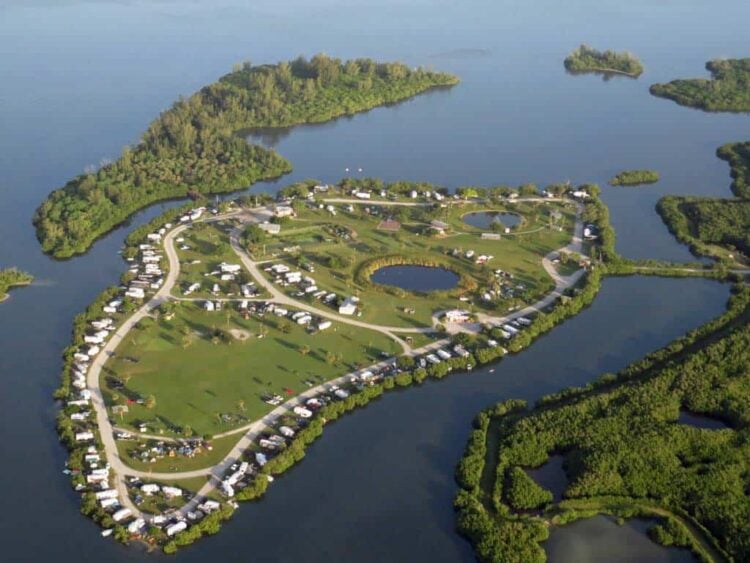
Long Point Park has long been one of my favorite campgrounds. The 85-acre park sits on an island in the Indian River, and most of the campsites are waterfront, laid out in a ring around the island’s perimeter.
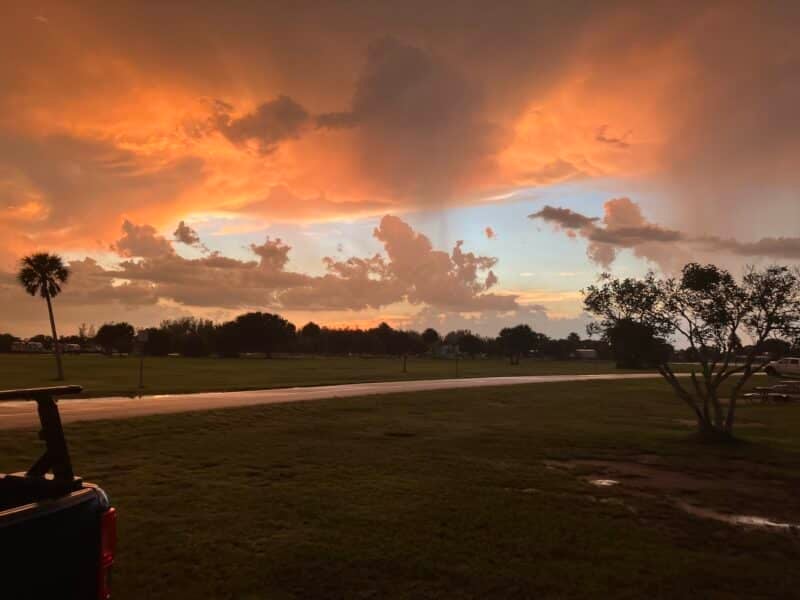
Lack of shade is a singular drawback, especially in summer, but frequent breezes coming off the water take the edge off.
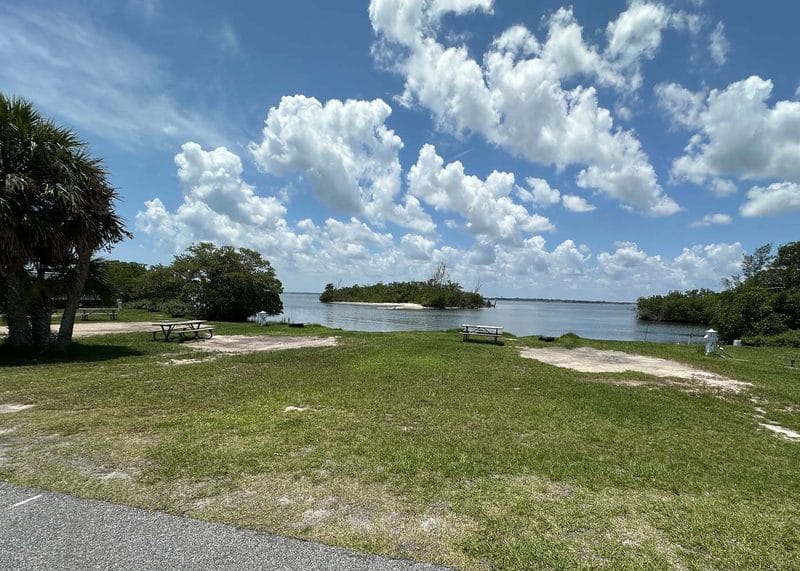
Of the park’s 170 campsites, 113 are waterfront, and most have at least a small patch of sandy beach where you can access the water with your kayak, canoe or small boat.
Editor’s Note: The boat ramp at Long Point Park is closed through October 2026 for reconstruction. The main kayak launch remains open, and kayaks may also be launched from campsites. Motor boats are not permitted to launch from campsites.
Waterfront sites have water and electric hookups only. A limited number of interior sites have sewer hookups. There are two dump stations near the central rest rooms and showers.
Bring your own shade, but be wary of frequent thunderstorms in summer with windbursts that can rip awnings off RVs and blow away canopies and tents.
Stake those tents!
On our most recent visit this past summer, we watched as a neighbor’s canopy twisted in the wind, leaving the frame in a tangled mess.
They replaced it the next day, only to have the new canopy blow down a few hours later when another afternoon storm popped up out of nowhere.
Winter camping is a less prone to thunderstorms, but you still need to be mindful of breezes coming off the water.
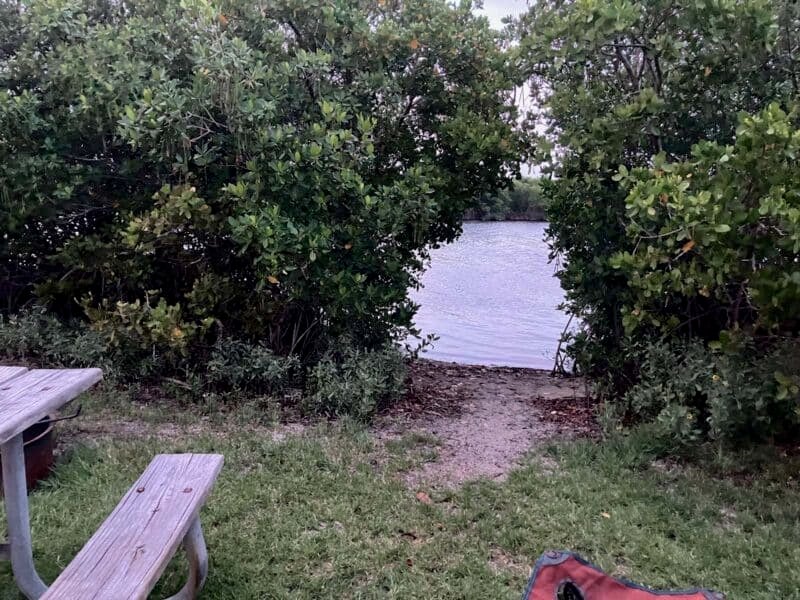
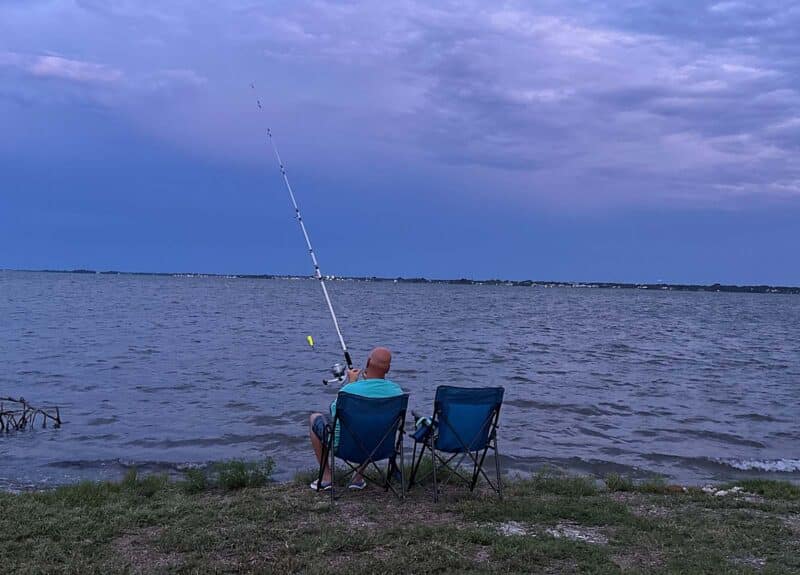
Mangroves line the perimeter of the island, protecting the shore from erosion, but a small opening is carved out of the mangroves at most sites, leaving enough room to launch a kayak or canoe.
You can anchor larger, motorized boats just off your little patch of beach.
Camping here in summer, we found these little portals to be a cozy respite in the shade to put a beach chair for relief from the hot sun. On the downside, it’s also a cozy spot to be discovered by pesky no-see-ums, especially near dusk.
Picking your campsite
Criteria to consider:
- Boat access. You want direct acess to the lagoon so you can anchor near shore or pull your kayak ashore. Some sites can accept larger boats than others. No boat? You will still want to jump in and get wet, especially in summer.
- Hookups for electric and water. The hookup stations are paired to serve adjacent sites, so there is a “right” side (Driver’s side for back-ins) and a wrong side.
- Shade. Few sites have shade, and the sites that do fill up fastest when the crowds arrive for weekends. The sites with a tree, as sparse as they are, are marked in the chart below the map.
- Weekdays are best. Overlapping into a weekend limits campsite availability, unless you’re a local with early-booking privileges. For the best choice of campsites, book Sunday through Thursday.
Official campground map
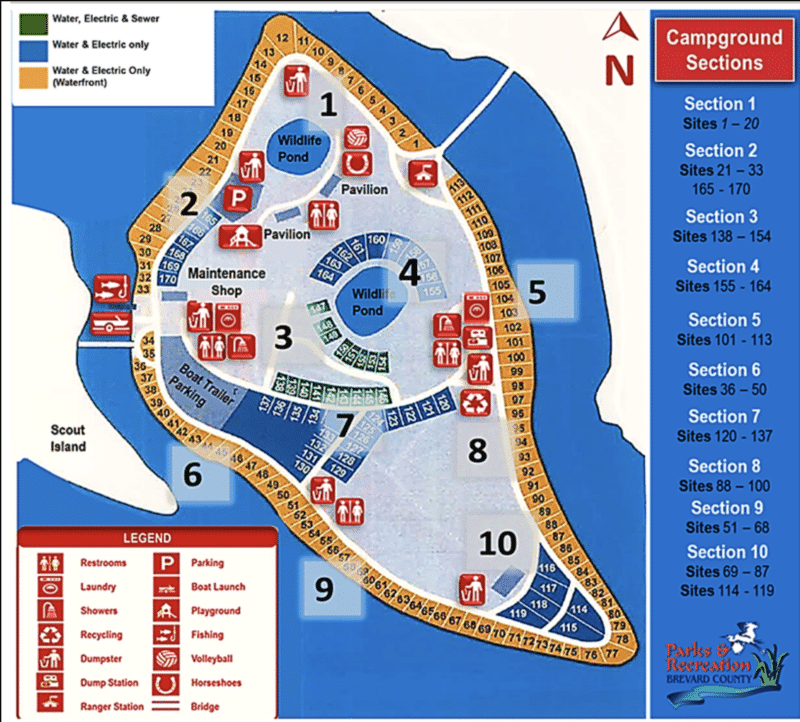
Hot Tip: My choices for the best campsites are #29 (near the boat ramp), #12, #68, #78 and sites #46-49 (nice beach).
This is a really useful chart!
When I arrived at the campground, a helpful park ranger gave me the key to the castle, her Cheat Sheet, and here it is: (Download PDF here)
Chart Key: The asterisk (*) to the left of each campsite number indicates that electric and water hookups are on the driver’s side of your vehicle. You will need extended water hoses and wiring when parking in sites without an asterisk.
The first column is the campsite number (brown indicates waterfront); second column is the size of the site; the “Boat” column is your guide to the size boat you can park at the site; and the last column indicates the presence of a tree with possible shade.
The blue/green-shaded chart on the right is for Interior Sites. Blue indicates sites with water and electric while green identifies sites with water, electric and sewer hookups.
Long Point Park, 700 Long Point Rd, Melbourne Beach, FL 32951. Open 7 days, sunrise to sunset for day use. Campers have 24-hour access.
Camping fees: Brevard County residents, $36 per night; Non-residents, $50 per night. Additional: $2 for water view; $2 for sites with sewer hookups; Boat ramp, $6.
Campground reservations: Brevard County residents can reserve campsites up to 13 months in advance; Reservation window for non-residents is 6 months. Maximum length of stay is 14 days.
Book reservations online or call 321-952-4532.
Your should also read: 30 awesome county parks with affordable camping
Editors Note: The A1A bridge over Sebastian Inlet is undergoing extensive renovation from now through 2027. Construction will occasionally cause traffic delays and may even prevent access to nearby Sebastian Inlet State Park.
What’s nearby?
Food, beer and bait is available at a small convenience store at the end of the park road on State Road A1A, but you should make your major supply stops on the mainland before venturing across the Intracoastal Waterway to Long Point Park.
There’s a Wal-Mart Supercenter on U.S. 1 in Sebastian, which we found to be convenient and an excellent source for camping supplies, groceries, beach and fishing gear.
If you are looking for a local brewpub on your way back to camp from WalMart, plan to stop at Pareidolia Brewing Company, 712 Cleveland Street, Sebastian.
And for an evening out at a fine restaurant, we recommend The Italian Cousin, 460 U.S. 1, north of the Wabasso Causeway before you get into Sebastian proper.
The menu is uncomplicated Italian-American with a few interesting twists. Best of all, our dinners exceeded expectations, the service was excellent, and prices were moderate ($20-$34). Well done, Chef Gus!
The beaches at nearby Sebastian Inlet State Park
Neighboring Sebastian Inlet State Park protects three miles of pristine beach that offers some of the best surfing on Florida’s Atlantic coast.
One of the more consistent surf breaks — Sebastian Inlet’s “First Peak” at the north jetty — is accessible from the north gate to the state park. ($8 per vehicle per day).
Although not quite the monster break it once was, First Peak still draws a crowd.
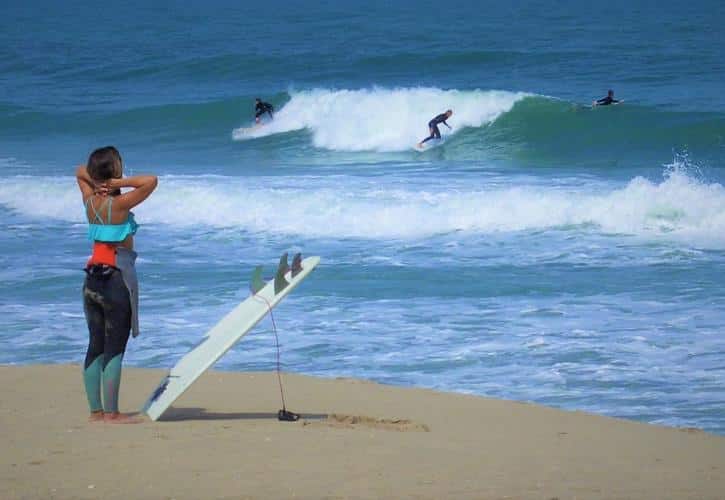
Another hot surf spot is “Monster Hole,” a shoal about a third of a mile off the beach on the south side of the inlet. Beach access and parking are free south of the inlet bridge.
The park’s north entrance also provides access to a wading beach inside the inlet, ideal for families with small children or swimmers just seeking relief from ocean surf.
Further south of the state park along A1A, there are multiple beach access points with free parking managed by Indian River County.
Like all inlets in Florida, the ebb and flow of tides draws gamefish through the inlet, making it not only attractive to anglers, but also to sharks. For the safest swimming, there’s plenty of great beach away from the inlet in both directions.
Sebastian Inlet web cam: http://www.sebastianinletcam.com/
Pelican Island
President Teddy Roosevelt, alarmed by the slaughter of pelicans and egrets for their plumage, signed an executive order in 1903 declaring Pelican Island a bird sanctuary.
It was America’s first national wildlife refuge.
More than 30 species of birds use the island, and 16 species nest here, including the brown pelican, wood stork, several varieties of egrets and herons, and the American oystercatcher.
The island itself can only be approached by water, but it can be viewed from an observation tower accessible via a boardwalk trail from the refuge visitor’s area on State Road A1A south of the inlet.
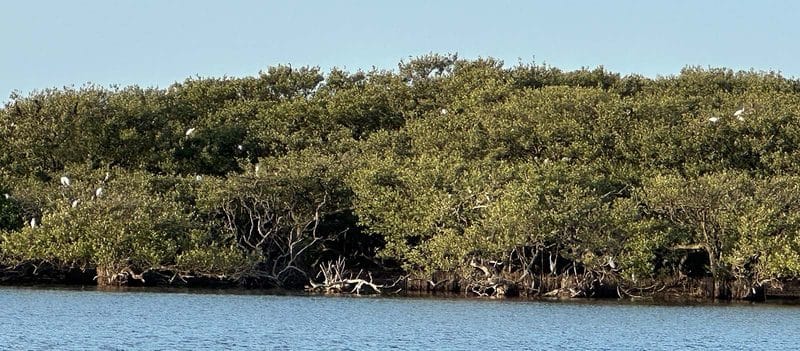
We took a boat tour offered by the non-profit Environmental Learning Center on Wabasso Island, just off the Wabasso Causeway, the main route to the mainland across the Indian River.
The pelican population was sparse in summer, though. We were told by our guide to come back after the fall migration, when the island is swarming with roosting white pelicans.
The Environmental Learning Center also has a museum showcasing the history of Pelican Island with exhibits featuring wildlife you might see on your eco-tour of Indian River Lagoon.
Environmental Learning Center, 255 Live Oak Drive, Vero Beach, FL 32963. Call 772-589-5050 for reservations. Pelican Island Eco-Tour: $40 adults; $25 for children (4-11).
Read more: Pelican Island: Oldest bird sanctuary in U.S
Web site: Pelican Island
McLarty Treasure Museum
The McLarty Treasure Museum is south of the inlet on the site of the survivors’ camp from the 1715 Spanish Fleet wreck.
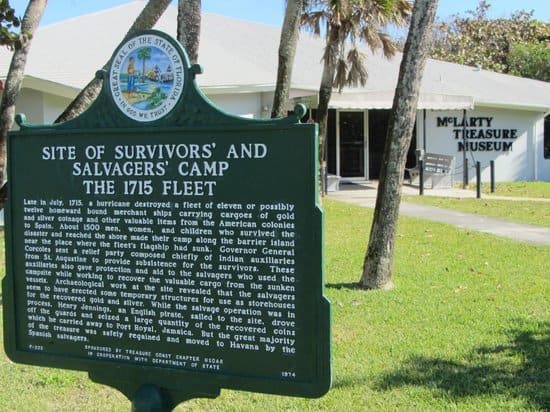
The museum features artifacts, displays, a movie documentary about the shipwreck shown continuously throughout the day, and an observation deck that overlooks the ocean.
Salvagers continue to work the ocean bottom offshore, seeking gold, silver and the “Queen’s jewels” lost to the sea and its sandy shores.
I was told that hunting for treasure on the beach near the museum was off-limits, but divers can legally dive for treasure offshore, and they still do. We just missed a salvage crew the afternoon we visited.
The museum is open daily 10 a.m. to 4 p.m. Admission is $2. Hours: 10 a.m. to 4 p.m. daily. Phone: (772) 589-2147
Read more: History and Culture of Sebastian Inlet