
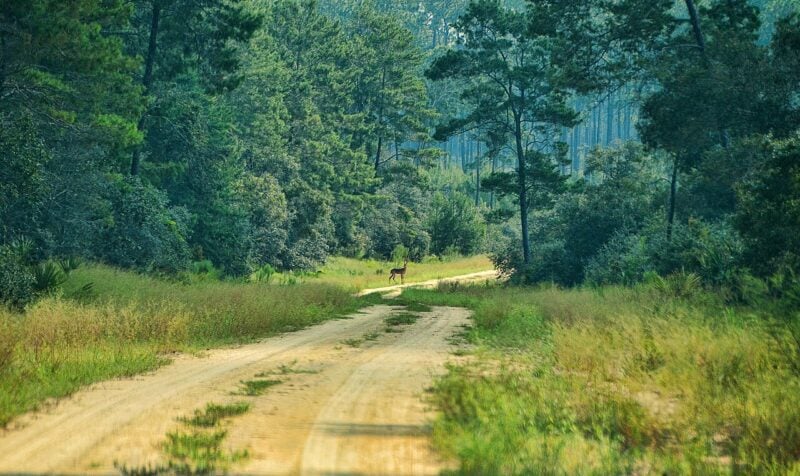
Encompassing more than 600 square miles in Central Florida, Ocala National Forest offers a wide range of adventures.
Hike the Florida Trail, camp in the deep woods, spend a lazy day at a cool, bubbling spring, paddle a spring run, a lake or a river. There are more than 600 springs, lakes and ponds in this forest.
Even if you are just out for a Sunday drive, Ocala National Forest will satisfy the urge to explore new destinations. Ramble forest roads, stop anywhere and take a hike.
From vast Florida sand pine flatlands and cypress-studded wetland prairies to densely wooded oak hammocks and colorful palm-shaded subtropical oases, the variety of eco-systems to explore is exceptional.
1) Take a hike in Ocala National Forest
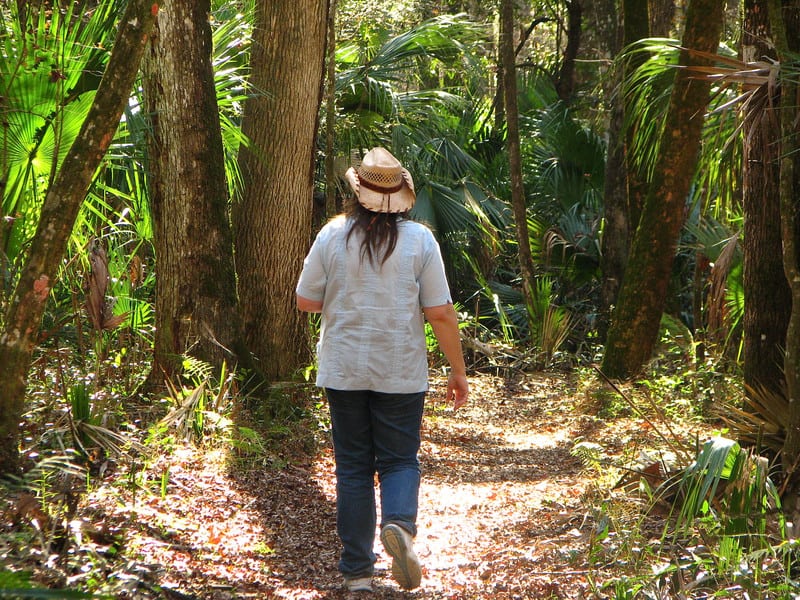
A 66-mile segment of the Florida Scenic Trail winds through the Ocala National Forest with numerous trailheads and access points in the Salt Springs Recreation Area and the Juniper Springs Recreation Area.
Recreation areas at Juniper Springs, Alexander Springs and Salt Springs all have nature trails, boardwalks, and trails that wander into the deeper woods.
In fact, the entire forest is wide open to hikers and backpackers. You can pull off to the side of any of the dozens of forest roads and blaze a trail through the woods.
But unless you are an experienced hiker with the all the right equipment, we suggest you stick to designated trails. This is, after all, the largest pine woods forest in the world. It’s easy to get lost.
2) Ride your bike in Ocala National Forest
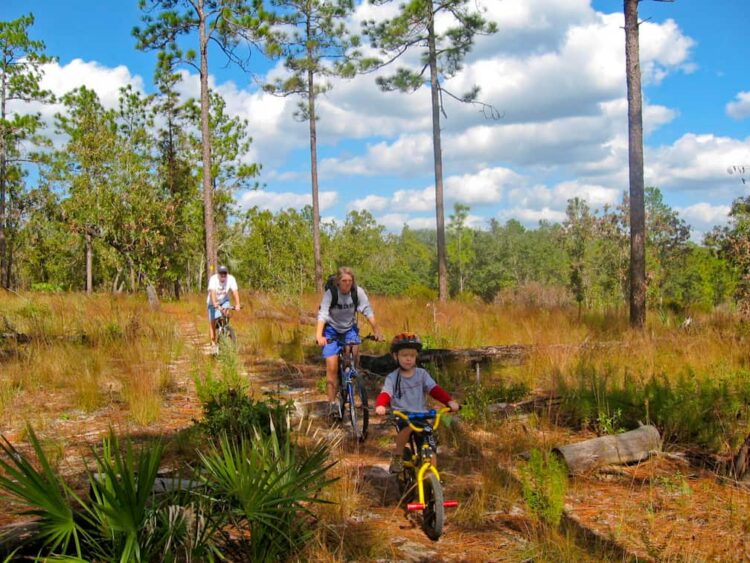
Although bicyclists can ride any of the hundreds of miles of forest roads, the only designated off-road bicycle trail in the Ocala National Forest is the challenging Paisley Woods Bicycle Trail, a 22-mile single-track loop through the deep woods and rolling hills.
You’ll find trailheads at the Alexander Springs and Clearwater Lake recreation areas.
The trail is typical for Florida scrub and sandhill environments, with occasional stretches of soft sand, which may make going difficult.
Marked with yellow diamonds, it intermittently intersects the hiking-only (orange-blazed) Florida Trail. Blue-blazed connector trails connect the loop with both the Alexander Springs and Clearwater Lake trailheads.
There are two interconnected loops – the Alexander Loop (11 miles) and the Clearwater Loop (11 miles). No designated rest areas exist.
Bicycles need to be built for rough terrain. Mountain bikes are ideal.
3) Camp in Ocala National Forest
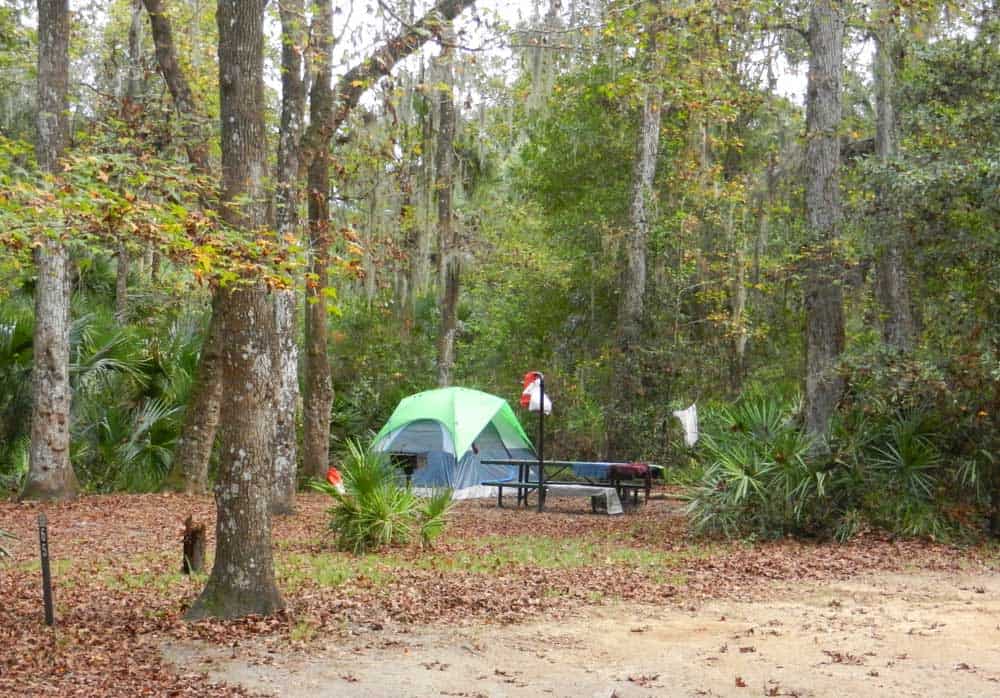
Ocala National Forest is a popular camping destination, offering developed campgrounds in designated recreation areas for both tents and recreational vehicles, remote campgrounds with limited amenities and dispersed tent camping along trails throughout the forest.
Backpackers can camp along any trail, even off the trail if you find a suitable site. Whatever you bring into the forest, you must bring out.
Both tents and RV’s are welcome at these developed campgrounds:
- Salt Springs Recreation Area, 13851 FL-19, Fort McCoy, FL 32134. — 163 back-in sites for tents and RVs. This is the only developed campground in the forest with electric, water and sewer hook-ups. There are 57 tent sites without hookups. Pets OK only in campground. Reservations.
- Alexander Springs Recreation Area, 49525 County Rd 445, Altoona, FL 32702. — 68 sites without hookups. Pets OK in the campground.
- Juniper Springs Recreation Area, 26701 FL-40, Silver Springs, FL 34488. — 79 sites for tents and RVs. No hookups. Pets OK in campground.
- Silver Springs State Park, 5656 E. Silver Springs Blvd, Silver Springs FL 34488 — 9 cabins and 52 RV/tent sites with electric and water hookups. Pets OK in campground.
- Rodman Campground, 108 Rodman Dam Road, Palatka FL 32177 — A state park on the north edge of the forest with 60 sites, including 34 RV or tent sites with electric and water hookups. Another 26 sites without hookups for tents. Pets OK in campground.
For information on more campgrounds in Ocala National Forest, read this story: Ultimate Guide to camping in Ocala National Forest
Activities may be restricted in some areas of the forest during the October-to-May fire season and hunting season (November to January). If you have concerns, call forest rangers at 352-625-2520.
4) Ride a horse
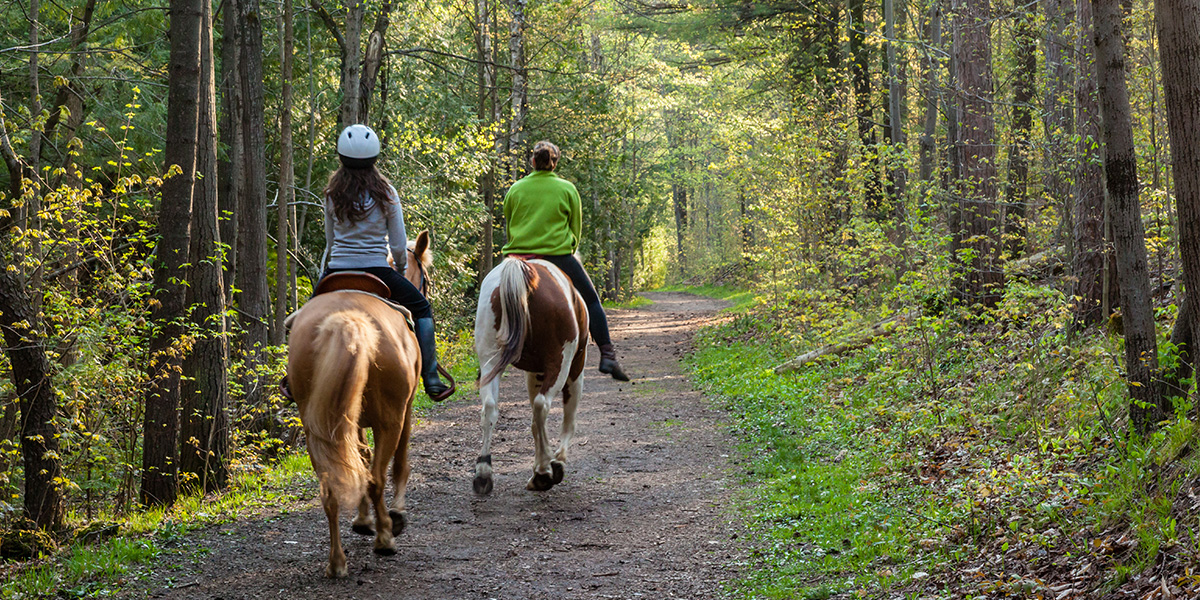
There are more than 100 miles of equestrian trails running through Ocala National Forest, the most popular being the One Hundred Mile Trail and the 34-mile Lake/Alachua/Marion County (LAM) Trail.
With nearby Ocala being the center of Florida’s horse industry and ranches, it’s natural you would have a place to ride in the forest.
Bring you own horse, or ride with guides.
The One-Hundred Mile Trail is divided into three loops: the 38-mile Flatwoods Riding Loop, the 38-mile Prairie Riding Loop, and the 19-mile Baptist Riding Loop.
The LAM Trail stretches 34 miles from Doe Lake almost to Eureka, along the Ocklawaha River.
The beauty of the Ocala National Forest is that you don’t have to stick to the trails if you don’t want to. You can park your horse trailer to the side of any forest road, as long as you leave room for other vehicles to pass.
There is designated trailer parking available for both the LAM Trail and the One Hundred Mile Horse Trail at the forest’s Swim Pond Trail Head, where you will also find primitive camping. Swim Pond is east of Doe Lake Recreation Area and the west of Big Scrub Campground, accessed from the same entrance off FR 14 as Trout Pond.
Guided trail rides are offered by Cactus Jack’s Trail Rides on the west side of the forest in Ocala.
- Cactus Jack’s Trail Rides, 11100 SW 16th Ave, Ocala, FL 34476. Reservations: Book online or send an e-mail to FLHorseRiding@gmail.com
On the north side of the forest in Fort McCoy, you can hitch a ride with Makin’ Tracks Trail Rides. One of their offerings takes riders to swim with their horses in the Ocklawaha River.
- Makin’ Tracks Trail Rides, 15901 NE 137 Court, Fort McCoy, FL 32134. Reservations: Book online. Call or text 352-342-8891 or send an e-mail to makintrackstrailrides@gmail.com
5) Swim, dive or snorkel in a cool spring
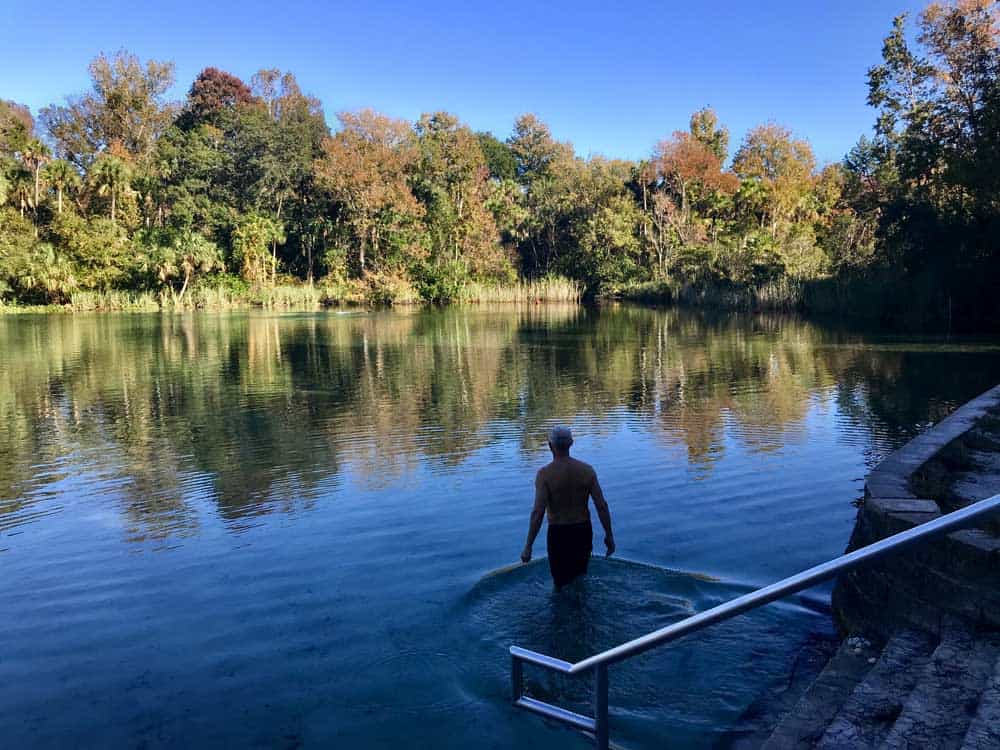
Several springs are easily accessible to visitors in Ocala National Forest, the most popular being Juniper Springs off State Road 40, which crosses the forest below Lake George, and Alexander Springs on County Road 445, nine miles west of Juniper Springs off State Road 40.
Snorkeling is permitted at both springs, but only Alexander Springs allows scuba diving. Scuba diving is limited to the large spring boil, and valid proof of certification is required.
For adult swimmers, Alexander Springs may be the top choice. The spring creates a large, shallow sandy-bottom natural pool ideal for swimming. Where the spring emerges from the bottom, snorkelers and scuba divers enjoy exploring the limestone rocks and boulders in the spring boil. (You can rent snorkel gear here too.)
The Salt Springs Recreation Area is another popular spring in the forest, although a bit more remote. Take U.S. 19 north from State Road 40 (about 4.5 miles east of Juniper Springs).
Salt Springs gets its name from minerals carried to the surface from underground aquifers, providing a level of salinity not found in the other springs.
Day use activities in the Juniper Springs Recreation Area include picnicking, swimming, snorkeling, bird watching, hiking, and paddling a spectacular spring run that runs through a shady sub-tropical forest. Both Alexander Springs and Salt Springs offer similar recreational opportunities.
6) Paddle a spring run
There are several spring runs you can paddle in Ocala National Forest.

Alexander Springs has crystal clear water and a great swimming hole that snorkelers will enjoy. You can rent canoes and kayaks for an easy, scenic 2- to 4-hour paddle where you are likely to see lots of wildlife. Brings hats and sunscreen: The river is in full sun.
You do not need a shuttle service; this trip is an out-and-back paddle.
Read more: Alexander Springs: Easy scenic paddling; lots of wildlife
Nearby Juniper Springs has a scenic spring run, a narrow, twisty 7-mile paddle trail through an amazingly scenic sub-tropical forest. It is the shadiest of the Ocala spring runs and the best in the summer heat and humidity.
Suspended since the pandemic and restored in Fall 2023, the shuttle service for privately owned kayaks has resumed, a cause for celebration among paddlers. Kayak rentals are also available.
Here’s more about Kayaking Juniper Springs Run.
The 4.5-mile Salt Springs Run is a popular paddle trail. Be forewarned, though, that there is no take-out at the end, so you have to paddle back against a mild current to the launch point at the Salt Springs Marina in the Salt Spring Recreation Area.
Salt Springs Run, unlike Alexander and Juniper, has powerboat traffic.
Salt Springs Run dumps its mineral-infused water into Lake George, second-largest lake in Florida and part of the St. John’s River system. If you’ve paddled this far, you should paddle a little further north into Salt Springs Cove and enjoy its magnificent shoreline.
All three springs have concessions where you can rent canoes and kayaks.
On the western edge of the forest, consider Silver Springs State Park.
Read more: Four great rivers to kayak near Ocala National Forest.
For exploring Ocala National Forest and more….
Hunting Season: Archery season for deer: Sept. 13 – Oct. 12; Crossbow: Sept. 13 – Oct. 17; Muzzleloading gun: Oct. 18-31; Youth deer hunt weekend: Oct. 25-26 (1); General Gun Season, Nov. 1-Jan. 18. For more information, visit Florida Fish and Wildlife Commission
Are the canoe rentals still closed?
The concessionaire who runs the canoe and kayak operation at Juniper — https://www.adventureocala.com/recreation-areas — still lists it as closed as of 1-12-22.
You can only primitive camp in the summer. Most of the primitive spots are closed due to hunters starting in November. I’m here (Nov.29th) and have been told I can only camp at official campgrounds.
My wife is coming to Florida for a conference in October 2022. We are from Texas and love to hike. What trails do you recommend where there is not so much traffic. We cannot camp out because my wife is diabetic and we need a refrigerator for her medication.
What do you recommend for exploring Ocala National forest in the summer. As a Florida resident, I know the heat, mosquitos, and summer rain play a big part in what is fun to do in the summer. Is horseback riding good in the summer?
Depends on your tolerance for heat and humidity. Personally, I’d stick to swimming in Juniper Springs, Alexander Springs, Silver Springs or Salt Springs. But arrive early because everybody else has the same idea. :-)
I visited Silver Glen Springs this past Saturday (June 8) … absolutely breathtaking! HIGHLY recommending Ocala National Forest and the various springs to friends…LOVED IT!!! OHH all except the porta potties … I’m not a big fan of those icky things! :)
Thanks so much for your comment.
Regarding the comment above by Phillip Davis, most folks are so used to urban areas (or even rural for that matter) that they don’t know what true “wilderness” looks like anymore. Thankfully nearly sixty years ago, my parents adored getting off paved roads and into National Forests and driving the fire trails & forest service roads in Michigan. I did the same while living in Colorado. Florida’s subtropical landscape is vastly different and when we are out in the forest during winter, the area can seem dry as a desert. National Forests are all left to nature with the exception of prescribed burns in order to contain the naturally occurring wildfires that pop up every year, and of course access roads into the woods. I prefer it that way – feels more like God & Nature intended it to be. <3 :-)
Although there are no true hills to hike in the Ocala area, there is some pleasant small “hill” hiking. Parts of the Greenway have long sections of berms remaining from the days of the defunct Cross Florida Canal construction that are traversed by hiking trails. Some of the berms became eroded before the forest grew back making the hiking even better.