
More than a dozen North Florida State Parks with campgrounds showcase diverse eco-systems that represent all that Florida has to offer, from coastal dunes to inland rivers, forests and springs.
Most of these state parks are near one of three Interstate highways crossing North Florida. All are perfect layovers — or destinations in themselves — for out-of-state visitors.
In this northern region of the state, cooler weather prevails earliest in autumn and latest in spring (but not much relief from the sun in summer).
Late fall may in fact be the best time of year for camping anywhere in our state: cool, even chilly temps, and empty campgrounds until January. You might even catch a little fall color.
Parks included in this story…
Stories in this series:
- Florida state parks with camping in the Panhandle
- 11 enchanting Central Florida state parks with camping
- Paradise found at 9 South Florida state parks with camping
- 14 North Florida State Parks with camping
Anastasia State Park
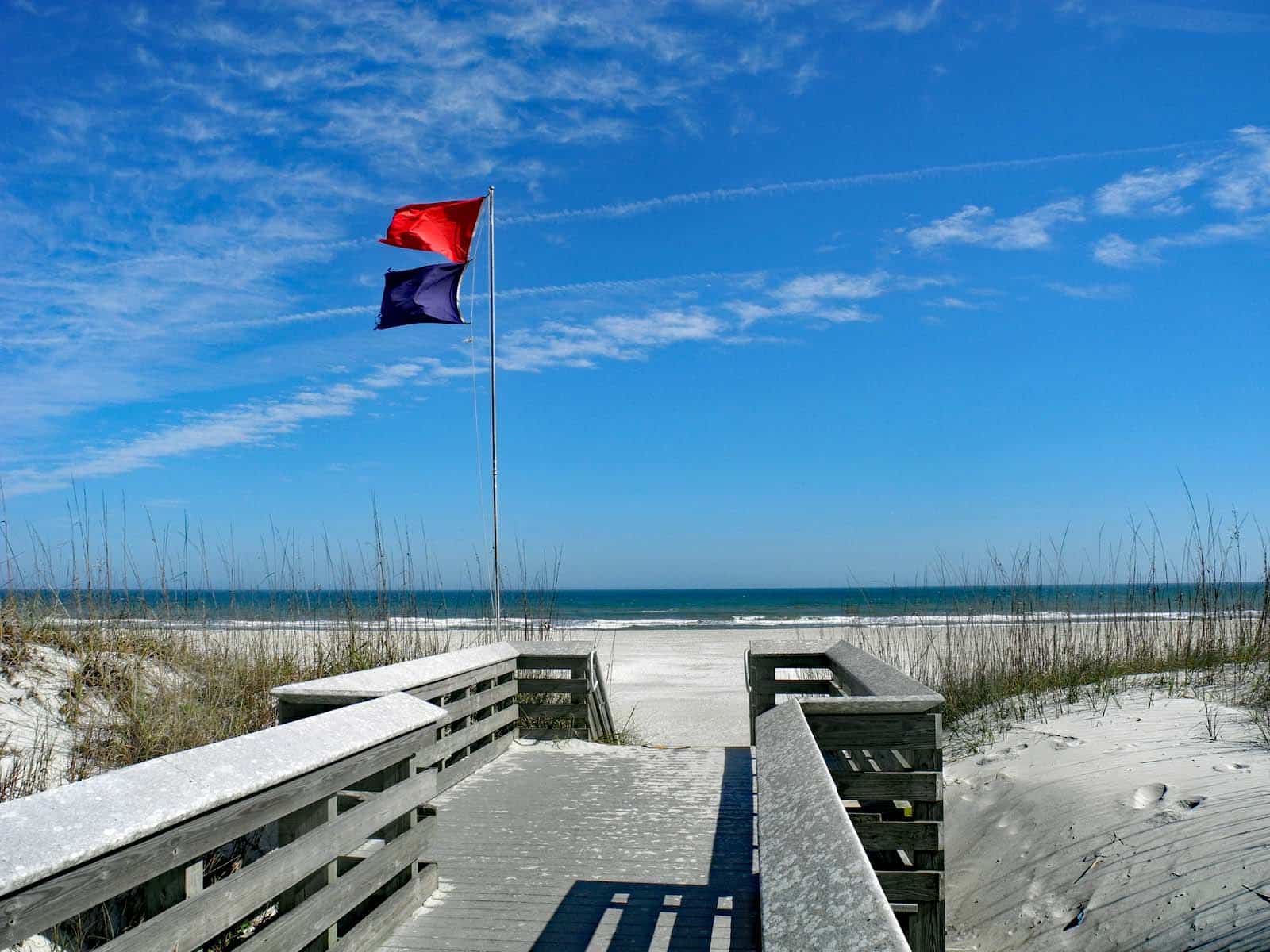
Four miles of pristine beach and nearby St. Augustine make Anastasia State Park the perfect destination for visiting the nation’s oldest city while soaking up the sun on four miles of pristine beach.
Bicycles are welcome on the beach’s hard-pack sands, opening up areas not easily accessible. A lagoon on the west side of the park features a concession where you can rent kayaks, paddleboards and small sailboats.
The campground is in a hammock forest, not far from the beach but protected from blowing sand and salt spray, still close enough to hear ocean waves flowing ashore. Ground cover provides visual privacy between most sites.
The park has 139 camp sites for RVs and tents with electric and water hookups, a picnic table, in-ground grill and fire ring. Dump station, no sewer hookups. Maximum RV length is 40 feet. Wheelchair Accessible: Yes. Pets: OK, but not on beaches.
Anastasia State Park, 1340-A State Road A1A South, St. Augustine, FL 32080. Rates: $28 plus a $7 per day utility fee and non-refundable $6.70 booking fee. Reservations: Book online at reserve.floridastateparks.org or call (800) 326-3521 up to 11 months in advance for Florida residents, 10 months in advance for non-residents. Getting there: Anastasia State Park is in St. Augustine, about 18 miles from I-95, Exit 298.
Read more about this park: Anastasia State Park seduces
Faver-Dykes State Park
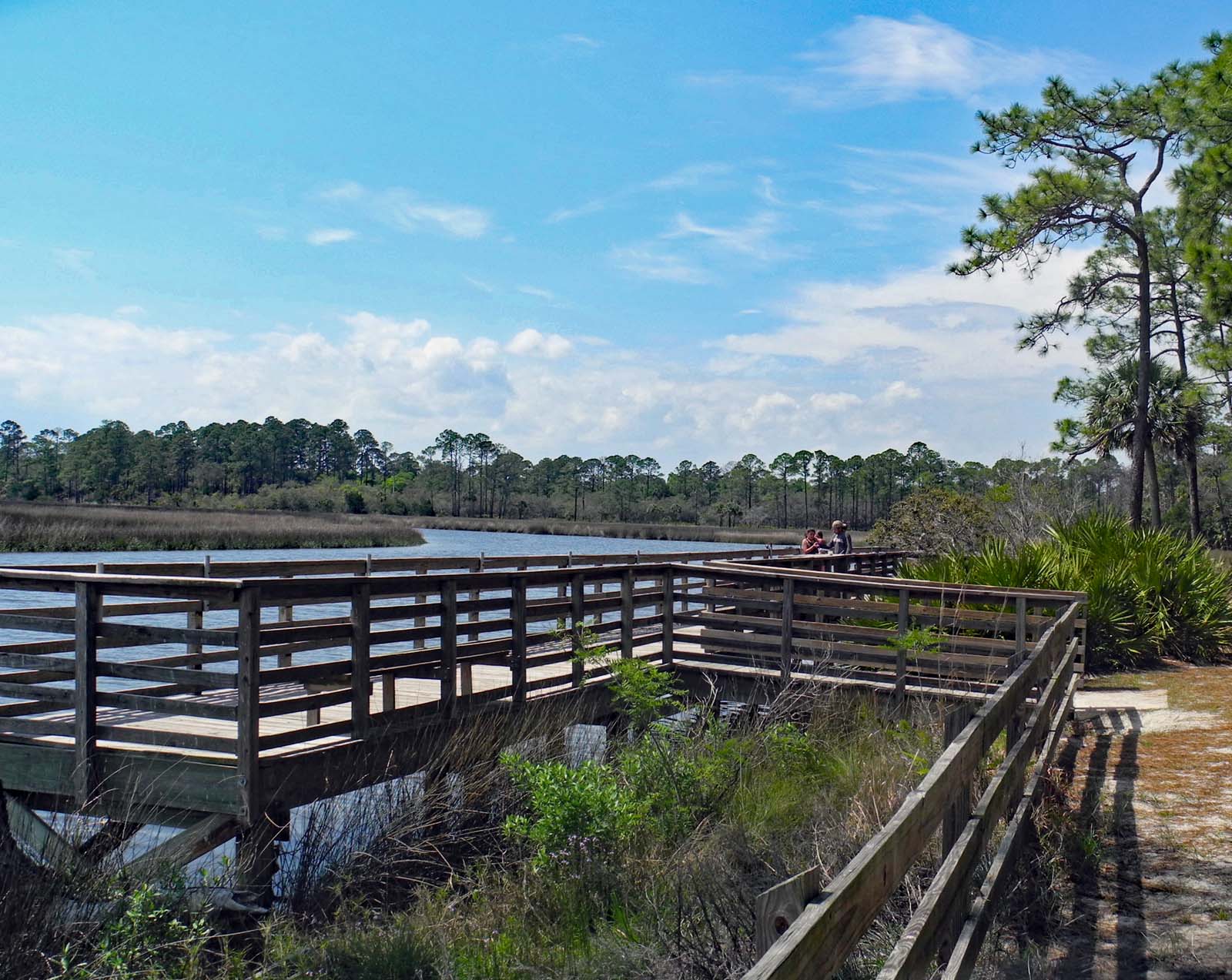
This tranquil park borders Pellicer Creek, which flows through open marshes to the Intracoastal Waterway, and it’s very close to Interstate 95, making it an excellent overnight stop if you’re just passing through.
But it’s worth staying a while, especially for kayakers. Pellicer Creek is a state-designated canoe and kayak trail with miles of paddle-worthy arteries to explore and engage with nature.
Birdwatching is popular during the spring and fall migrations, when more than 100 species have been seen in the park. And historic St. Augustine is only 20 miles north.
The small campground has 30 sites in a shady hardwood hammock, buffered with natural vegetation for privacy. Each site has water & electric, fire circle with grill and a picnic table. Dump station, no sewer hookups. Hot showers and restrooms with ADA accessible amenities are available. Maximum RV length is 30 feet.
Faver-Dykes State Park, 1000 Faver-Dykes Road, St. Augustine, FL 32086. Rates: $20 plus a $7 per day utility fee and a non-refundable $6.70 booking fee. Reservations: Book online at reserve.floridastateparks.org or call (800) 326-3521 up to 11 months in advance for Florida residents, 10 months in advance for non-residents. Getting there: Faver-Dykes State Park is south of St. Augustine, just 2 miles off I-95, Exit 298.
Related story: Five cool things we discovered in St. Augustine
Pets are allowed in all Florida State Park campgrounds, but restrictions may apply to other areas of the park. Alcohol is permitted within campsites but not elsewhere.
Fort Clinch State Park
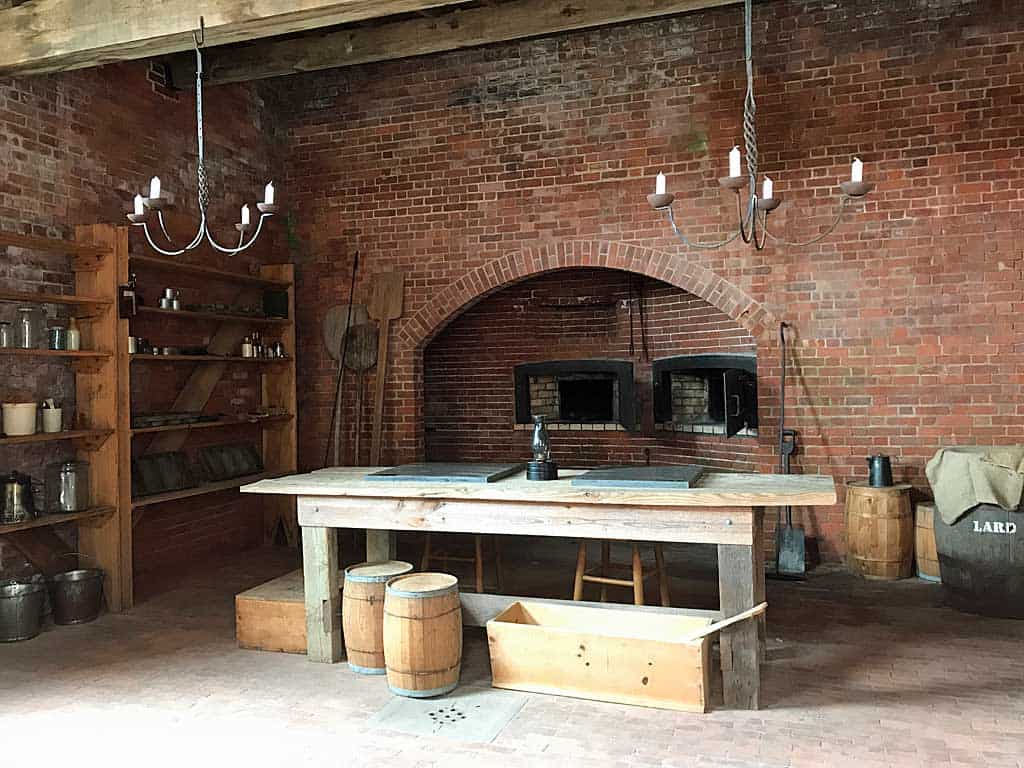
Fort Clinch was built in 1847, after the end of the Second Seminole War, and it was a Union garrison during the Civil War, disrupting the shipping of supplies to the Confederate Army along the St. Mary’s River.
During the Great Depression, the Civilian Conservation Corps restored the fort and built a museum.
Ride your bicycle to the charming town of Fernandina Beach nearby. You’ll want fat tires on your bike if you choose to ride several miles of beach (only at low tide), and there’s a six-mile paved multi-use trail runs adjacent to the park road and through forests.
This state park has two campgrounds, one on the river side and the other tucked behind sand dunes near the Atlantic Ocean. The Amelia River Campground has 40 sites and the Atlantic Beach campground has 21. Each site has a fire ring, picnic table, water and electric hookups. Dump station, no sewer hookups. Maximum RV length is 40 feet. Wheelchair Accessible: Yes. Pets: OK.
Fort Clinch State Park, 2601 Atlantic Avenue, Fernandina Beach, FL 32034. Camping: 61 sites, Camping fee: $26/night plus a $7 per day utility fee and a non-refundable $6.70 booking fee. Reservations: Book online at reserve.floridastateparks.org or call (800) 326-3521 up to 11 months in advance for Florida residents, 10 months in advance for non-residents. Getting there: Fort Clinch State Park is north of Jacksonville on the Georgia-Florida state line, about 17 miles from I-275, Exit 41.
Read more about Fort Clinch State Park, Amelia Island gem
Gamble Rogers State Park
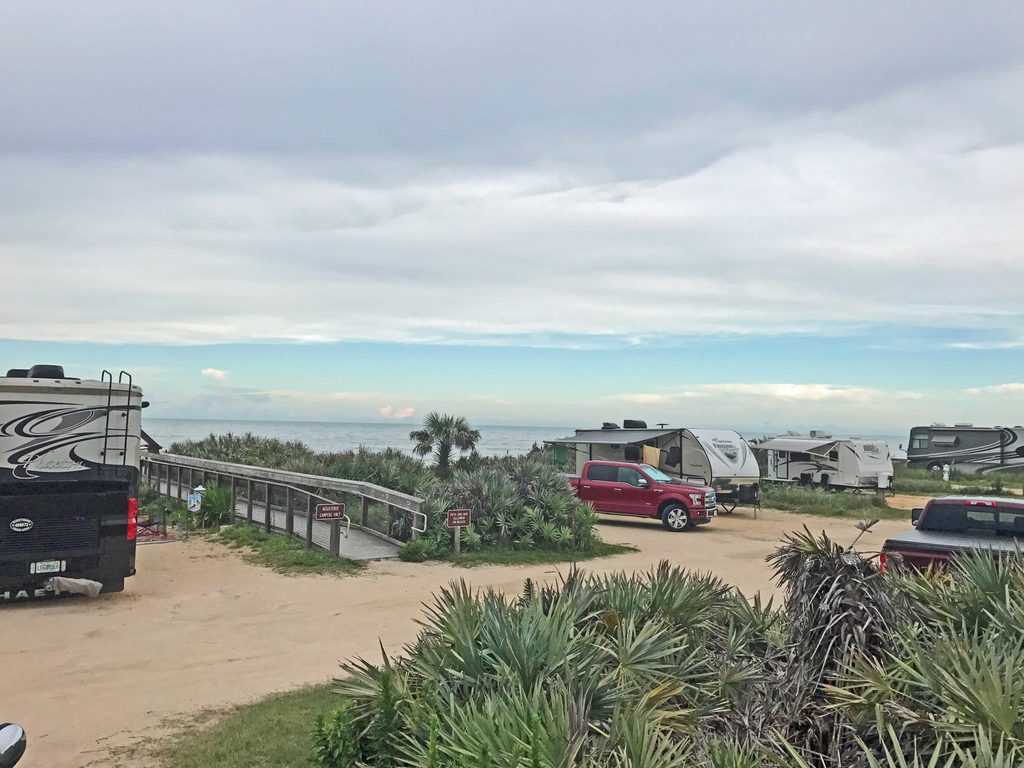
Oceanfront campsites in the dunes set Gamble Rogers State Park apart from the rest. It doesn’t get much better than this.
The park’s half-mile beach expands exponentially to three-and-a-half miles when you include adjacent North Peninsula State Park
There are two campgrounds, a sandy oceanfront section of 34 sites behind the dunes with beach access, and a newer riverside loop of 34 sites with pads on the inland side of State Road A1A.
The riverside section of this 145-acre park has hiking trails and a boat ramp on the Intracoastal Waterway offering access to saltwater marshes on the Matanzas and Tomoka rivers.
Campsites have water and electric, picnic table, fire ring and access to a communal dump station. Beachside, the sites are close together without any vegetation or privacy, while the riverside campground affords more space and privacy between sites.
On the 2nd and 4th Saturdays of every month, folk musicians gather to honor the park’s namesake, folksinger James Gamble Rogers, who drowned here trying to save a struggling swimmer.
Gamble Rogers State Park, 3100 S. State Road A1A, Flagler Beach, FL 32136. Camping fee: $28 per night, plus $7 daily utility fee for RVs, state and local taxes and a one-time $6.70 reservation fee. For reservations, book online at reserve.floridastateparks.org or call 800-326-3621. Getting there: Gamble Rogers State Park is in Flagler Beach, about 7 miles from I-95, Exit 284
Read more about this park: Oceanfront jewel celebrating song and sea
Gilchrist Blue Springs State Park
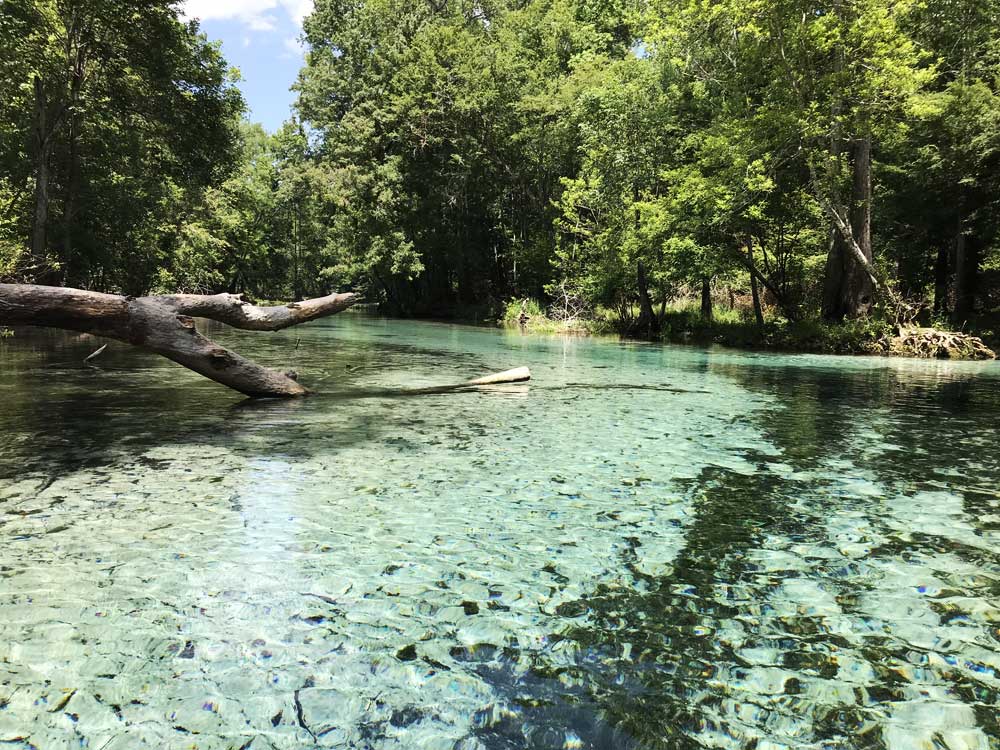
Editors Note: The campground at Ruth B. Kirby Gilchrist Blue Springs State Park reopened on October 1, 2026 after extensive renovations.
Gilchrist Blue Springs State Park is a new addition to the Florida state park system, a recent state purchase from private owners, preserving one of the prettiest spring runs feeding the Santa Fe River, Big Blue.
There are actually four springs in the park, but three (Little Blue, Naked and Johnson) are in the forest, inaccessible by boat.
At Big Blue’s springhead, the swimming area has a platform about 10 feet above the water for folks who want to take a big plunge, as well as sandy banks for those who want to enter the water gradually.
Gilchrist Blue Springs State Park has 23 campsites: 16 sites for RV or tent camping (30 amp available) and seven sites designated for tents only.
Gilchrist Blue Springs State Park, 7450 N.E. 60th St., High Springs FL 32643. Camping fees: $18 per night plus $7 nightly utility fee (waived for tents), tax and a nonrefundable $6.70 reservation fee. For reservations, go to reserve.floridastateparks.org or call (800) 326-3521 up to 11 months in advance for Florida residents, 10 months for non-residents. Kayak Rentals: aoafun.com Getting there: Gilchrist Blue Springs State Park is near High Springs, about 10 miles from I-75, Alachua Exit 399.
Read this related story: Kayaking Santa Fe River: Springs & scenery make it a treasure
Gold Head Branch State Park
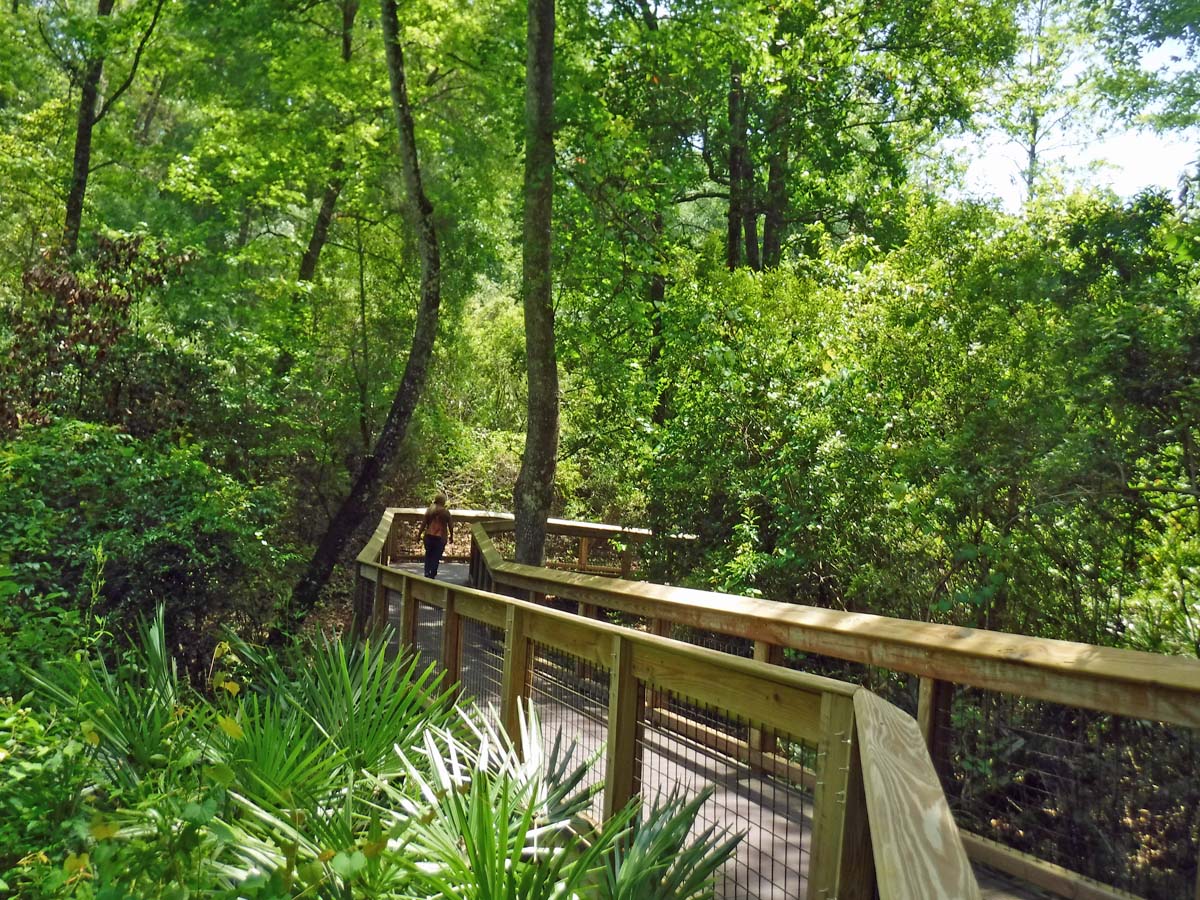
Ancient sand dunes far from the sea with rolling hills and deep ravines populated with springs dominate this 2,000-acre state park developed in the 1930s by the Civilian Conservation Corps, making it one of Florida’s first state parks.
When water is high, you can swim or kayak in Little Lake Johnson, but the lake is too low more often than not. Hiking is popular on a 5.5-mile section of the Florida National Scenic Trail, and I loved riding my electric bike all around the campground and on some unpaved trails.
As Florida goes, this is high country.
Each of three camping areas has a centrally located restroom with hot/cold showers. The park’s 73 campsites have 20/30-amp electric, water, fire ring and picnic table. Dump station, no sewer hookups. Laundry facilities. Maximum RV length is 30 feet. Pets are allowed in the campgrounds but not in the swimming area or buildings.
Gold Head Branch State Park, 6239 State Road 21, Keystone Heights FL 32656. Camping fee: $20/night plus $7 utility fee and non-refundable $6.70 booking fee. Two primitive sites on trails, $5 per person. No utiity fee for tents. Cabins: $65-$100 plus utilities. Reservations: Book online at reserve.floridastateparks.org or call (800) 326-3521 up to 11 months in advance for Florida residents, 10 months for non-residents. Getting there: Gold Head Branch State Park is northwest of Gainesville.
Read more about this park: Gold Head Branch State Park: Unsung treasure with cabins, camping
Lafayette Blue Springs State Park
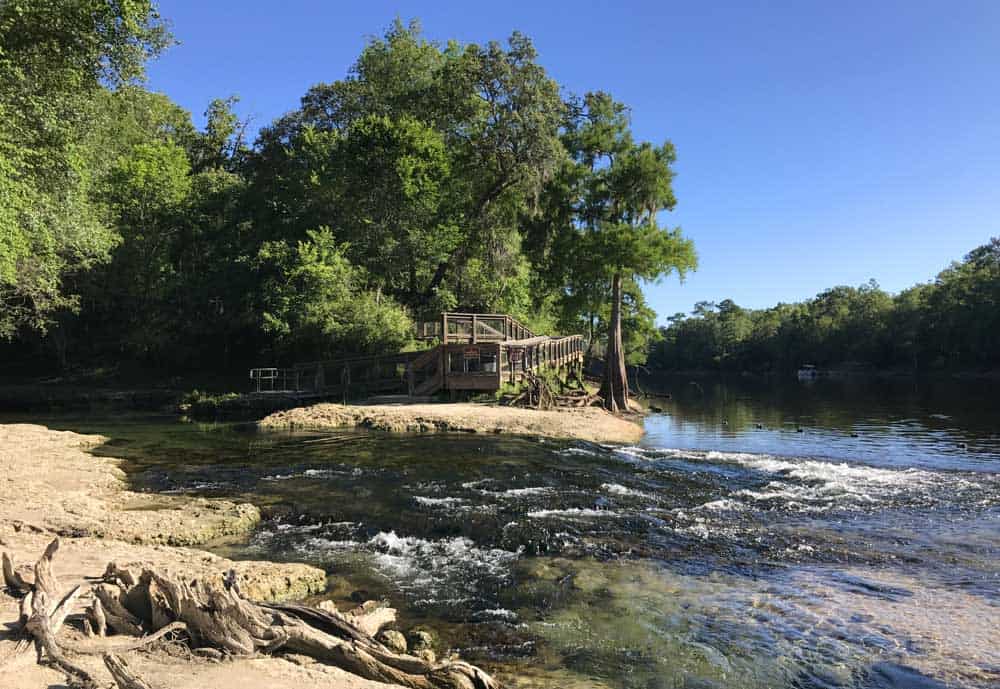
Remote, picturesque and rural, Lafayette Blue Springs State Park is a long way from major population centers, and that’s just the way we like it. The park has a terrific spring for swimming and some of our favorite Florida park cabins.
Aside from the cabins, only primitive tent sites are available in the park. No RVs.
The cabins are expansive two-bedroom houses on stilts set in lovely quiet woods. The cabins require a walk up stairs to reach them, although one cabin has an elevator to make it accessible to people with disabilities.
They are a short stroll to the Suwannee and the spring, but the thick forest is all you see from the wraparound screen porch.
Each cabin has an electric fireplace, a full kitchen, one bedroom with a queen bed, and one bedroom with twin beds.
The primitive tent sites are designed to serve paddlers stopping overnight on the Suwannee River. Arrive by car, but you need to carry gear a short distance to the campsites. (There is a cart.)
Each site has a picnic table, fire ring, charcoal grill, water and electricity. A portable restroom facility is nearby.
Lafayette Blue Springs State Park, 799 Blue Springs Rd, Mayo, FL 32066. (386) 294-3667. Cabin rental: $100 per night plus $7 nightly utility fee, tax and nonrefundable $6.70 reservation fee. Reservations: Primitive camping is first-come, first-served. Book cabins online at reserve.floridastateparks.org or call (800) 326-3521 up to 11 months in advance for Florida residents, 10 months in advance for non-residents. Getting there: Lafayette Blue Springs State Park is near Live Oak, about 30 miles from I-10, Exit 283.
Read more about this park: Lafayette Blue Springs State Park: Cool springs, comfy cabins, kayak the Suwannee
Little Talbot Island State Park
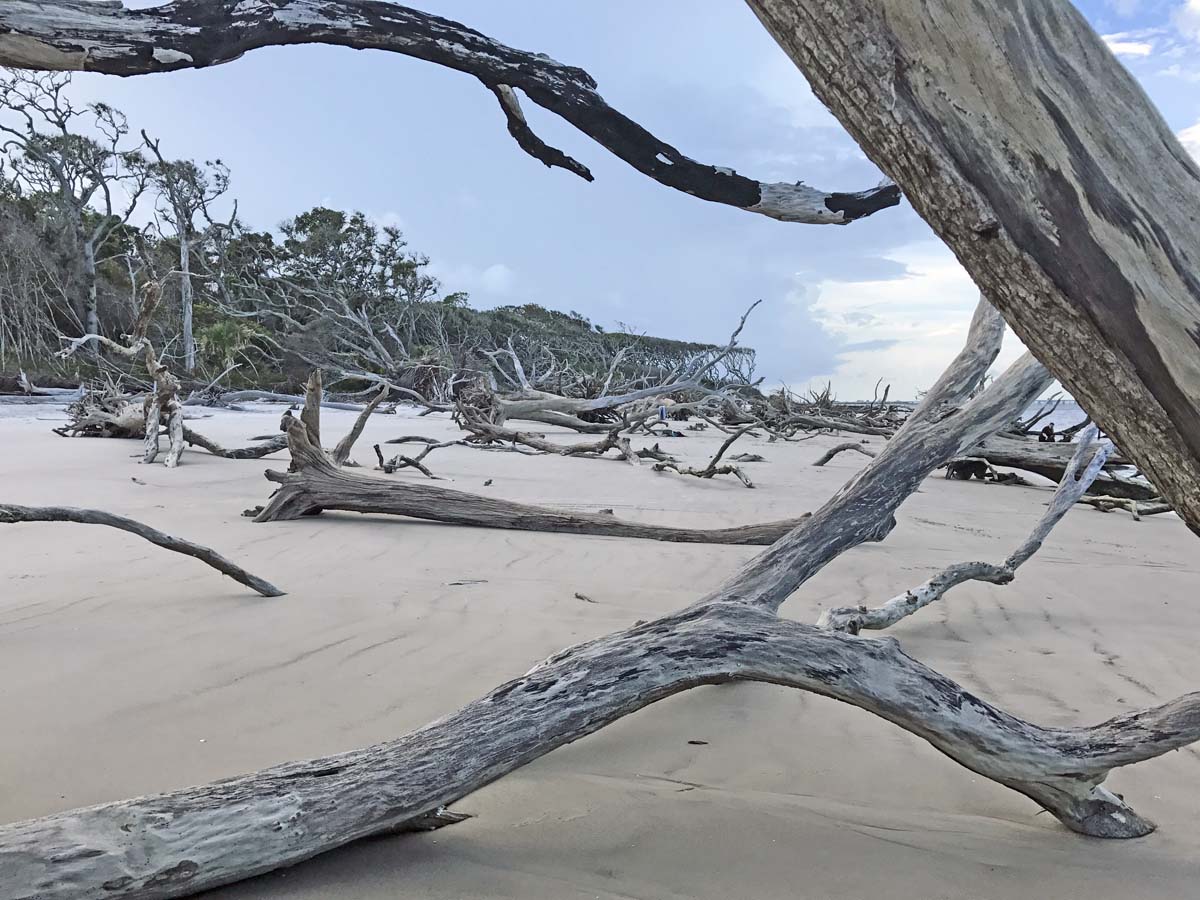
Boneyard Beach on Big Talbot Island, just north of the campground on Little Talbot Island. (Photo by Bob Rountree)
With five miles of white-sand beaches, Little Talbot Island is one of Florida’s few remaining undeveloped barrier islands, and it is the campground anchor for six other state parks clustered around it, collectively known as the Talbot Islands State Parks.
The park has 2.5 miles of paved roadway for bicycles, or you can ride along the beach on hard-pack sand.
Boneyard Beach on Big Talbot Island is a must-see with its twisted and tangled skeletal remains of live oaks and cedar trees, beaten down and uprooted by erosion, then repeatedly salt-washed, sea-bashed and sun-beaten. An eerie site.
Equally fascinating is Blackrock Beach, an unusual lava-like formation that is actually hardpan sediment uncovered by severe erosion. Both beaches are accessible from the half-mile-long Blackrock Nature Trail off State Road A1A.
There are 36 campsites on Little Talbot Island, tucked into coastal dunes surrounded by a maritime hammock of live oaks and magnolia trees. Each site has 20/30-amp electricity, water, fire ring and picnic table. Dump station, no sewer hookups. Maximum RV length is 30 feet. Wheelchair accessible and pets are OK.
The campground has a laundry facility and two bathhouses with hot showers.
Little Talbot Island State Park, 12157 Heckscher Drive, Jacksonville, FL 32226. Camping fee: $24/night plus $7 daily utility fee and a one-time $6.70 booking fee. Reservations: Book online at reserve.floridastateparks.org or call (800) 326-3521 up to 11 months in advance for Florida residents, 10 months for non-residents. Getting there: Little Talbot Island State Park is on the northeast edge of Jacksonville, about 18 miles from I-95, Exit 362 A
Read more here about The Talbot Islands
Manatee Springs State Park
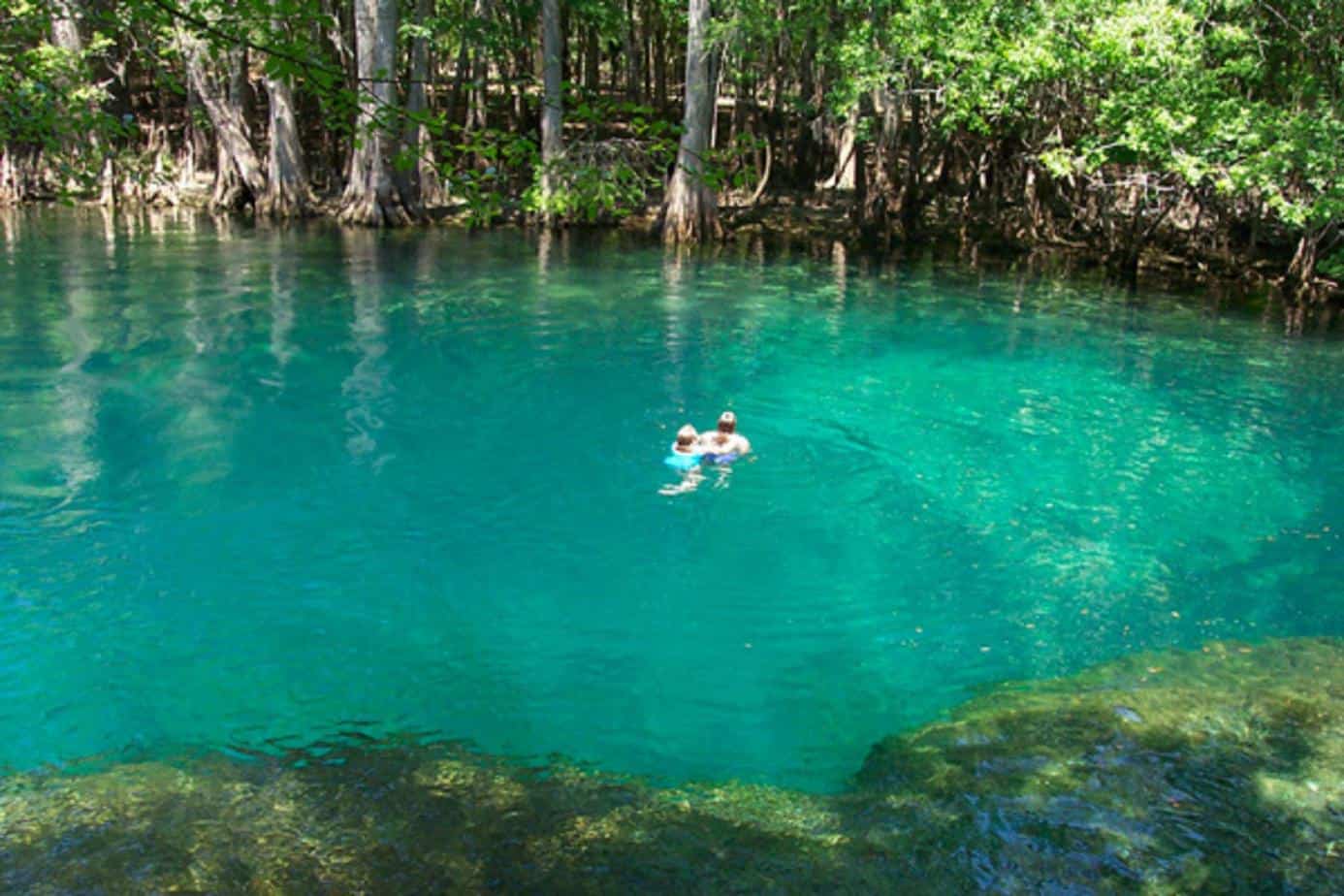
About an hour west of Gainesville, this remote state park is an outstanding destination on Florida’s remote “Nature Coast” in the Big Bend. Local tourism boosters are trying to brand it “Pure Water Wilderness.”
Whatever you call it, the area has some outstanding natural features, the centerpiece being this park’s namesake first-magnitude spring that pumps 100 million gallons of water daily into the Suwannee River.
Swimming and scuba diving are permitted in all but a few restricted areas, and kayak, canoe and paddleboard rentals are available from the park concession.
Mountain bikes are welcome on 8 miles of wooded off-road trails, and hikers can enjoy another 8 miles of trails that wind around cypress swamps, sinkhole ponds and uplands.
Manatee Springs State Park has 80 campsites in three loops, each with its own restroom with hot showers, and all three campground loops are within easy walking distance of the spring. Each site has a electric and water. Fourteen sites in the Magnolia 1 loop are set aside for tent campers. Maximum RV length is 40 feet on Sites, 5, 7 and 37.
Glamping sites are located in the Hickory Loop and feature queen beds with linens, interior and exterior lighting, heating and cooling, coffee maker, interior and exterior seating with a fire pit and outlets for charging electronic devices.
What is Glamping? Glamping is short for “glamorous camping” with luxury amenities. Generally, everything for your overnight stay is provided. All you need to bring is your suitcase or backpack and toiletries.
Manatee Springs State Park, 11650 N.W. 115 St., Chiefland FL 32626. Camping fee: $20 plus $7 daily utility fee for RVs (not tents) and a one-time $6.70 booking fee. Glamping: Seasonal range $90 to $225 per night. For RV and tent reservations, book online at reserve.floridastateparks.org or call (800) 326-3521 up to 11 months in advance for Florida residents, 10 months for non-residents. Glamping reservations are managed by the park concession. Getting there: Manatee Springs State Park is about 40 miles west of Gainesville at I-75 Exit 390.
Read more about both parks: Hidden treasures for cabins, camping
O’Leno State Park
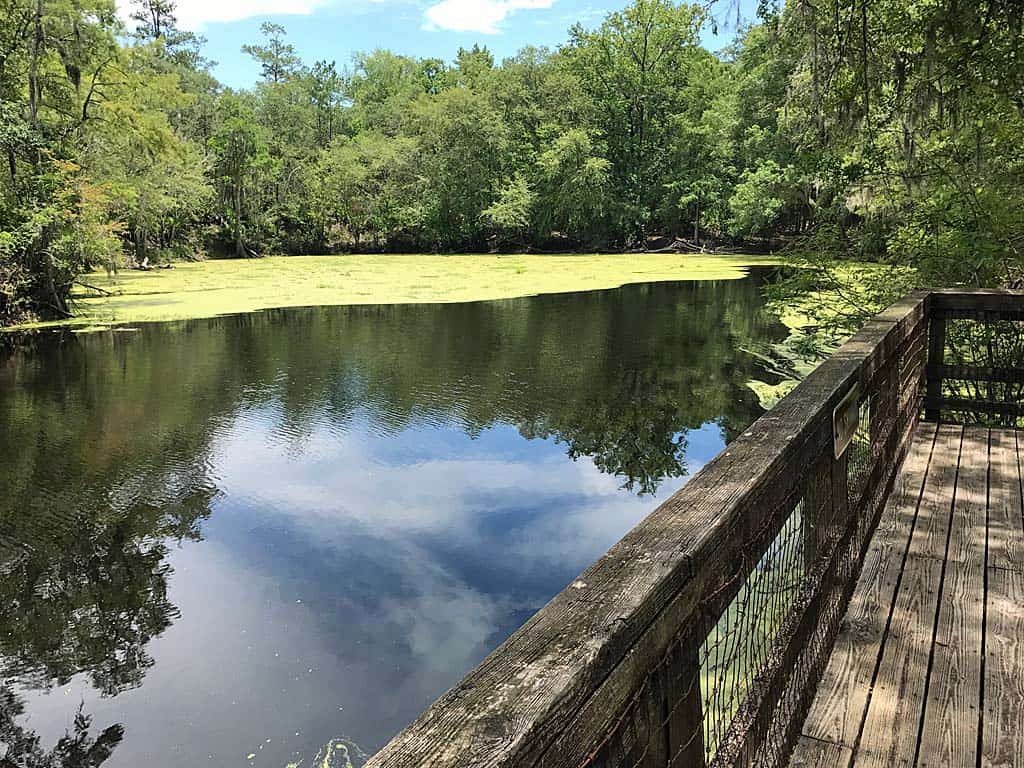
This scenic Florida State Park is along the banks of the Santa Fe River, one of the best paddling destinations in Florida, and there are miles of hiking, bicycling and nature trails, one of which takes you to the point where the river disappears underground.
Another trail takes you through mysterious woods with “lakes” that pop up out of nowhere, but actually are part of an underground river system.
O’Leno State Park is one of Florida’s original state parks, developed in the 1930s by the Civilian Conservation Corps.
O’Leno has two camping loops with 61 campsites, each with water, electric, in-ground grill, picnic table and a centrally located restroom in each camping area. A dump station and dumpsters on site. Pets are allowed within the two campground loops but not in the swimming area, river, youth camps or buildings. (Maximum RV length is 50 feet.)
O’Leno State Park, 410 SE O’Leno Park Road, High Springs, FL 32643. 386-454-1853. Camping Fee: $18 plus $7 daily utilities fee, tax and a one-time $6.70 booking fee. For camping reservations, book online at reserve.floridastateparks.org or call (800) 326-3521 up to 11 months in advance for Florida residents, 10 months for non-residents. Getting there: O’Leno State Park is north of Gainesville, about 8 miles off I-75, Exit 414
Read more about this park: Disappearing river takes a dive in the woods at O’Leno State Park
Paynes Prairie State Park
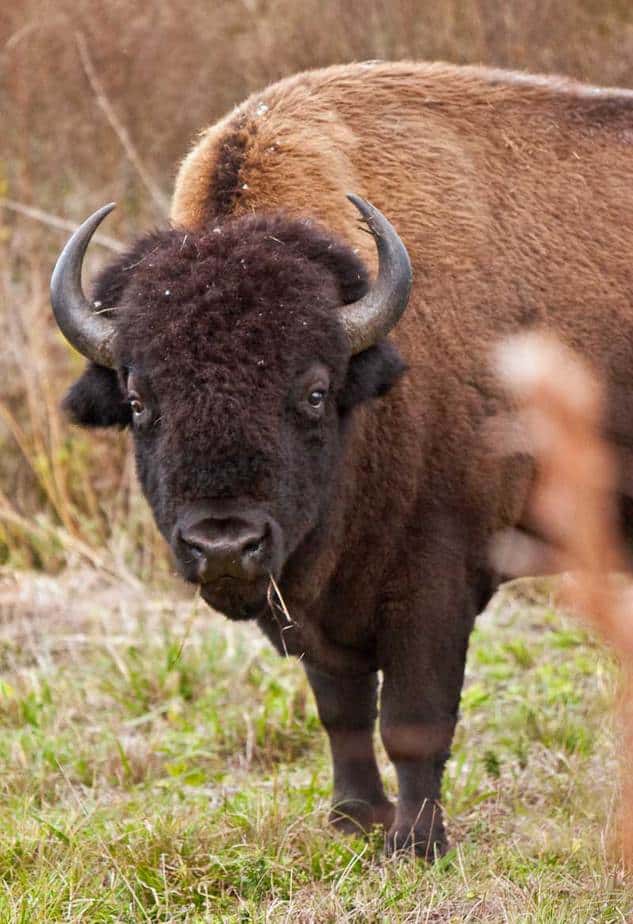
Paynes Prairie Preserve is a vast Everglades-like savannah, a fabulous destination for hiking, biking, camping and particularly wildlife viewing.
Roaming the prairie, within range of hikers, are wild horses, descendants of those brought to Florida by the Spanish, and bison, re-introduced here in 1975. Bison actually lived here when Spanish explorers arrived, so it’s an authentic Florida experience.
The densely shaded campground is near Lake Wauburg and it accommodates tents, trailers or RVs (back in). There’s a short walk from the parking area to the tent sites. Each tent site has a lantern post, fire ring with grill and picnic table with shared water and electric service.
The 30 RV sites each have 30-amp electric service, a lantern post, picnic table, and a fire ring with grill. Restrooms are ADA accessible with hot showers, and the central dump station serves recreation vehicles.
Paynes Prairie State Park. 100 Savannah Blvd., Micanopy FL 32667. Phone 352-545-6000. Camping: $18 plus a $7 daily utility fee, sales tax, and one-time $6.70 reservation fee. Primitive tent camping is $5 per person, per night. For reservations, book online at reserve.floridastateparks.org or call (800) 326-3521 up to 11 months in advance for Florida residents, 10 months for non-residents. Getting there: Paynes Prairie State Park is just south of Gainesville, about 9 miles off I-75, Exit 382
Read more about this park: Paynes Prairie: Bison and wild horses? Yup, in Florida
Rainbow Springs State Park
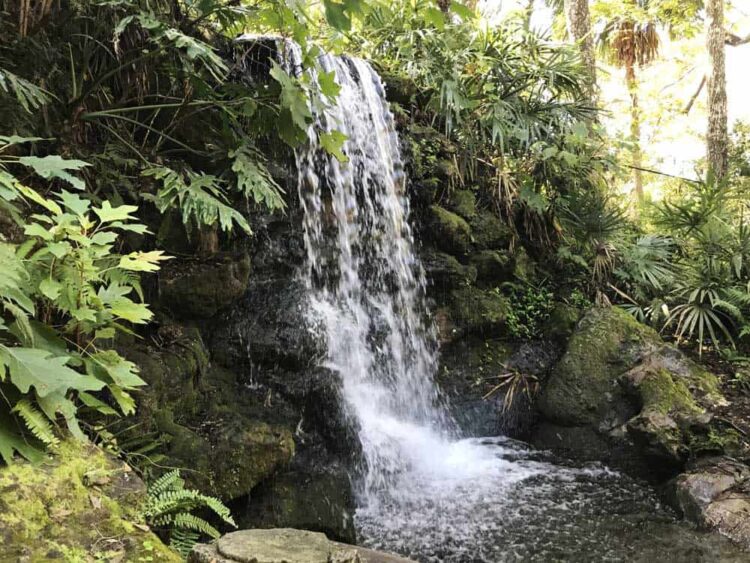
Rainbow Springs, Florida’s fourth largest spring, has dozens of bubbling vents producing a swimming area at Rainbows Springs State Park in Dunnellon that looks like one of the cleanest pools you’ve ever seen.
In summer, the Rainbow River sees hundreds of people on tubes float down its pristine waters every day. Tubing season runs April to October. From fall to spring, the Rainbow River belongs to kayakers, and it makes for an outstanding outing.
Rainbow Springs was a commercial roadside attraction from the 1930s to 1973, but when the newly built Interstate system sucked traffic out of small towns, it could not compete with the likes of Disney, which opened in 1971. After shutting down, the community rallied to save Rainbow Springs from development and it became a state park that opened in 1992.
The campground has full hookups at every site and has an entrance separate from the park’s day-use area, which gets extremely crowded on weekends and holidays. Max RV length is 103 feet.
Rainbow Springs State Park, 19158 SW 81st Place Road, Dunnellon, FL 34432. (352) 465-8555. Camping rate is $30 and $7 utility fee plus tax and a one-time booking fee of $6.70. Reservations at reserve.floridastateparks.org or call (800) 326-3521 up to 11 months in advance for Florida residents, 10 months for non-residents. Getting there: Rainbow Springs State Park is about 25 miles from I-75, Exit 341
Read more: Rainbow River: Pure spring water makes kayaking, tubing tops
Silver Springs State Park
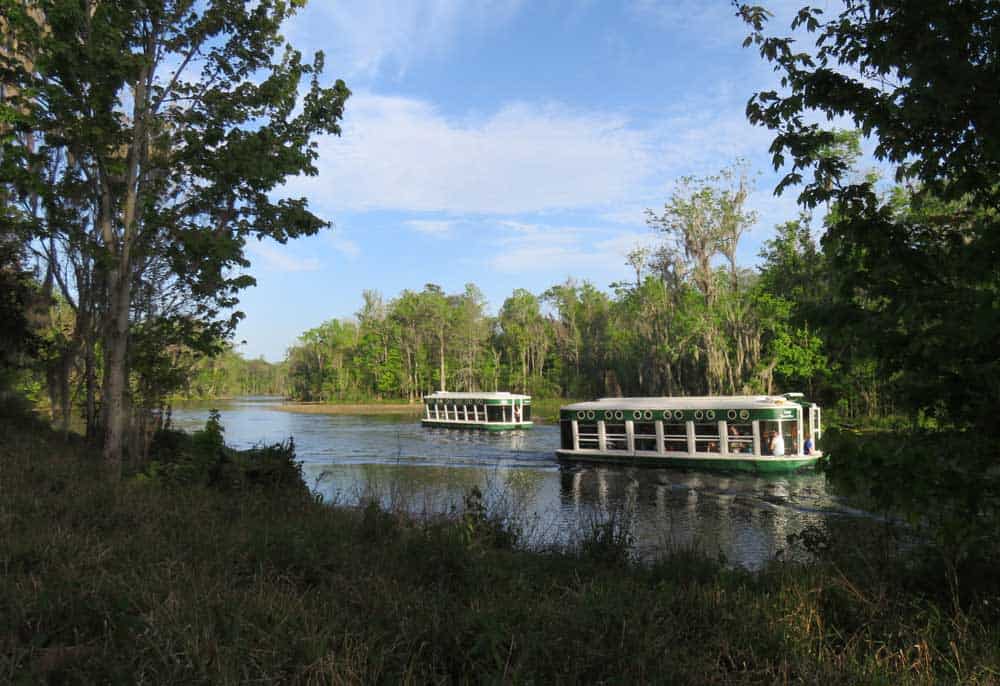
If you haven’t experienced Florida’s most famous spring, you’re missing one of the most beautiful destinations in Florida.
Silver Springs also happens to be Florida’s original tourist attraction, where glass-bottom boat trips originated 140 years ago.
In 2013, the state of Florida took over the famous attraction, merging it with a neighboring state park and preserving one of the most exquisite slices of Florida natural beauty anywhere.
Those glass-bottom boat tours are still marvelous, the electric boats gliding quietly around the spring so you can peer into a deep, clear waters filled with fish.
Other activities include on and off-road bicycling, birding, boating, horseback riding, and paddling. A new network of hiking trails has also opened recently.
In Spring, wild azaleas flourish along the ridgeline above the river.
The campground has 59 spacious sites with water and 30-amp electric hookups; 10 sites offer 50 amp service. All sites have fire ring, a barbecue grill and a picnic table. Two sites are wheelchair accessible with an ADA accessible restroom with showers. Pets are OK in the campground but not in cabins. Maximum RV length is 50 feet.
Silver Springs State Park may have the best cabins of any state park: Fully equipped two-bedroom house with a huge screened porch, a gas fireplace, surrounded by a mature forest.
Silver Springs State Park, 1425 N.E. 58th Ave., Ocala FL 34470. Camping: $24 plus $7 utilities daily, tax and $6.70 booking fee. Cabins: $110 (2-night minimum), $7 daily utility fee and a booking fee. Book online at reserve.floridastateparks.org or call (800) 326-3521 up to 11 months in advance for Florida residents, 10 months for non-residents. Getting there: Silver Springs State Park is east of Ocala, about 15 miles from I-75, Exit 358
Read more about this park: Famous spring plus cabins, hiking, history
Suwannee River State Park
As of June 2026, the campground was closed for renovations. Cabins walk-iins are available but reservations are not being accepted.
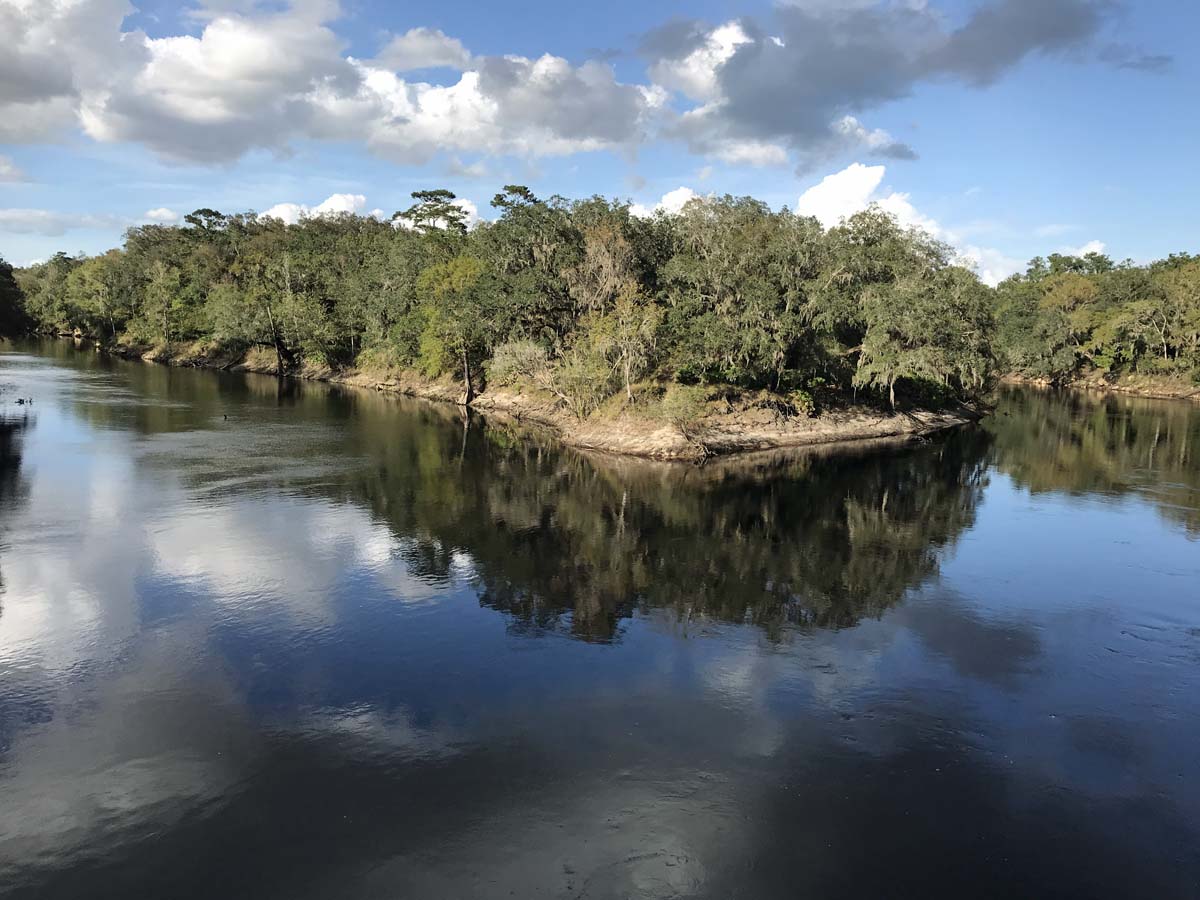
We loved camping at Suwannee River State Park, nestled in quiet woods on a high bluff above the junction of the Withlacoochee and Suwannee Rivers — a pair of rivers on the move but even a novice paddler can negotiate the currents without difficulty.
The small campground contributes to the serenity of this hardwood forest on our visit. The occasional distant rumbling of an overnight train did little to disturb the peace.
Promised songbirds, though, were not in evidence this trip. As a designated hub of the Great Florida Birding Trail, we expected more. It’s entirely possible, of course, that we didn’t sit still long enough to listen.
Explore both rivers in a kayak, canoe or small motorboat. Other activities include on- and off-road bicycling, birding, boating, fishing, hiking, paddling.
The park’s 30 campsites accommodate tents or RVs, including three ADA sites. Each campsite has a picnic table, grill, clothesline, 50 amp electric service, water and sewer hook-ups. An accessible restroom with showers is centrally located in the campground. Pets are welcome. Max RV length is 45 feet.
This park also has five spacious, two-bedroom cabins that sleep six along the Suwannee River Wilderness Trail. Each has heating and cooling, an electric fireplace, screened porch, kitchenette, and they are fully equipped with linens and kitchen utensils. No TV. No phones.
Suwannee River State Park, 3631 201st Path, Live Oak, Fla. 32060. Campground and cabin reservations were not being accepted as of June 2026. Cabins are available to walk-ins. Getting there: Suwannee River State Park is northwest of Live Oak, FL, about 6 miles north of I-10, Exit 275, on U.S. 90.
Read more: Suwannee River State Park at the center of adventure
Stephen Foster Folk Cultural Center
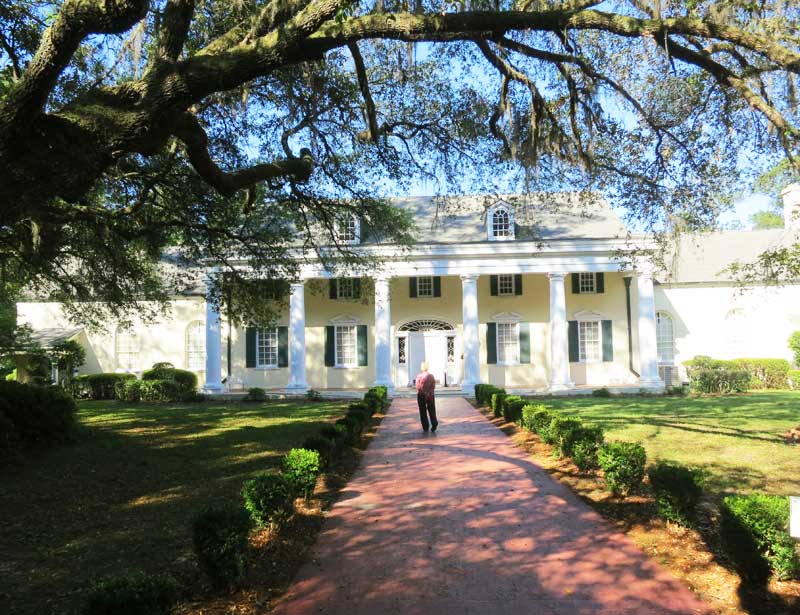
“Way down upon the Suwannee River,” the Stephen Foster Folk Cultural Center is a monument to what never was, which is frankly not unusual for Florida.
While this park is on the Suwannee River, composer Stephen Foster has never actually been here. In fact, he has never seen any part of the river before (or after) he wrote his classic ode to the South, “Old Folks at Home.”
Nevertheless, the park’s museum features exhibits about Foster’s most famous songs, and his music flows from the park’s 97-bell carillon throughout the day.
Outdoor activities in this park include off-road mountain biking on a developed fat-tire trail, fishing, geo-seeking, hiking, horseback riding, paddling, wildlife viewing.
The campground has 45 oak-shaded sites with water and electric hookups, picnic table and fire ring, and all of the sites are ADA accessible. An accessible restroom with showers is centrally located. There are no sewer hookups for RVs. A dump station is available. Maximum RV length is 45 feet.
There are five riverside cabins with two bedrooms with a fireplace, screened porch and kitchenette.
Stephen C. Foster Cultural Center State Park, 11016 Lillian Saunders Drive/U.S. 41, White Springs FL 32096. Campsites are $20 per night plus a $7 daily utility fee for RVs, and a one-time booking fee of $6.70. Cabins: $100 per night. For reservations, go to reserve.floridastateparks.org or call (800) 326-3521 up to 11 months in advance for Florida residents, 10 months for non-residents. Getting there: Stephen Foster State Park is near the junction of I-10 and I-75 in White Springs, about 4 miles from I-75 Exit 439
Read more: Glorious Suwannee river; great cabins, odd old museum
Related stories
- State parks camping in Florida’s Panhandle
- State parks camping in Central Florida
- State parks camping in South Florida & the Keys
Florida State Parks camping FAQ
These frequently asked questions apply only to Florida State Parks camping, not campgrounds managed by other entities, such as Florida State Forests, county or water management district recreation areas. Nor do they apply to campgrounds managed by the federal government.
Is park admission included in state park camping rates?
Yes. Park admission is included in the base camping rate.
Do Florida residents have any benefits when reserving campsites in state parks?
Yes. Florida residents can book campsites at Florida State Parks up to 11 months in advance, a 30-day head start over non-residents.
Are Florida residents entitled to discounts?
Yes and no. Florida residents 65 and older are entitled to a 50% discount off the base camping fee. The discount does not apply to utility or booking fees, which are additional.
A 50% discount on the base camping fee is also available to families from a Florida-licensed foster home and to Florida residents with a Social Security disability award certificate or a 100% disability award certificate from the federal government.
All other Florida residents must pay full price.
Can a single individual reserve more than one campsite at a time?
No, at least not for the same dates in the same park. Each party must reserve their own. This complicates matters when friend groups try to book campsites as a group. Some state parks have group campgrounds that are reservable.
Can I reserve a campsite for someone else?
No. Registered campers must produce identification to rangers upon arrival at the campground, and the ID must match the name on the reservation.
Is there a limit on how long I can stay?
Yes. There is a two-week limit for a reservation at any one state park, and there is a waiting period between bookings at the same park. Reservations are matched in the database to ensure compliance.
Are pets allowed in state park campgrounds?
Yes. Pets are allowed in all Florida State Park campgrounds, but restrictions may apply to other areas of the park, such as beaches or trails.
Are eBikes allowed to use the trails in Florida state parks?
Electric bicycles are allowed on any trail that permits traditional bicycles, per Florida state law, although some restrictions may apply to specially groomed mountain bike trails.
Is alcohol allowed in state park campgrounds?
Yes. Registered campers are permitted to use alcohol within the boundaries of their campsite but not in other areas of the park. Day visitors are not allowed to consume alcohol in the park.
Bonnie Gross contributed to this article.
Manatee Springs flows into the Suwannee River, not the Santa Fe.
Fixed. Thanks, Skip. Greatly appreciate the extra pair of eyes. :-)
The Suwannee and the Withlachoochee come together at Suwannee River S.P. , not Stephen Foster.
Thank you! That was my bad. As I put this article together, I had to jockey a few things around, always a formula for mistakes. I greatly appreciate the heads up. :-)