
Last updated on September 16th, 2026 at 01:07 pm
Whether you are in Daytona Beach for an event at the Speedway or a beach vacation, we share 14 entertaining things to do while you’re here.
Upcoming Speedway Events
- Aug. 28-29, 2026 — Coke Zero 400
- Oct. 15-18, 2926 — Biketoberfest
- Dec 27–30, 2026, 2025 — Daytona Kart Week
- Jan. 22-24, 2027 — Roar Before the Rolex 24
- Jan. 28-31, 2027 — Rolex 24 at Daytona
- Feb 13-21, 2027 — Speedweeks
- Feb. 13: Wheatley Vodka Clash (Preseason exhibition race)
- Feb. 17: Daytona 500 Qualifying
- Feb. 18: Duel at Daytona
- Feb. 19: Craftsman Truck Series (Season opener)
- Feb. 20: O’Reilly Auto Parts Series & ARCA Menards Series Races
- Feb. 21: Daytona 500
- Mar 5-14, 2027 — Bike Week
- Mar. 6, 2027 — Daytona Supercross
- Mar. 5-6, 2027 — Daytona Short Track
- Mar. 13, 2027 — Daytona 200
- May 6-9, 2027 — ‘Welcome to Rockville’ music festival
Cruise ‘The Loop’ for scenic drive
The Ormond Scenic Loop is a 30-mile road trip through live-oak canopies, postcard waterfront scenes, abundant wildlife, three state parks and a state historic site.
Along the way, enjoy kayaking, fishing, hiking, bicycling, and there are two public campgrounds where you can set up a base camp in two of the five state parks along the Loop.
Tomoka State Park is an exceptional base for camping and paddling back-country marshes and waterways while you are attending Speedway events, and nearby Gamble Rogers State Park kicks it up a notch with three dozen campsites right on the beach.
North Peninsula State Park doesn’t have a campground, but it has a beautiful 2.5-mile-long beach where you can pull off the road and go for a swim at one of the many dune boardwalks.
Cap your ride with a late lunch or early dinner at Hulls Seafood Restaurant, on the mainland side of the Granada Boulevard Bridge in Ormond Beach. Avoid during peak dining hours because of long waits for a table.
The Ormond Scenic Loop is popular with bikers. You’ll love it, too.
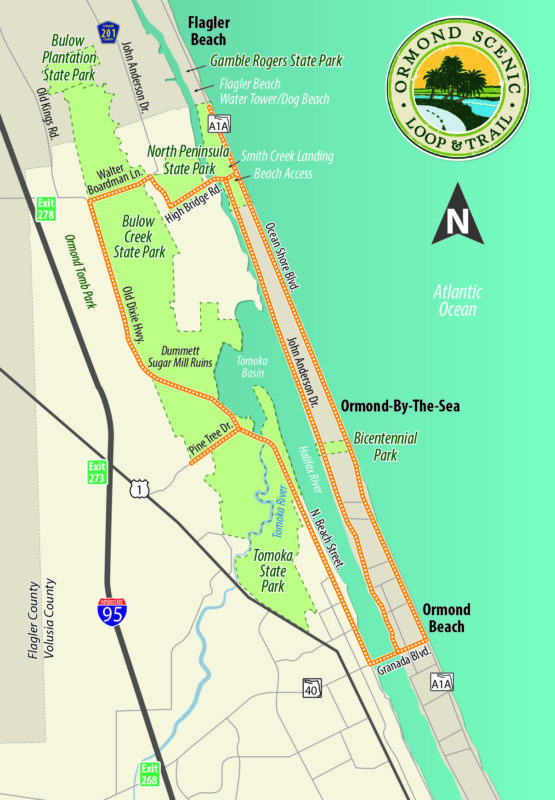
Getting there: From Daytona, go north on State Road A1A to State Road 40 in Ormond Beach. Go west to North Beach Street, then north to Tomoka River State Park, gateway to the Ormond Scenic Loop.
Related stories:
- Ormond Scenic Loop & Trail worth more than a quick ride by Bonnie Gross
- Tomoka State Park: Gateway to the Ormond Scenic Loop by Bob Rountree
Camp on the beach
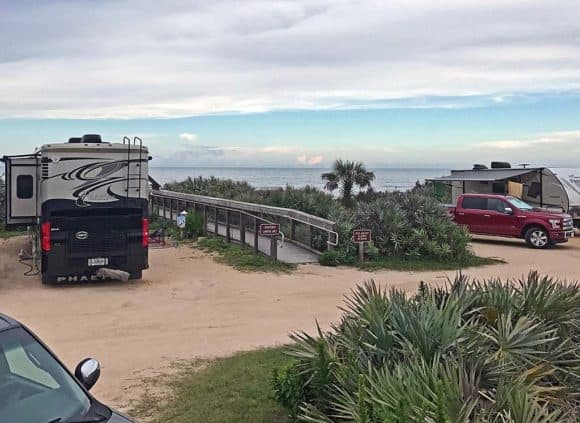
On scenic State Road A1A north of Daytona, there’s a state park with two campgrounds, one of which is directly on the beach in Flagler Beach, an Old Florida beach town that will steal your heart.
A paved bike path alongside A1A allows you to visit the adjacent North Peninsula State Park, a much larger park with 2.5 miles of pristine beach and majestic dunes, and there’s a kayak launch on the river side offers paddlers access to miles of backcountry wetlands and rivers.
On the second and fourth Saturdays of every month, visitors are in for a treat as folk musicians gather to honor the park’s namesake, folk singer James Gamble Rogers, who drowned here trying to save a struggling swimmer.
Getting There: Gamble Rogers State Park is on State Road A1A, 8 miles north of Daytona Beach. Access via the Ormond Scenic Loop, or a more direct route would be to take I-95 to Flagler Beach exit, east to the beach, then south on A1A to the park.
- Related article: Gamble Rogers State Park: Oceanfront jewel celebrating song and sea by Bob Rountree
Go whale watching
Who knew!?!
Whales! In Florida!
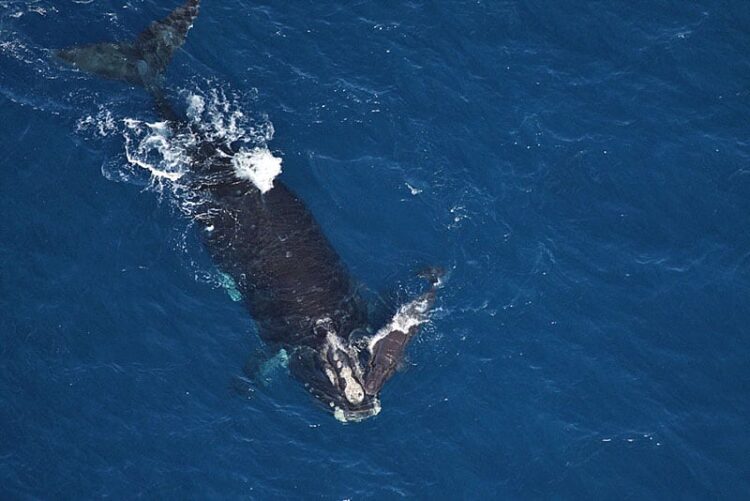
The rare North Atlantic Right Whale swims south to spend the winter and breed in the warm waters off Flagler Beach.
Only 450 right whales are known to exist – and they nuzzle close to shore to give birth.
A prime location for whale-watching is the Flagler Beach Pier, and when there are sightings, the pier magically fills with whale-watchers.
In between sightings, wander around this Old Florida beach town, shop its boutiques and art galleries, and dine at any one of a dozen beach area restaurants. (We like Finn’s Rooftop!)
Getting There: Take Florida Highway A1A 9 miles north of Daytona Beach. You can’t miss it.
Related articles:
- Flagler Beach: A whale of an Old Florida beach town by Bob Rountree and Bonnie Gross
- Right whale watching: A winter thrill off Florida’s northeast coast by Bonnie Gross
Go surfing
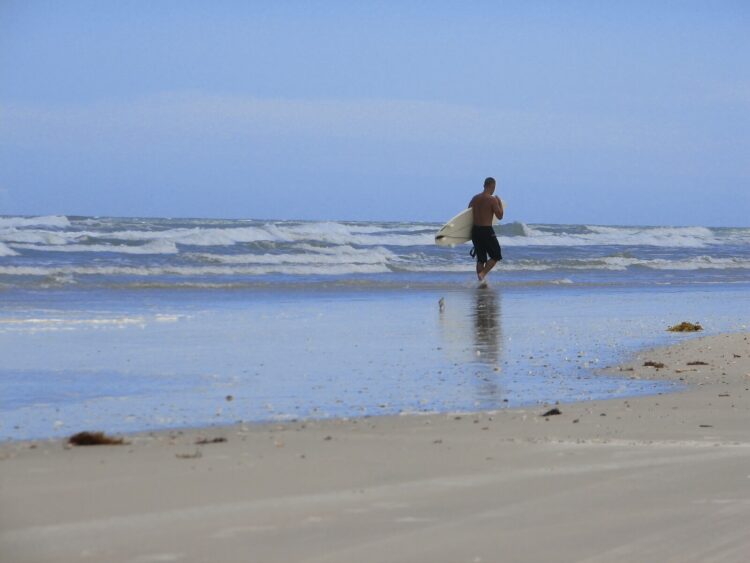
One of Florida’s premier surfing destinations is on the south side of Ponce Inlet in New Smyrna Beach. Surf breaks here can be phenomenal, and the slow slope of the beach offers a long ride home.
The downside is that sharks frequent the inlet, feeding on fish that roll through the channel with the tides, and occasionally they’ve been known to nip at surfers’ heels riding waves at the jetty.
If you slip your board in the water a bit south of the inlet, there’s considerably less chance of encountering these creatures of the deep, and the beach is gorgeous and accommodating.
Board rentals are available on Flagler Avenue near the centrally located lifeguard station.
This also offers a fabulous 1.5-mile boardwalk hike above the rolling dunes, where it’s easy to spot wildlife scurrying through the scrub.
Getting there: Go to New Smyrna Beach’s North Causeway and continue straight on Flagler Avenue to the beach access ramp. Pay the $30 beach access fee at the booth in front of The Breakers Bar, turn left and go all the way to the inlet jetty. Be aware of the soft sand. I know the area well and have been stuck more than once out by the jetty.
- Related Story: New Smyrna Beach: The best little beach town by Bob Rountree
Paddle Spruce Creek

So, you didn’t bring your kayak but would love to paddle a beautiful Florida creek while you’re in Daytona Beach.
Check out Cracker Creek, a private park with canoe/kayak rentals on upper Spruce Creek. The creek moves slow enough you can paddle against the current. From their launch area, go upstream or downstream, and get back without much hassle.
This section of Spruce Creek is the least developed, so there’s plenty of nature to observe. But get out there soon. Last time I was there, houses were popping up everywhere.
For those who prefer to settle back and just enjoy the scenery, Cracker Creek offers two-hour pontoon-boat tours that will cruise eight miles east to the Spruce Creek Reserve. A one-hour Eco-Tour explores a two-mile section of Spruce Creek. Call 386-304-0778 for information and reservations.
Getting there: Follow Dunlawton Avenue west past I-95, where Dunlawton turns into Taylor Road. The entrance to Cracker Creek is on the left.
Related Article: Spruce Creek paddle: A diamond in the rough by Bob Rountree
Drive on the beach
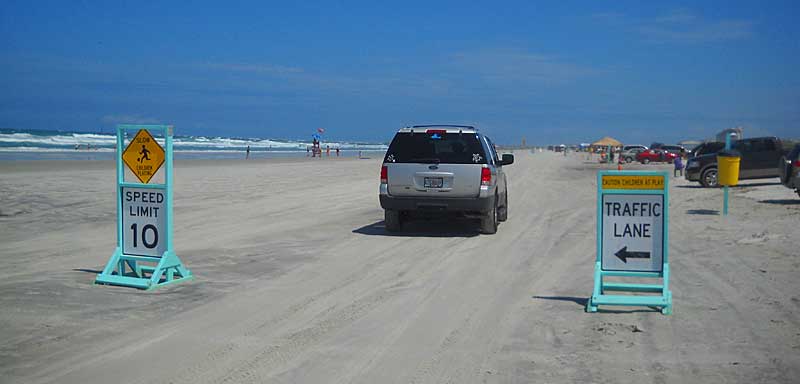
Driving your car on the hard-packed sands of Volusia County is a Florida tradition, although you’ll pay top dollar for the privilege these days.
Pioneers did it with horses and buggies, but the legacy for race fans is the history made here from the 1930s until 1959 — the birth of NASCAR and stock car racing.
Stay up to date with beach conditions, weather, parking, ramp openings and closures by downloading Volusia County’s new Beach Navigator app at www.volusia.org/services/public-protection/beach-safety/beach-navigator.stml
The daily beach pass is $30 (2026). Non-residents pay $150 for an annual pass. Purchase beach passes online through the app. Volusia County residents can register for a free pass at www.parkvolusia.org.
Once on the beach, you can park wherever you like (almost), set up your beach gear, and enjoy the sea rolling ashore just a few feet away.
Getting there: Go to the beach in either Daytona or New Smyrna and ride up or down State Road A1A and look for signs. For detail on ramps, use these maps: Daytona Beach | New Smyrna Beach
Related Story: Ultimate Road Trip: Driving on Florida’s coastal beaches by Bonnie Gross
Climb historic Ponce Inlet Lighthouse
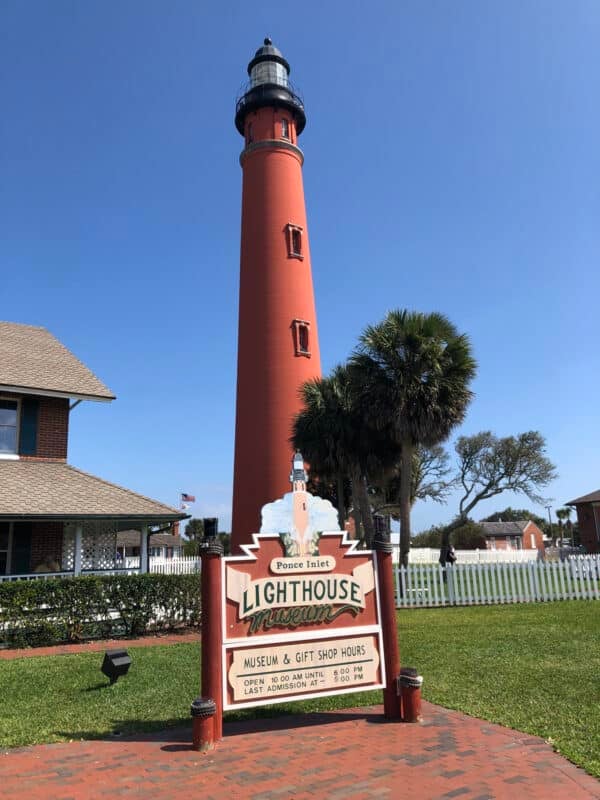
This is Florida’s tallest lighthouse, with 203 steps to the top for a magnificent view of the busy inlet, the ocean, crowds of surfers and a sprawling, dune-filled coastal park on the inlet’s south side.
Ponce Light is the second tallest masonry lighthouse in the United States. (The famed Cape Hatteras Light is taller.)
The lighthouse keepers’ cottages and other historic buildings are home to a museum, where the history of Florida’s coastal lighthouses comes alive.
Don’t miss the display of historic Fresnel lenses that once beamed their brilliance over the sea to guide mariners. Among them, the Ponce lighthouse’s original lens and the rotating first order Fresnel lens from the Cape Canaveral Lighthouse.
Getting there: Take Atlantic Avenue (SR A1A) to the southernmost point of the Daytona peninsula to 4931 South Peninsula Drive.
Related article: Ponce Inlet: A delightful outdoor oasis near Daytona Beach by Deborah Hartz-Seeley
Go fish at Canaveral National Seashore
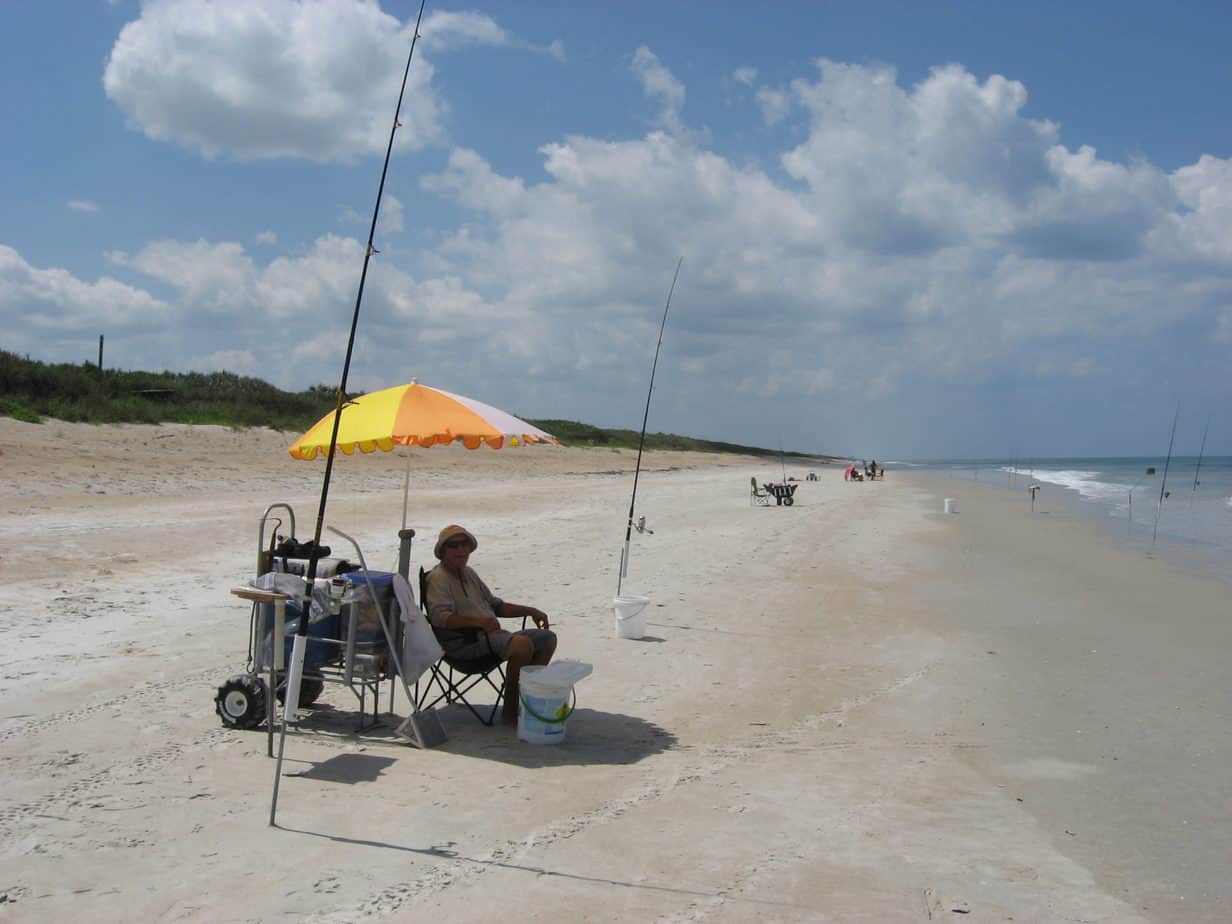
Canaveral National Seashore is the longest stretch of pristine beach on Florida’s Atlantic Coast, and it’s easily accessed from New Smyrna Beach.
There are five beach-access parking lots with a total of 200 spaces, and they fill up fast on weekends.
The best beach for surf fishing is Lot #1, which has 89 parking spaces. You can also enjoy some really fine backwater fishing in the Indian River and Mosquito Lagoon at the park’s river-side fishing pier, or along shoreline trails.
The vehicle entrance fee is $20 (2023), $15 for motorcycles, and the entrance pass is valid for seven days. Walk-ins and bicycles are $10. Annual passes and the National Parks lifetime senior pass for $80.
Getting there: The north entrance to Canaveral National Seashore’s Apollo Beach is from State Road A1A in New Smyrna Beach. The beach highway dead ends at the park entrance in Bethune Beach.
Related Story: Canaveral National Seashore: Florida’s longest unspoiled beach by Bob Rountree
Explore Merritt Island National Wildlife Refuge
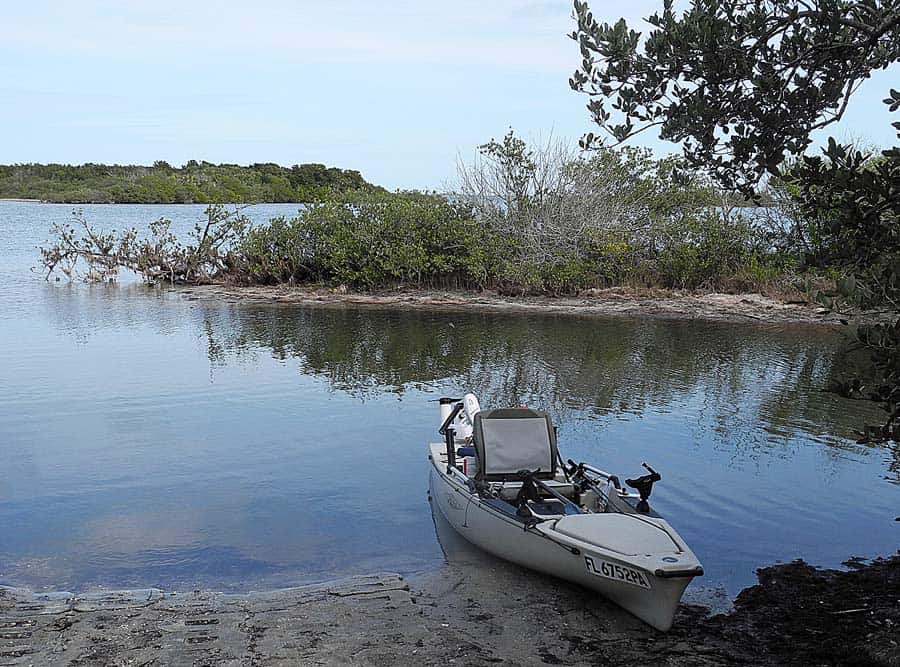
Merritt Island National Wildlife Refuge offers a multitude of activities, from bird watching and hiking to kayaking and fabulous backcountry fishing, less than an hour’s drive south of Daytona Beach.
The casual, fun and scenic highway that runs through the refuge starts just south of Oak Hill off U.S. 1. Once inside the refuge, cruise for miles through wilderness.
Bring kayaks for a paddle in Mosquito Lagoon, go to the Visitor Center for lessons in bird-watching or access Playalina Beach from the south entrance to Canaveral National Seashore.
Along the way, you’ll see the rocket-launch towers at Kennedy Space Center. You might even witness a rocket blast off into space!
Getting there: Follow U.S. 1 south from Daytona. Just past Oak Hill, you’ll see the north entrance to the refuge on your left.
Related Story: Merritt Island National Wildlife Refuge: Birds and beauty galore by Bonnie Gross and Bob Rountree
Feast on fresh seafood
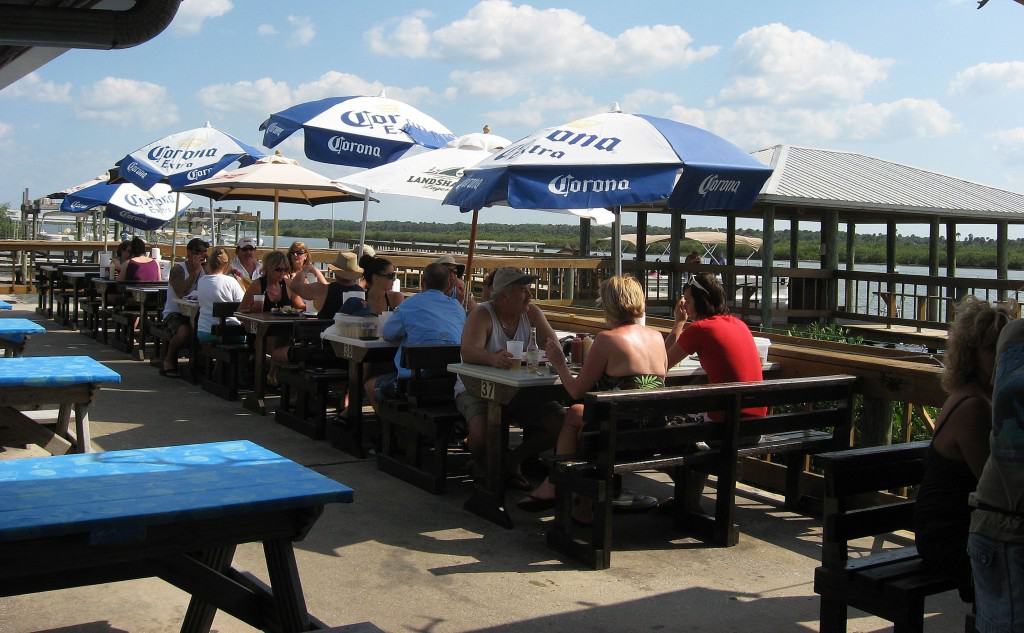
Hulls Seafood Restaurant and Market, 111 W Granada Blvd, Ormond Beach — Hulls is a recent discovery for me, but I think I’m the last person to hear about it. This restaurant and retail market is extremely popular, and there are often long lines of diners waiting for a table. The wait is worth it. We dined on the freshest seafood I’ve ever enjoyed. Fresh off the boat.
Goodrich Seafood, 253 River Rd, Oak Hill –– Goodrich Seafood was once an ice house on Mosquito Lagoon where fishermen would drop off their catch. I went there for clams harvested from the Indian River Lagoon. Today, it’s a restaurant. Locally harvested oysters are the specialty, and you might want to try the “Kickin’ Corn and Crab Chowder” or their mahi tacos while sitting on the deck overlooking the lagoon.
JB’s Fish Camp, 859 Pompano Avenue, Bethune Beach — JB’s has been around for as long as I can remember, and it has grown exponentially popular with the Daytona Speedway crowd. Like Goodrich, JB’s is on the Indian River Lagoon, and oysters and crabs are featured on the menu.You can rent kayaks and paddle boards to explore the Indian River Lagoon, and it’s the perfect dining stop if you’re visiting Apollo Beach Canaveral National Seashore..
Get lost in Ocala National Forest
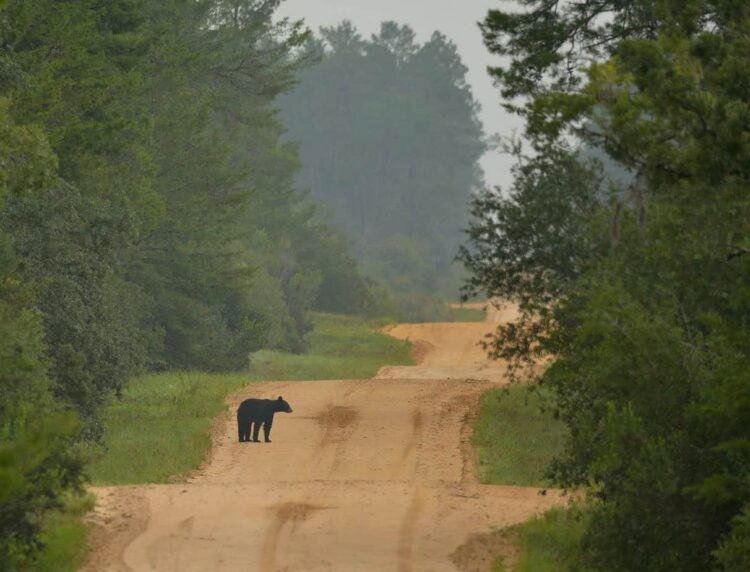
Hike a scenic trail, camp in the deep woods, spend a lazy day at a cool, bubbling spring, ride the equestrian trails, paddle a spring run, a lake or a river.
Or just drive around and enjoy this spectacular forest in the center of Florida.
One of my favorite adventures is to get lost on the hundreds of miles forest roads, most unpaved but hard-packed and well-maintained. You can park on the shoulder almost anywhere and go for a hike, set up a primitive wilderness camp or go fishing.
There are more than a dozen campgrounds in Ocala National Forest, and you can read about all of them in our Camping Guide to Ocala National Forest.
And there’s a good chance you’ll see bears. Ocala National Forest is home to roughly one-third of Florida’s total bear population roaming its 383,000 acres.
So much to do, so much to see.
Getting there: From I-95 Exit 268, take State Road 40 west.
Related Story: 6 Things to Do in Ocala National Forest by Bob Rountree
Hike in a wilderness close to Daytona Speedway
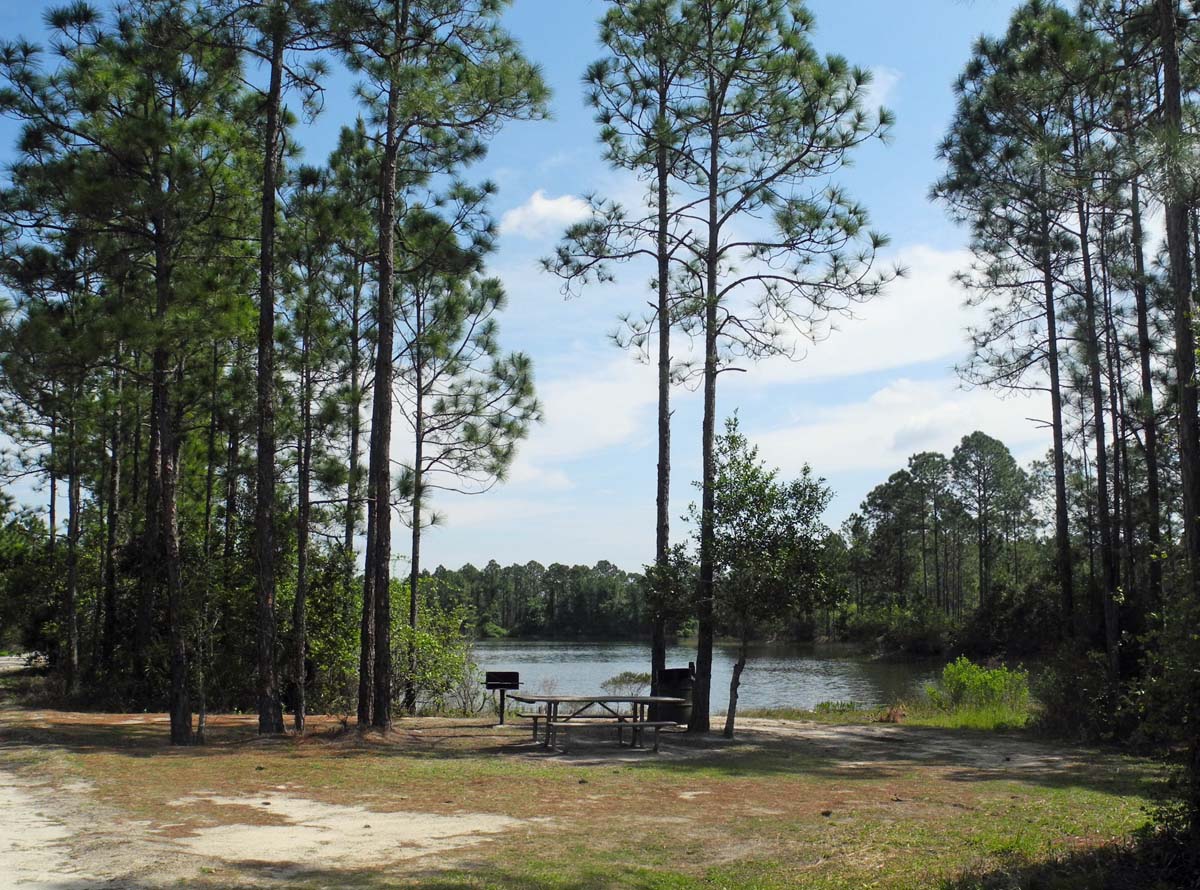
If it comes as a surprise there’s a vast state forest just seven miles from Daytona International Speedway, you are not alone. Even long-time locals tell me: “Never heard of it.”
But here it is, on International Speedway Boulevard, just west of Interstate 95, a 27,000-acre forest of pine islands, grassy wetlands and quiet ponds that feed a critical aquifer supplying Daytona Beach residents with water.
The forest has two primitive campgrounds, including one for equestrians, several lakes and ponds for fishing and kayaking, picnic areas, hiking trails and miles of off-road bicycling.
Fair warning: I found the chiggers to be bothersome, so avoid high grass and wear long pants when hiking.
Getting There: Take International Speedway Boulevard (U.S. 92) six miles west of I-95 (Exit 261). The forest straddles the highway with four forest access points.
Related Article: Tiger Bay State Forest near Daytona Speedway) by Bob Rountree
Swim in summer, manatees in winter at Blue Spring State Park
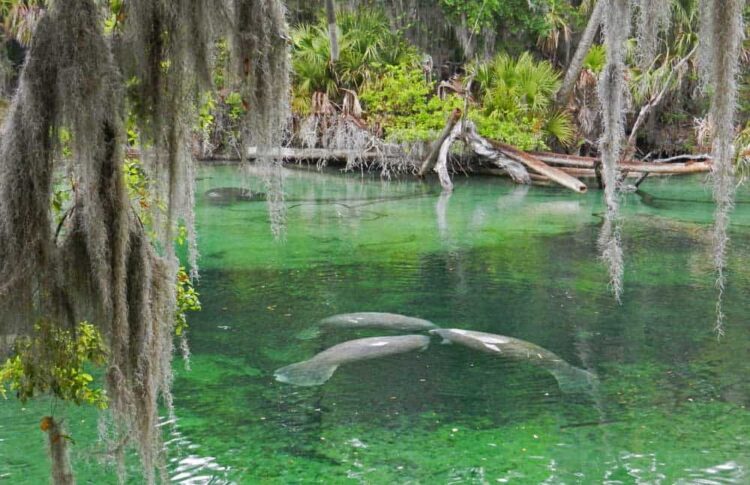
Blue Spring has a half-mile boardwalk along the spring run, offering many vantage points for observing manatees, and there are often naturalists or volunteers present to answer questions during winter’s manatee season.
In summer, the spring is one of the most popular swimming holes in the state. It is so popular, day visitors now need to purchase a day-use reservation from July 15-October 24, 2026.
The park also has a campground, making it an excellent choice for booking a site around speedway events.
For a few magical weeks in late March and early April, the woods at Blue Spring State Park twinkle with fireflies, a display people get in line to see.
Year around, the park is a great launch for kayaks, canoes and standup paddle boards for exploring the backwaters of the St. Johns River.
Related Article: Blue Spring State Park: Manatees in winter; swimming in summer; beauty year-round by Bonnie Gross and Bob Rountree
Drive the best stretch of A1A
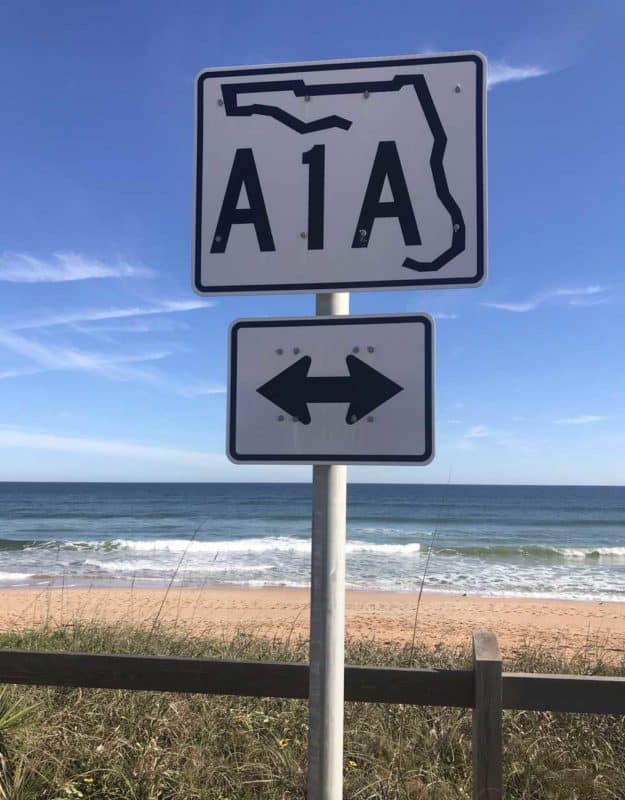
For beauty and history without dense development, the 30-mile stretch of Florida A1A from Ormond Beach north to Matanzas Inlet is unsurpassed.
You can drive 20 miles without a traffic light and find empty beaches with free parking. One stretch has a canopy of magnificent live oak trees on a route through a Florida you probably thought was gone forever.
This stretch of A1A has many interesting state parks and historic sites, making it a most rewarding and scenic day trip, whether you are in a convertible or on a motorcycle.
Getting There: Take State Road A1A north from Daytona through Ormond Beach and Flagler Beach, then keep on going north.
Related Article: Florida A1A: Best section for superb views & intriguing history by Bonnie Gross